


The Hammond Problem Is the Thermometer, Not the Snowfall
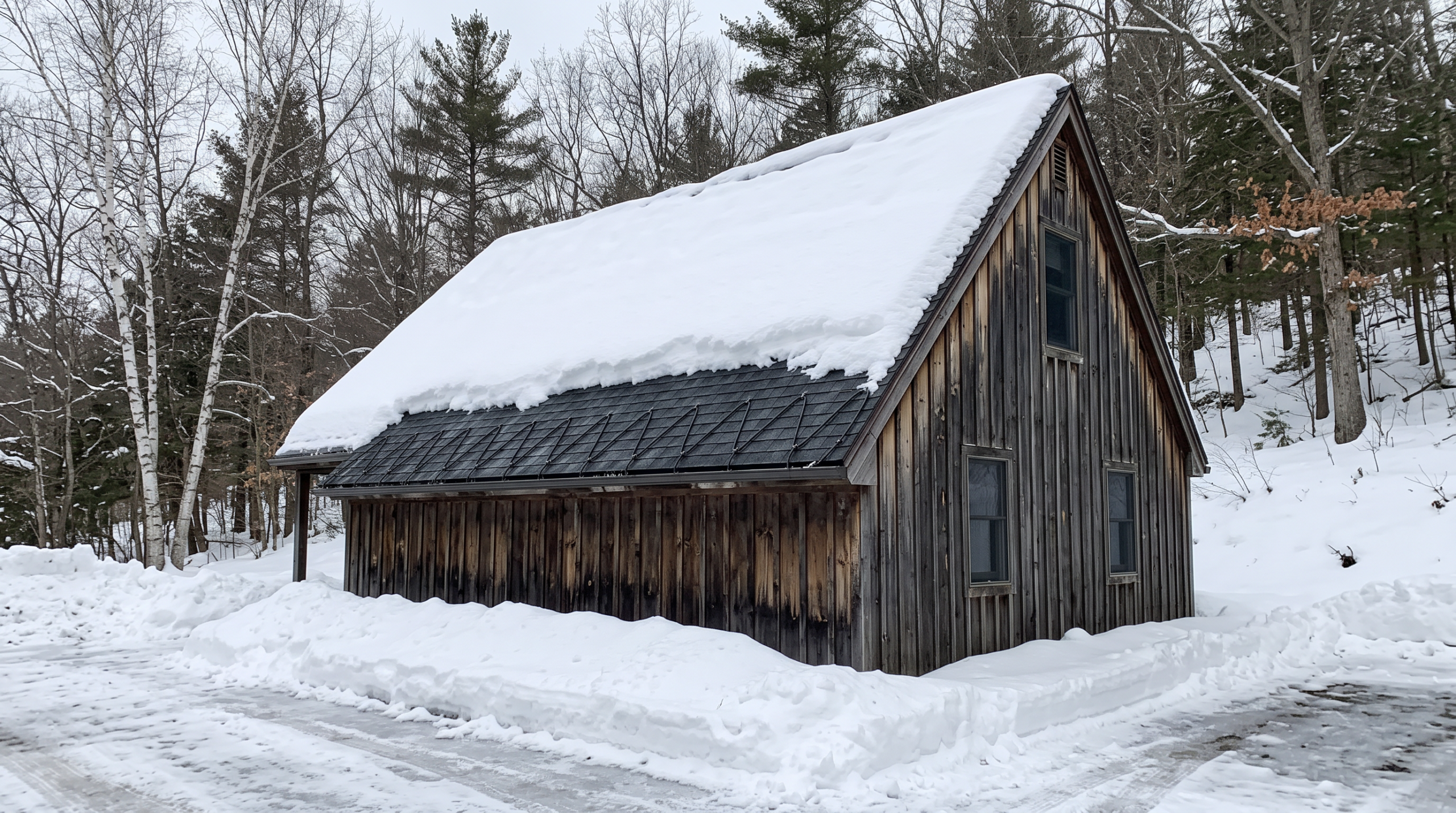
The snow totals here are unremarkable, which is exactly why Hammond roofs get caught out. An ice dam needs meltwater and a cold eave, not a record storm.

The building stock has no margin for it. Because the winters here read as mild, attics tend to be under-insulated, eave details are less considered, and ice barrier is as often absent as present on a roof in Hammond.
Ice-barrier practice in Lake County
Because ice is not the first thing a homeowner in Hammond thinks about, the membrane is the detail most often value-engineered out of a re-roof. It is worth asking for by name on any quote.
What a Crew Does on a Hammond Roof
Crews walk the eaves, valleys and gutter line first and photograph every dam and every point where water is tracking inside, before touching anything. You get shown what they found and quoted the crew-hour rate before work starts.
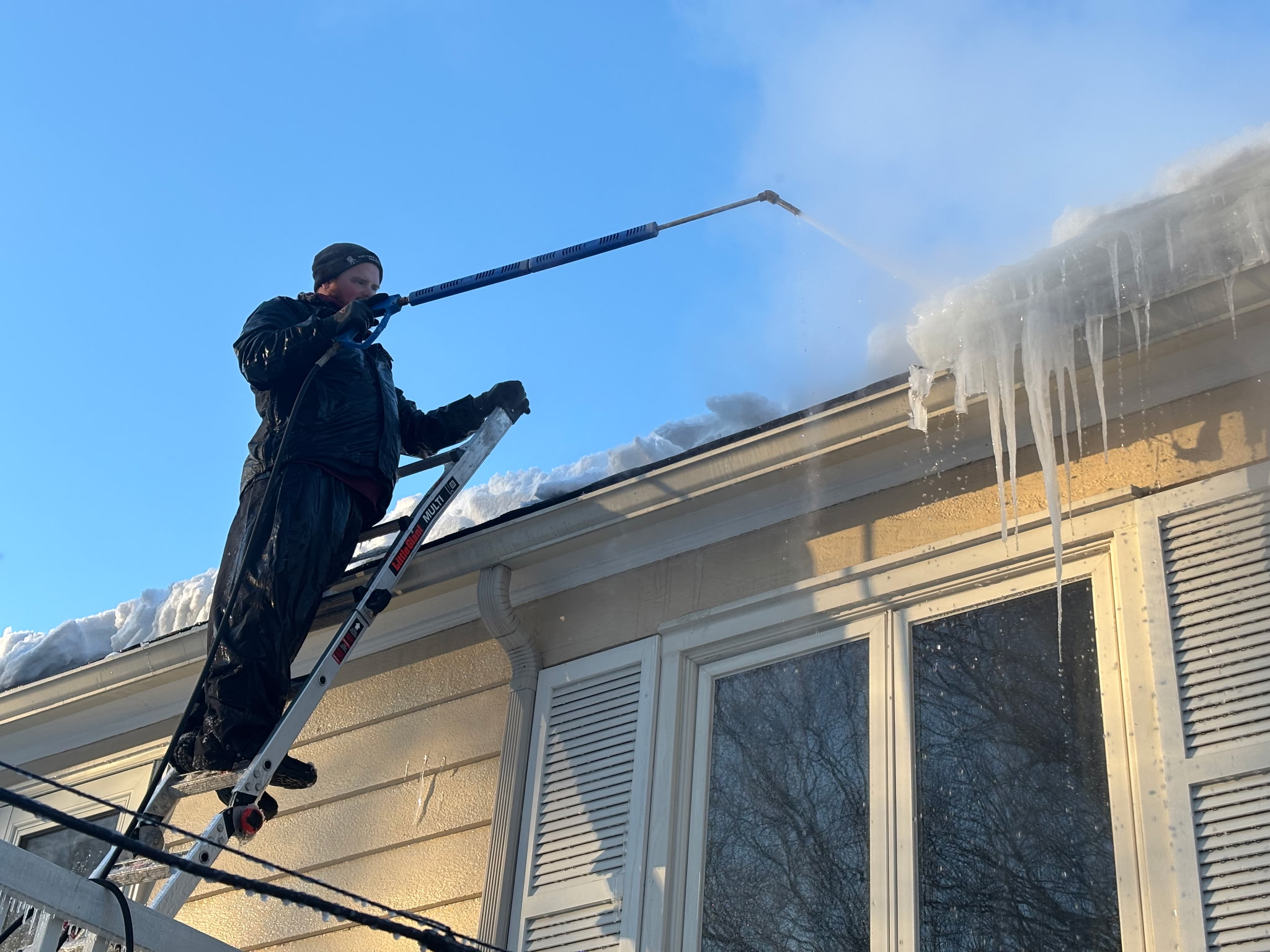
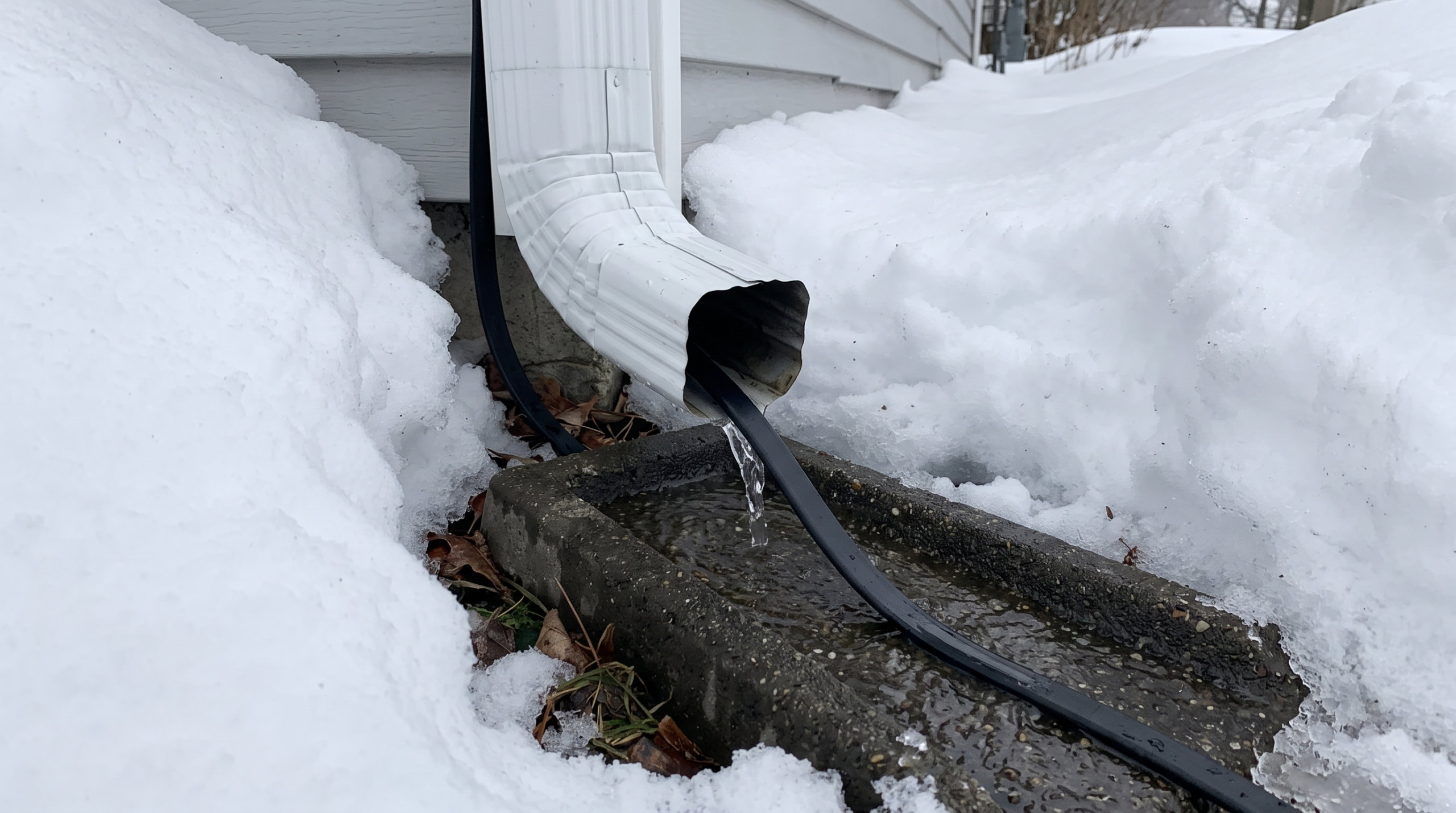
Then the ice comes off with low-pressure steam, starting wherever water is actively backing up so drainage opens early. Frozen gutters and downspouts are cleared in the same visit, because a cleared eave above a solid block of ice in the gutter dams again on the next cold night.
What gets photographed, and why it matters later
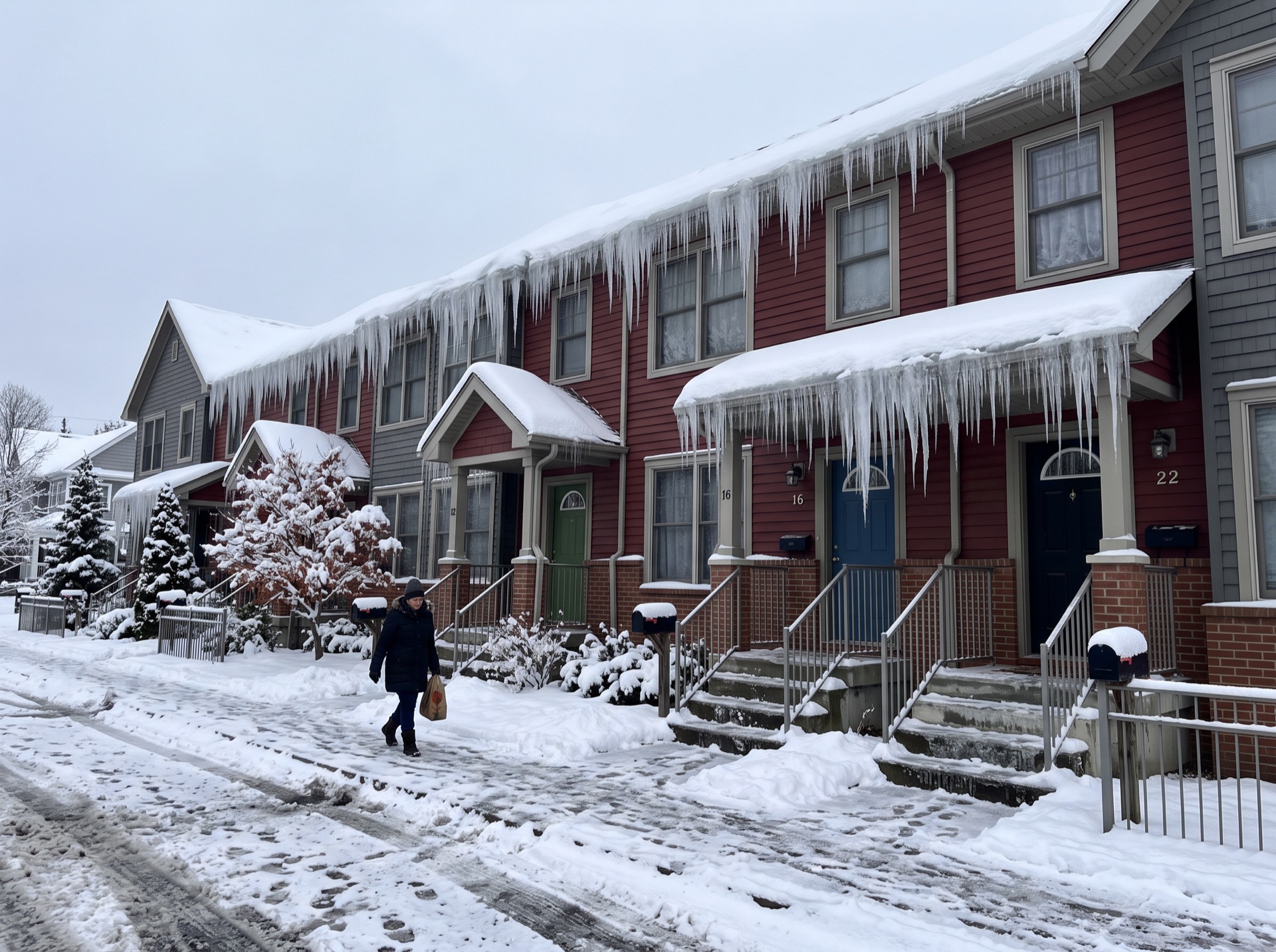
Before the lance comes out, the crew shoots the dam from the ground and from the roof, the icicle line, any staining visible inside, and the specific courses where water is tracking under the shingles. Timestamps are on every frame.
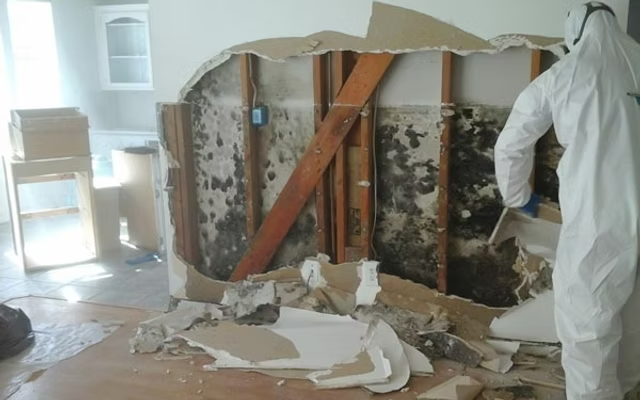
That record is the whole case if a claim follows. An adjuster arriving in March sees a dry roof and a stained ceiling; the photographs are what connect the two, and they are what a maintenance-exclusion denial runs into.
Dormers, valleys and dead spots
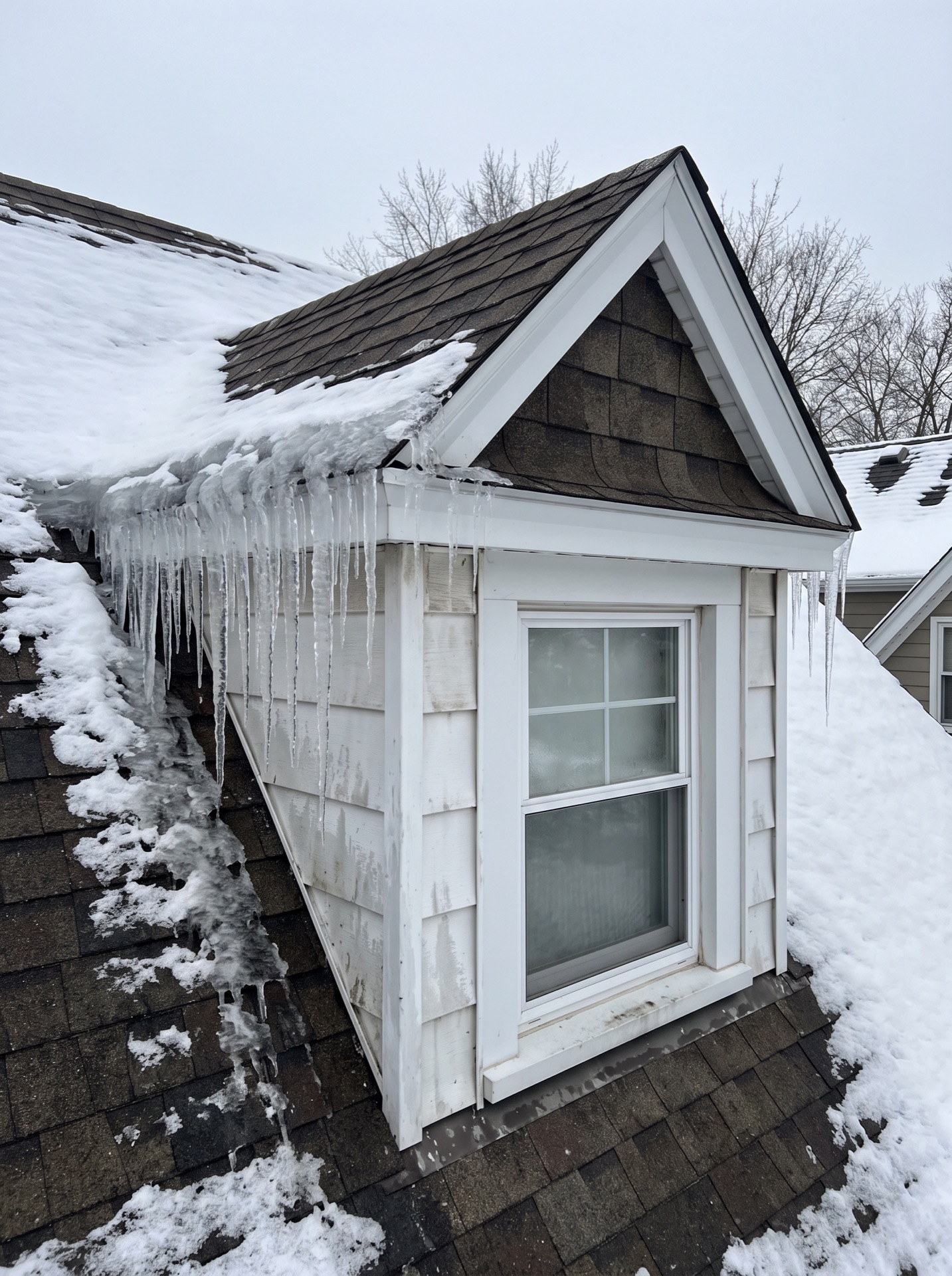
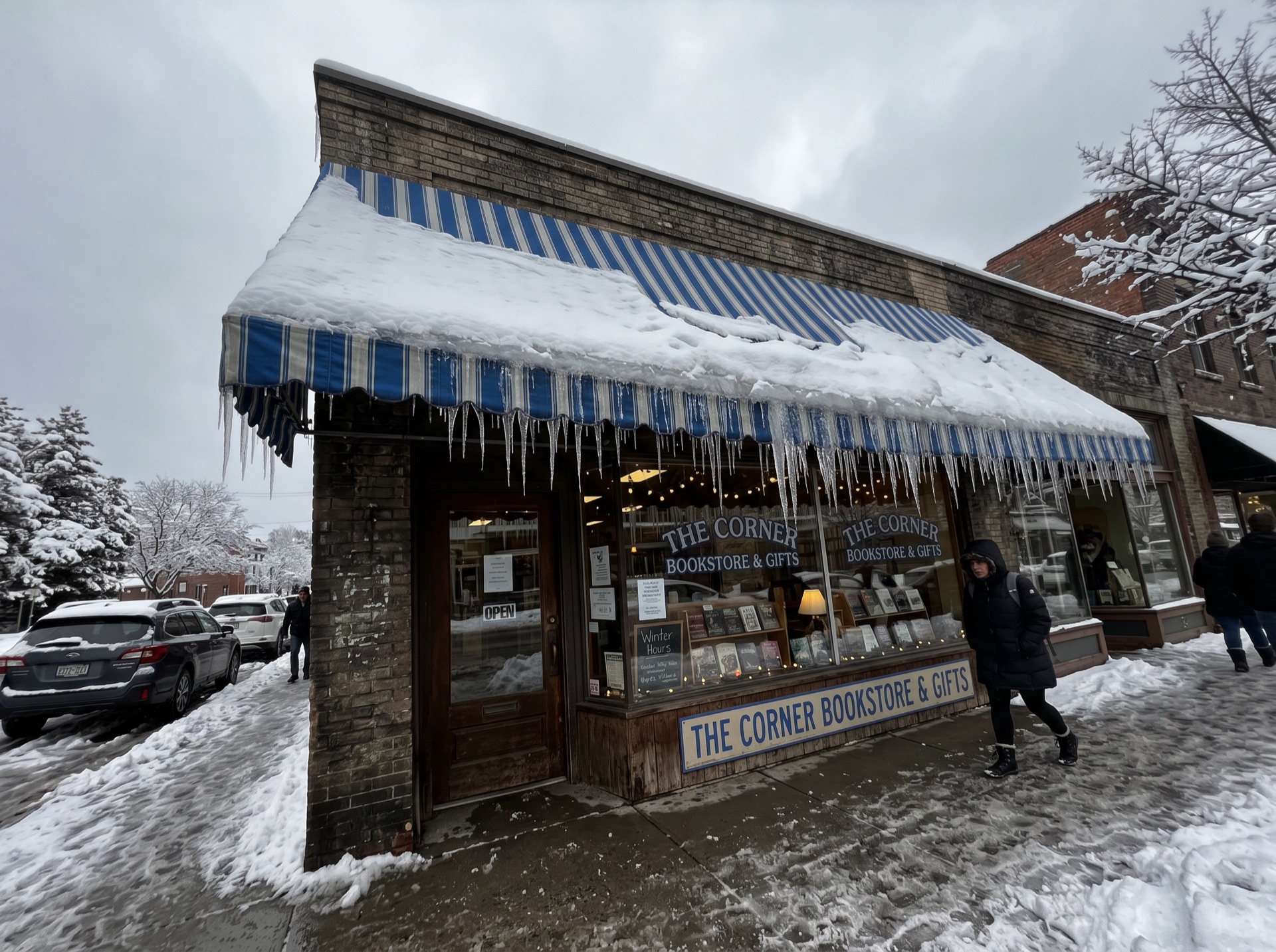
Ice does not distribute evenly. It concentrates where two roof planes meet, behind dormers, in dead valleys that drain nowhere, and along the north face that never sees sun. Those pockets hold water deepest and leak first.
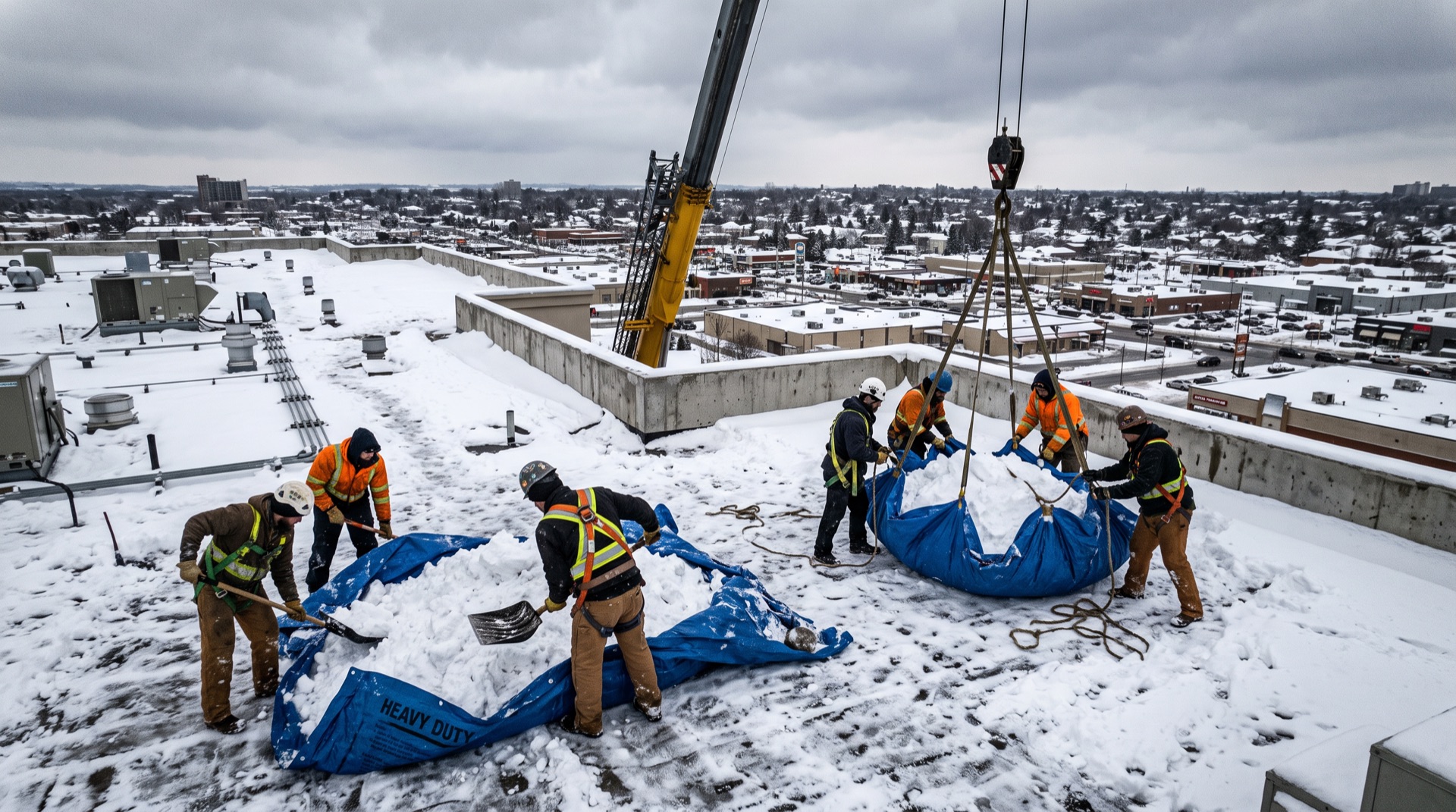
A crew working a roof in Hammond clears the full eave line and then goes back through the valleys and dormer pockets specifically, because clearing the easy straight run and calling it done is how a roof leaks again a week later.
Why the dam formed in the first place
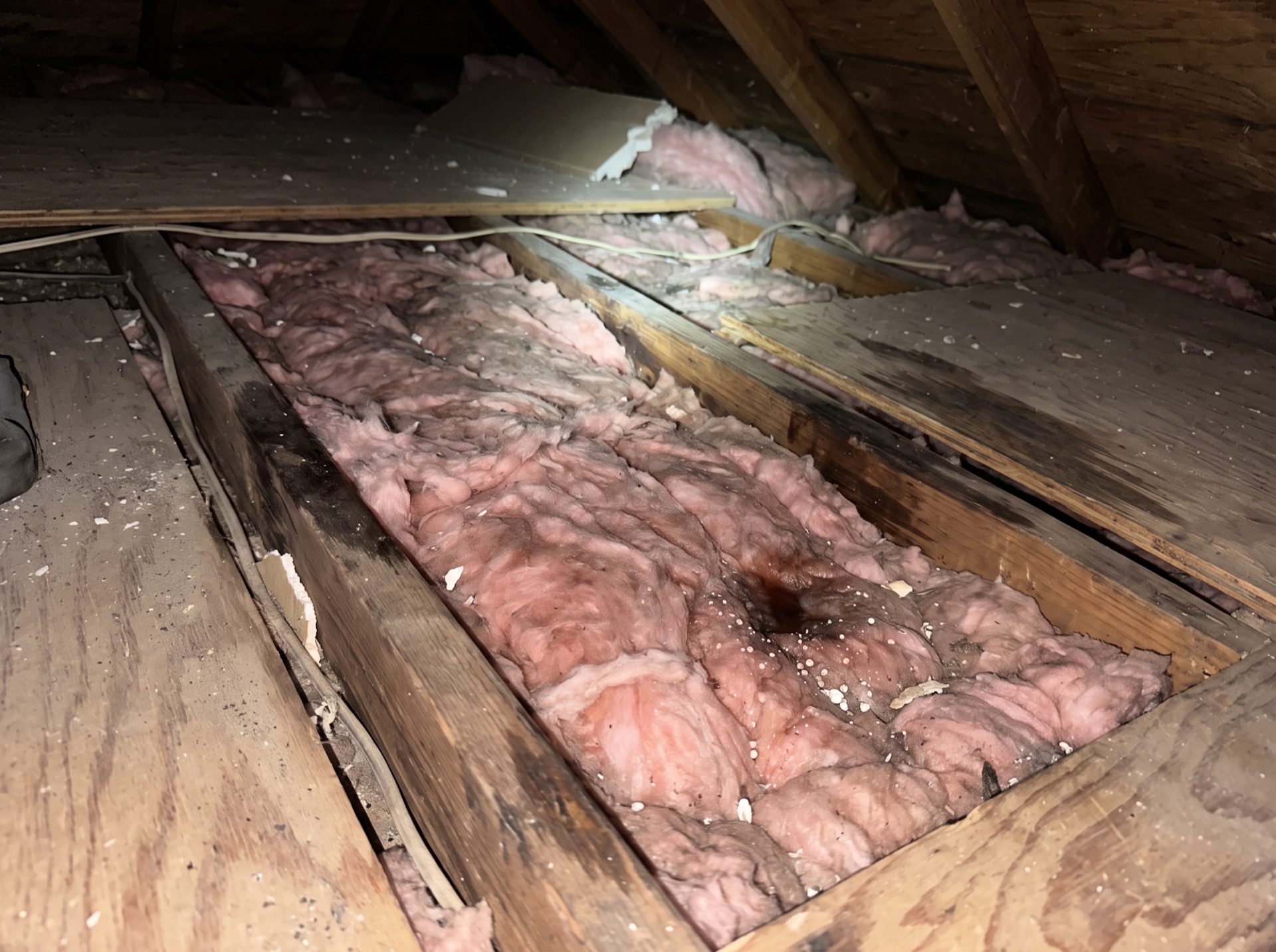
Ice dams are a heat problem wearing a weather costume. Warm air escaping into the attic melts snow on the upper roof; that meltwater runs to the eave, which hangs past the heated envelope and stays below freezing; it refreezes there, and the ridge of ice grows a layer every cycle. Removal is the emergency fix. Before the crew leaves you will know which part of your attic is feeding it.
| Pricing model | Billed by the crew hour, rate quoted before dispatch |
|---|---|
| Removal method | Low-pressure steam only. No chipping, salt or pressure washing. |
| Primary climate stressor | Repeated thaw-freeze cycling |
| Local ice-barrier practice | Eave membrane on new work, often absent |
| Typical scope | Steam, 4-8 crew hours typical |
| Coverage area | Hammond and Lake County |
| Documentation | Dated before and after photos, written scope in Xactimate line items |
Lake County Coverage From Hammond
Crews working Hammond cover the adjoining communities on the same route — East Chicago, Whiting, Griffith, Dyer and Saint John — so a storm week usually means one truck handling several addresses in Lake County rather than separate trips.
Nearest hub towns with their own crew pages: Munster, Highland, Gary, Schererville, Merrillville, Hobart.
When a storm hits Lake County, crews are dispatched by severity rather than by call order — water already inside the house goes first.
If water is already inside a property in Hammond, call (888) 561-9664 rather than filling in a form — the phone is faster and leaks jump the line.