Skip to content
Park Ridge, IL
Flat Roof & Parapet · Cook County

Commercial Ice Dam Removal in Park Ridge, IL — Freeze‑Thaw Response

Ice Dam Now provides commercial ice dam removal in Park Ridge, IL and the surrounding Cook County, using low-pressure steam only — never chipping, salt or pressure washing. Crews are licensed, insured and harness-certified, dispatch same day for active interior leaks, and bill by the crew hour at a rate quoted before dispatch. Dated photo documentation is supplied for insurance claims.

Documentation for the board — Condition report and photo record with every invoice
Tenant-hours scheduling — Work windows set around occupancy and access
Flow confirmed below — An open drain throat over a frozen leader is not an open drain
EPDM, TPO and mod-bit — Low-pressure steam only, seams and flashing details avoided

Get Ice Dam Help Park Ridge

A few quick questions, then pick a time. If water is coming in, call instead.

What is the zip code of the home?

Roof leaking right now? Call (888) 561-9664 — that is faster than any form.
Water coming through the ceiling?Every hour an ice dam sits there, more water gets under the shingles.Call (888) 561-9664
24/7
Storm Season Dispatch
No Chipping
Steam Only
Cook
County Coverage
Crew Hour
Rate Quoted Up Front
Documented
Photos On Every Job

Homeowners across Cook County call about icicles. Icicles are cosmetic. The dam behind them, holding back standing water, is not. As part of our complete Park Ridge winter roof services, crews handle commercial ice dam removal across Cook County.

Why Park Ridge Roofs Dam Up: Cycling, Not Snowfall Totals

The snow totals here are unremarkable, which is exactly why Park Ridge roofs get caught out. An ice dam needs meltwater and a cold eave, not a record storm.

Diagram showing how ice dams form on roofs due to inadequate insulation and poor ventilation
Heat escaping into the attic melts roof snow; the meltwater refreezes at the cold eave and the dam grows a layer every cycle.

And the cycling is relentless rather than dramatic. Fifteen or twenty crossings of freezing in a season each add a layer, and the houses with the thinnest attic insulation in Cook County all find out in the same week.

Ice-barrier practice in Cook County

Ice-barrier membrane at the eaves is required on new work under the residential code Illinois follows, but on a roof built before that it is frequently absent — and this is the region where it is most often skipped.

Commercial Ice Dam Removal in Park Ridge: How The Work Runs

Parapets hold the water in

A parapet is why a commercial deck ponds instead of shedding. Scuppers through the parapet are the only exit, and they are narrow, exposed on three sides and the first thing to freeze solid.

Steaming a scupper throat open is often the single highest-value twenty minutes of a commercial Park Ridge call.

Working around rooftop plant

HVAC curbs, exhaust fans, conduit, gas lines, solar racking and railing are all obstacles and all drift traps. The snow behind a large unit is usually the deepest on the roof and the ice under it the thickest.

Crews work around and under them rather than over, and anything running stays running.

Scheduling around tenants

Noise, access, parking and the hours a Park Ridge business can have equipment outside its door all shape when work happens. Some jobs run overnight for that reason.

Set the constraint on the call and the window gets planned around it rather than negotiated on the day.

Flat roofs fail differently

A pitched residential roof dams at the eave. A commercial deck dams at its drainage: frozen scuppers, iced-over internal drains, and ponding that refreezes into a sheet across the low spots. Water then sits on the membrane at depth, finds a seam or a flashing detail, and comes through into the tenant space below.

Parapet walls make it worse by holding the melt on the deck instead of letting it run off an edge. By the time it shows up as a ceiling tile stain in a Park Ridge unit, there is usually standing water up there.

Multiple buildings on one site

Campuses, retail strips and multi-building properties get walked together and prioritized by which deck is closest to trouble, rather than worked in the order the calls came in.

One scope, one invoice, one contact. It is a meaningfully different job from nine separate ones.
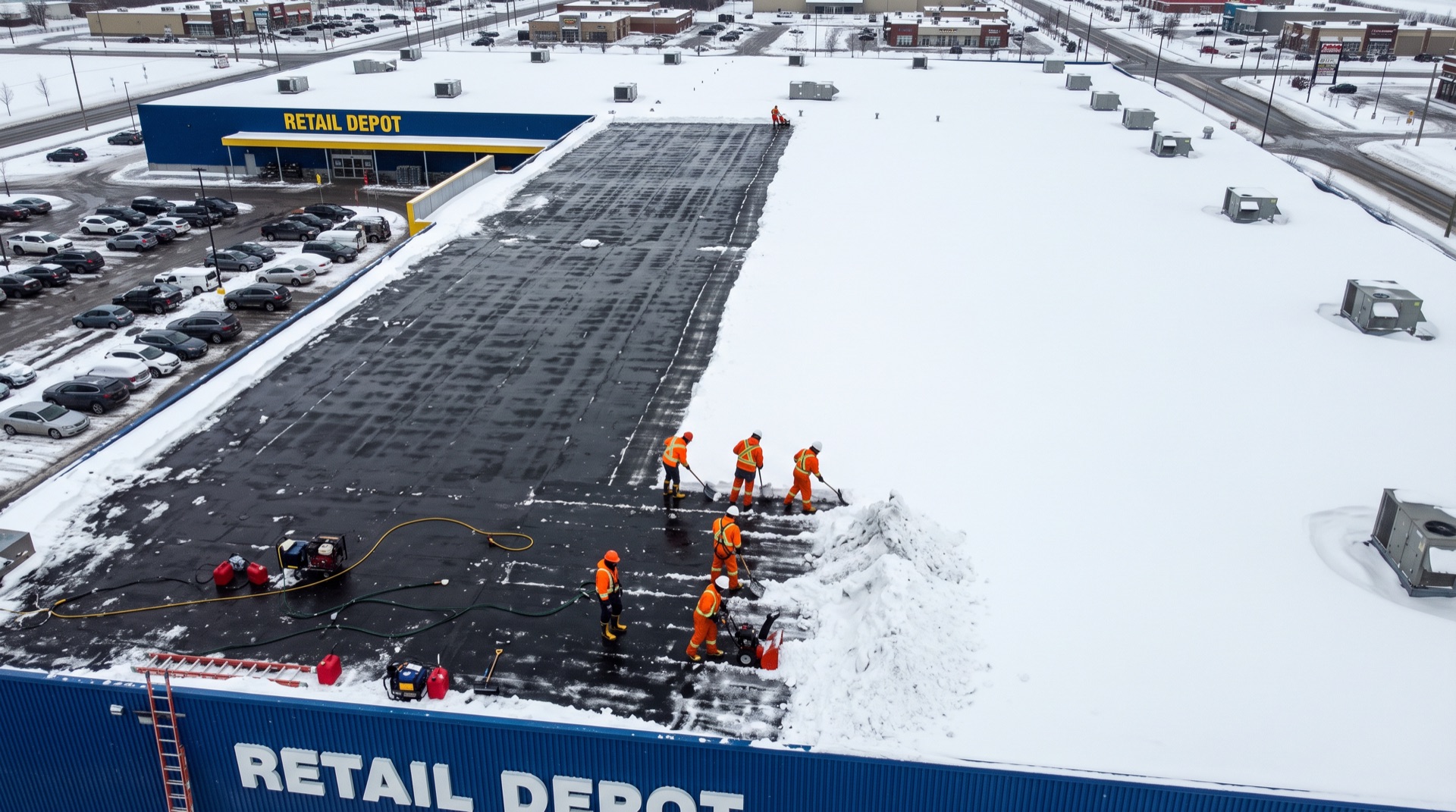
Workers in high-visibility gear clearing snow from a large retail store rooftop
A crew of workers removes heavy snow from the flat roof of a Retail Depot big-box store.

What you get in Park Ridge

  • Documentation for the boardCondition report and photo record with every invoice
  • Plant worked aroundHVAC curbs, conduit, racking and railing avoided, not cleared over
  • Tenant-hours schedulingWork windows set around occupancy and access
Commercial Ice Dam Removal in Park Ridge, IL — specification
Service specification for Park Ridge, IL
Local ice-barrier practiceEave membrane on new work, often absent
DocumentationDated before and after photos, written scope in Xactimate line items
ServiceCommercial Ice Dam Removal in Park Ridge, IL
Primary climate stressorRepeated thaw-freeze cycling
Pricing modelBilled by the crew hour, rate quoted before dispatch
Dispatch windowSame day to 24 hours
Typical scopeSteam, 4-8 crew hours typical

Neighborhoods and Towns We Reach From Park Ridge

Crews working Park Ridge cover the adjoining communities on the same route — Niles, Morton Grove, Harwood Heights, Golf and Schiller Park — so a storm week usually means one truck handling several addresses in Cook County rather than separate trips.

Nearest hub towns with their own commercial ice dams pages: Des Plaines, Glenview, Skokie, Mount Prospect, Bensenville, Wilmette.

Crews cover Park Ridge and the surrounding Cook County towns through the whole season, and during a freeze event they run from first light until dark.

Most jobs do not stop at one service. Commercial Ice Dams in Park Ridge often runs alongside commercial roof snow removal in Park Ridge, and both get written into one scope rather than billed as separate visits.

Active leak right now? Our 24/7 Park Ridge steam ice dam removal crews are dispatched first during a freeze event. Call (888) 561-9664.
Conditions We Work In

Commercial Ice Dam Removal In Practice

Conditions crews work in across Cook County. Every job is photographed before and after.

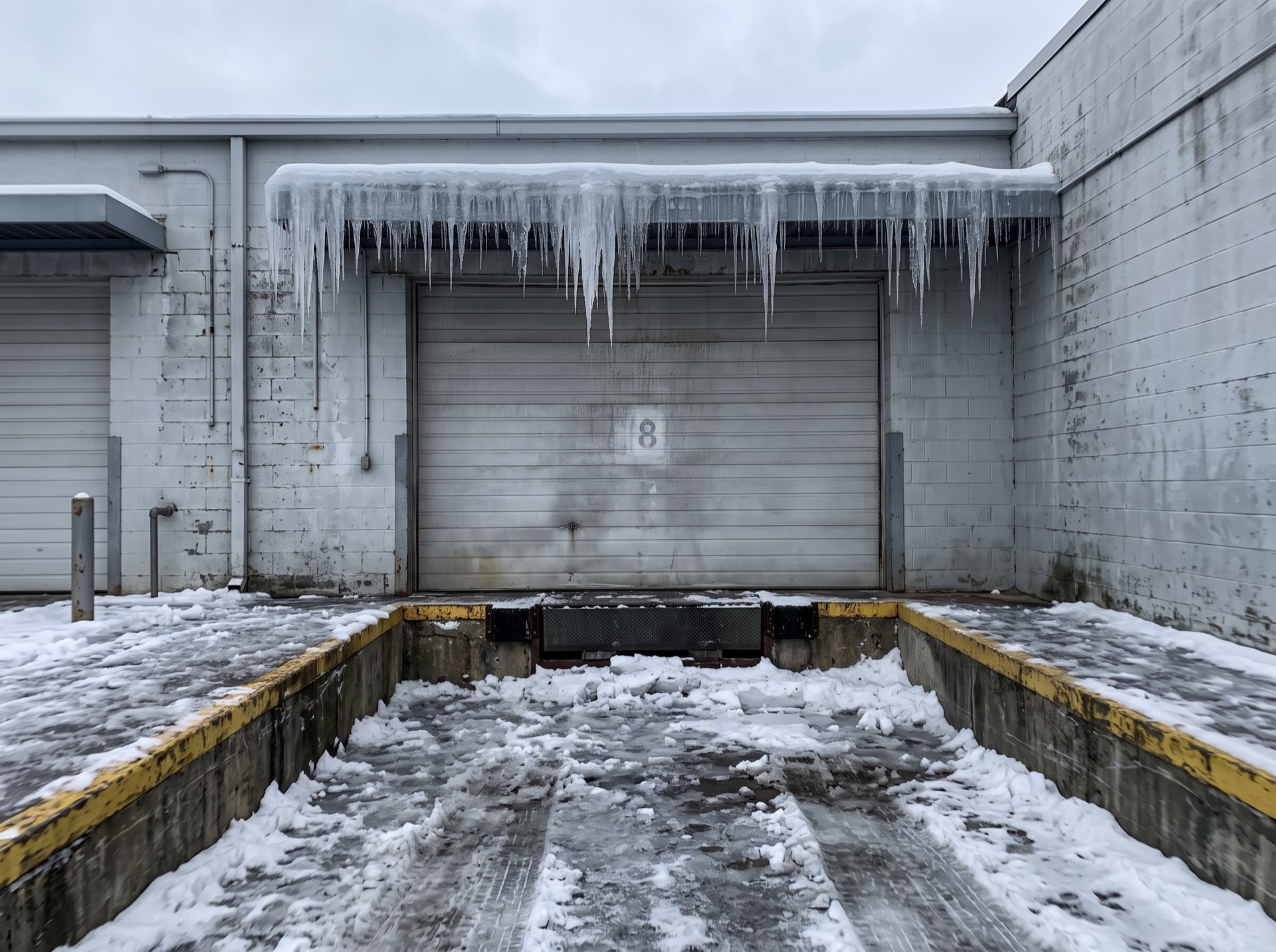
Large icicles hanging over warehouse loading dock number 8 in winter
Heavy icicles form along the roofline above a snow-covered commercial loading dock during freezing winter conditions.
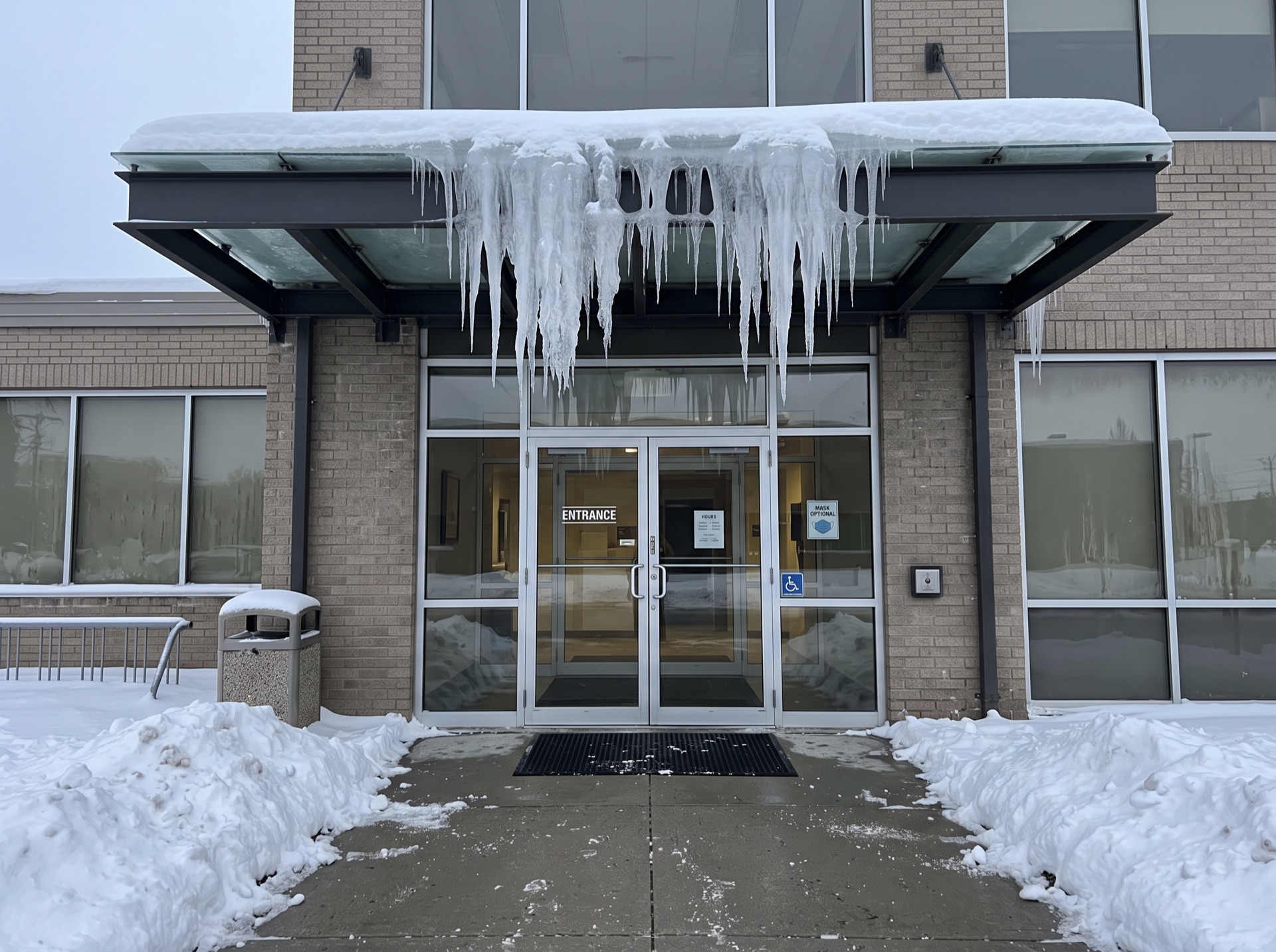
Large icicles hanging from commercial building entrance canopy in winter
Massive icicles form along the canopy above a commercial building entrance after heavy winter snowfall.
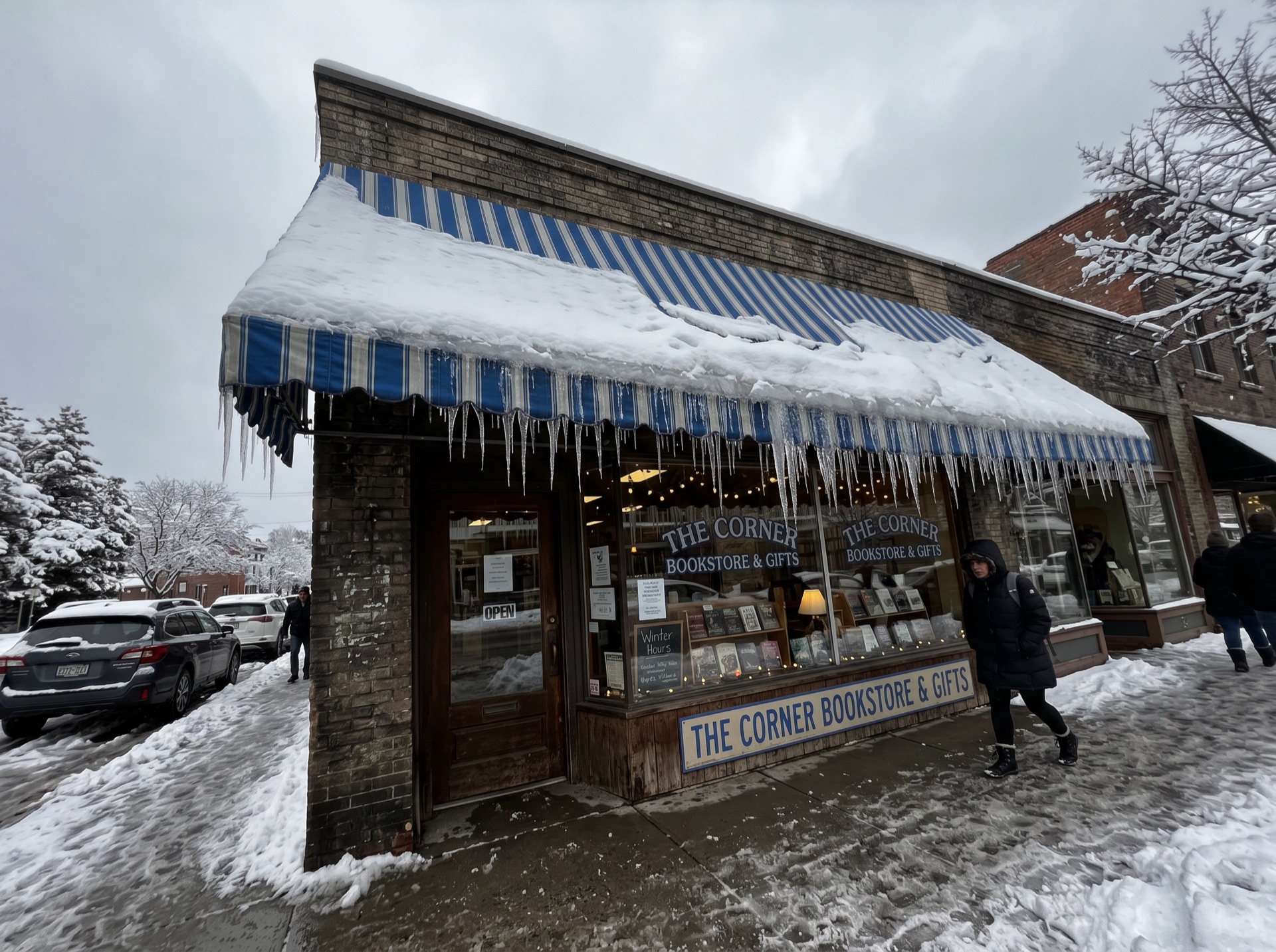
The Corner Bookstore and Gifts storefront with heavy snow and icicles on blue striped awning
Icicles hang from a snow-laden striped awning outside The Corner Bookstore & Gifts on a wintry day.
FAQ

Park Ridge Questions We Actually Get Asked

It is billed by the crew hour, and the rate plus a realistic time estimate are quoted on the phone before anyone is dispatched.

  • Scope drives the hours: length and thickness of the ice, roof pitch and height, and whether the gutters are frozen solid.
  • Access matters too — a three-story Park Ridge roof takes longer to set up on than a ranch.
  • The invoice matches the quote. There are no surprise add-ons written on the tailgate.

No. Steam removal is maintenance work, not construction, so no building permit is pulled for it anywhere in Cook County.

  • A permit does come into it once the work becomes a repair — new decking, a re-roof or structural work.
  • That is handled through the Park Ridge building department, or the Cook County building authority where the city has no department of its own.
  • Ask before signing anything: a contractor who says a re-roof in Park Ridge needs no permit is telling you something useful about how they work.

Please do not. Salt corrodes flashing, fasteners, gutters and anything metal it drains across, and it damages whatever is planted below.

  • Calcium chloride is less aggressive than rock salt but still ends up in the soil at the drip line.
  • A puck melts a hole, not a drainage path, so the water simply refreezes a few inches further on.
  • Crews use heat and nothing else - no salt, no chemicals, nothing corrosive.

Often for the interior water damage, sometimes for the removal itself, but it depends entirely on your carrier and policy wording.

  • Many policies treat emergency mitigation separately under a duty to protect property clause.
  • Denials usually cite the maintenance exclusion, which dated photographs taken during the event are the direct counter to.
  • Crews photograph the dam, the entry points and the interior damage, and write the scope in Xactimate line items.
  • The coverage decision is between you and your carrier — no contractor can promise an outcome there.

Clear a path to the affected side, move vehicles off the driveway and unlock any side gate.

  • Put something under an active interior drip and move what you can out of the way.
  • Photograph the interior damage yourself as well - more evidence is never a problem.
  • Do not go on the roof or up a ladder. That is the part that sends people to hospital.

Not if the method is one the warranty permits, which is why the document gets read first. Low-pressure steam is accepted by the major membrane manufacturers; mechanical ice removal frequently is not. Where a warranty names an approved contractor, that gets flagged rather than worked around.

Yes. Campuses, retail strips and multi-building properties get walked together, prioritized by which deck is closest to failure, and billed under one scope rather than as separate jobs.

Nearby

Commercial Ice Dams In Towns Around Park Ridge

Same-Day Response

Get A Park Ridge Crew Out

Waiting for a thaw is a strategy, but it is an expensive one — the melt has to go somewhere, and it goes into the insulation first.

✓ Licensed & insured✓ Low-pressure steam only✓ Rate quoted up front✓ Photos for your claim
Online Quote(888) 561-9664