



Elevation, Aspect and Ice: The Ada County Pattern
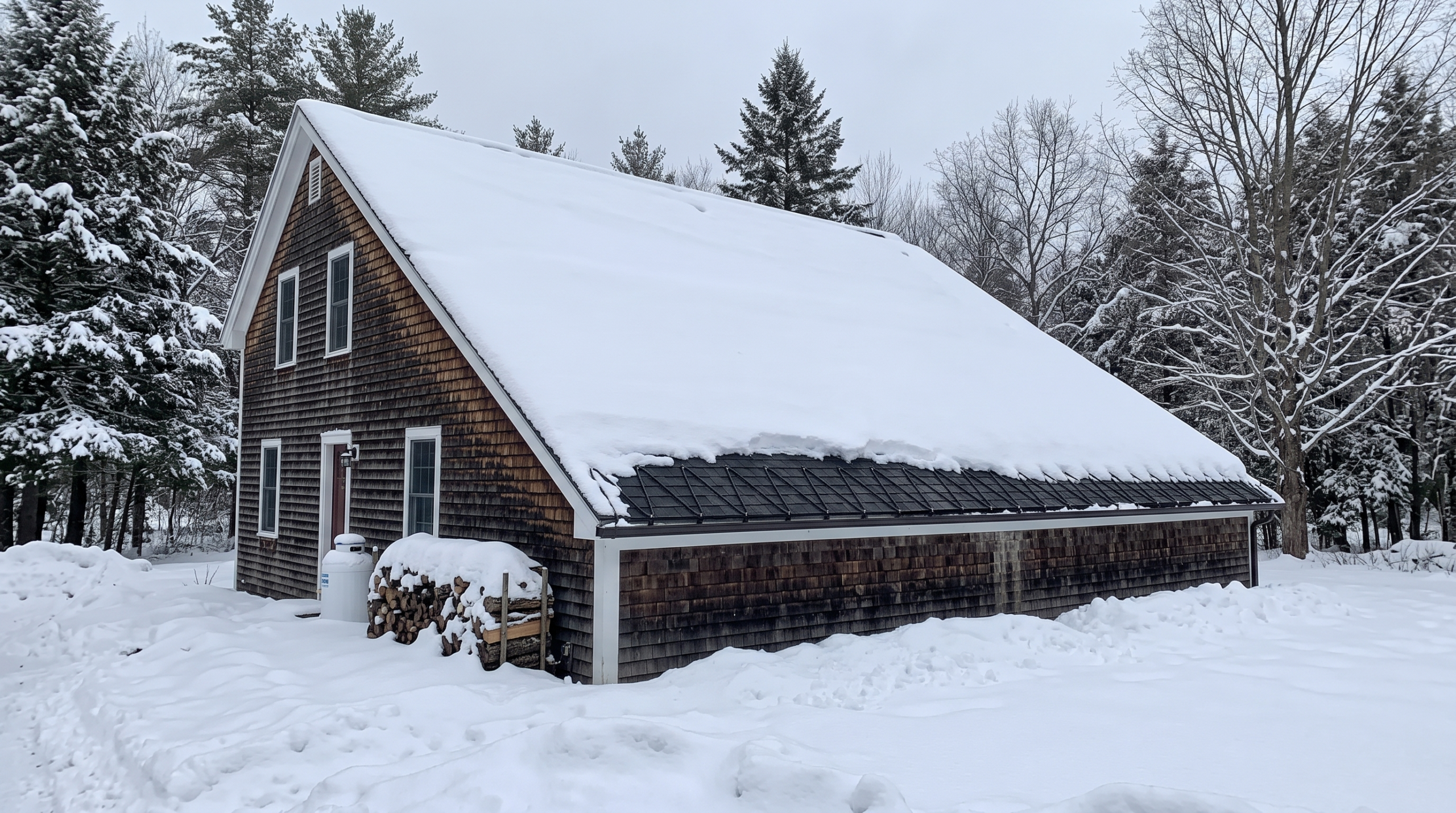
The pack at this elevation is deep enough to act as its own insulation, which means the surface melts under sun while the base stays locked. Water released at the top has to travel through and under all of it.

Depth makes it worse. A Ada County roof can carry several feet of pack, and all of that is a reservoir sitting above an eave that never sees sun.
Ice-barrier practice in Ada County
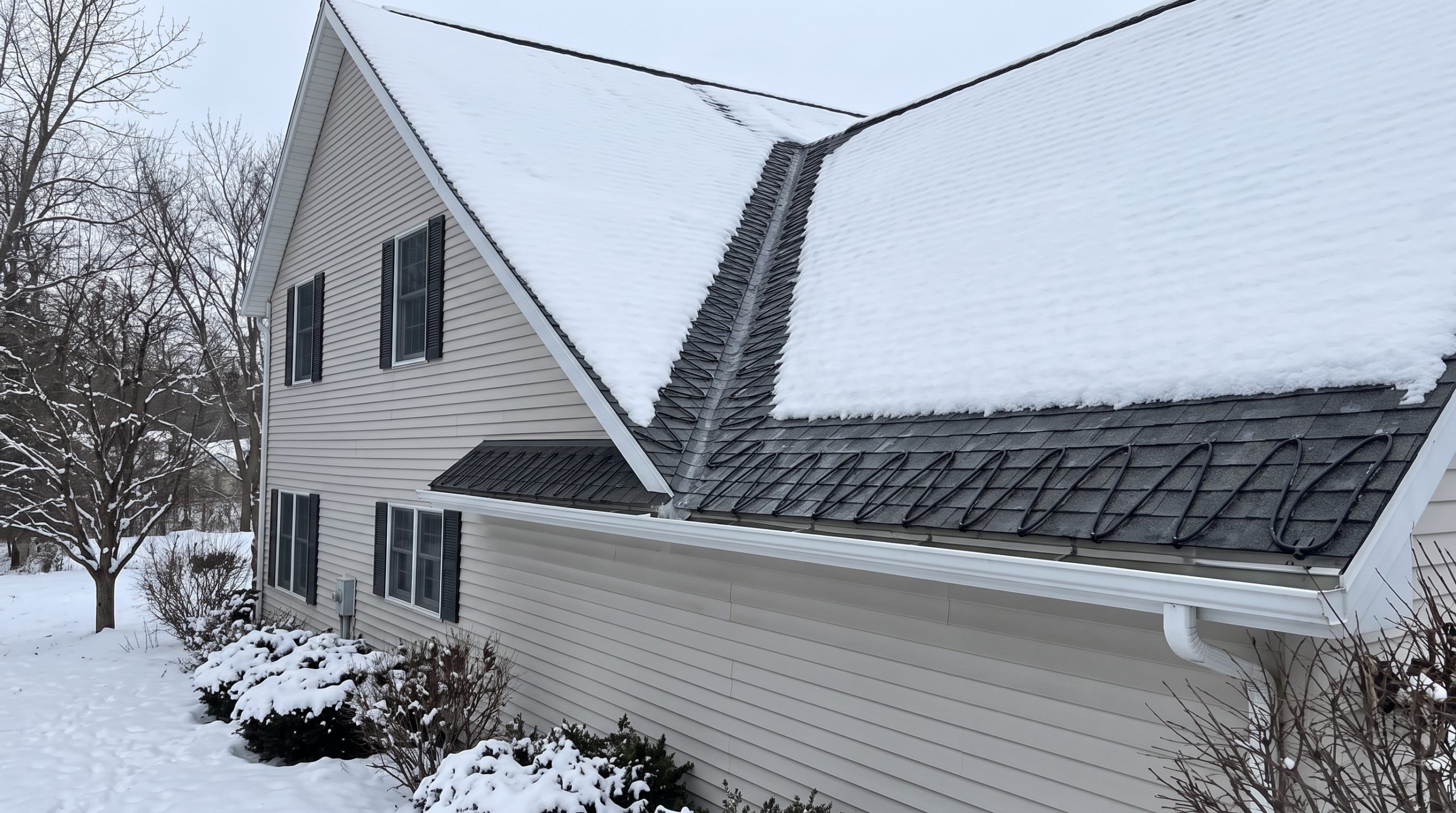
High-country Idaho codes typically call for extended ice barrier and, on metal roofing, snow guards above any door, walkway or parking area. Both exist because of what comes off these roofs.
The Eagle Dispatch Process, Step by Step
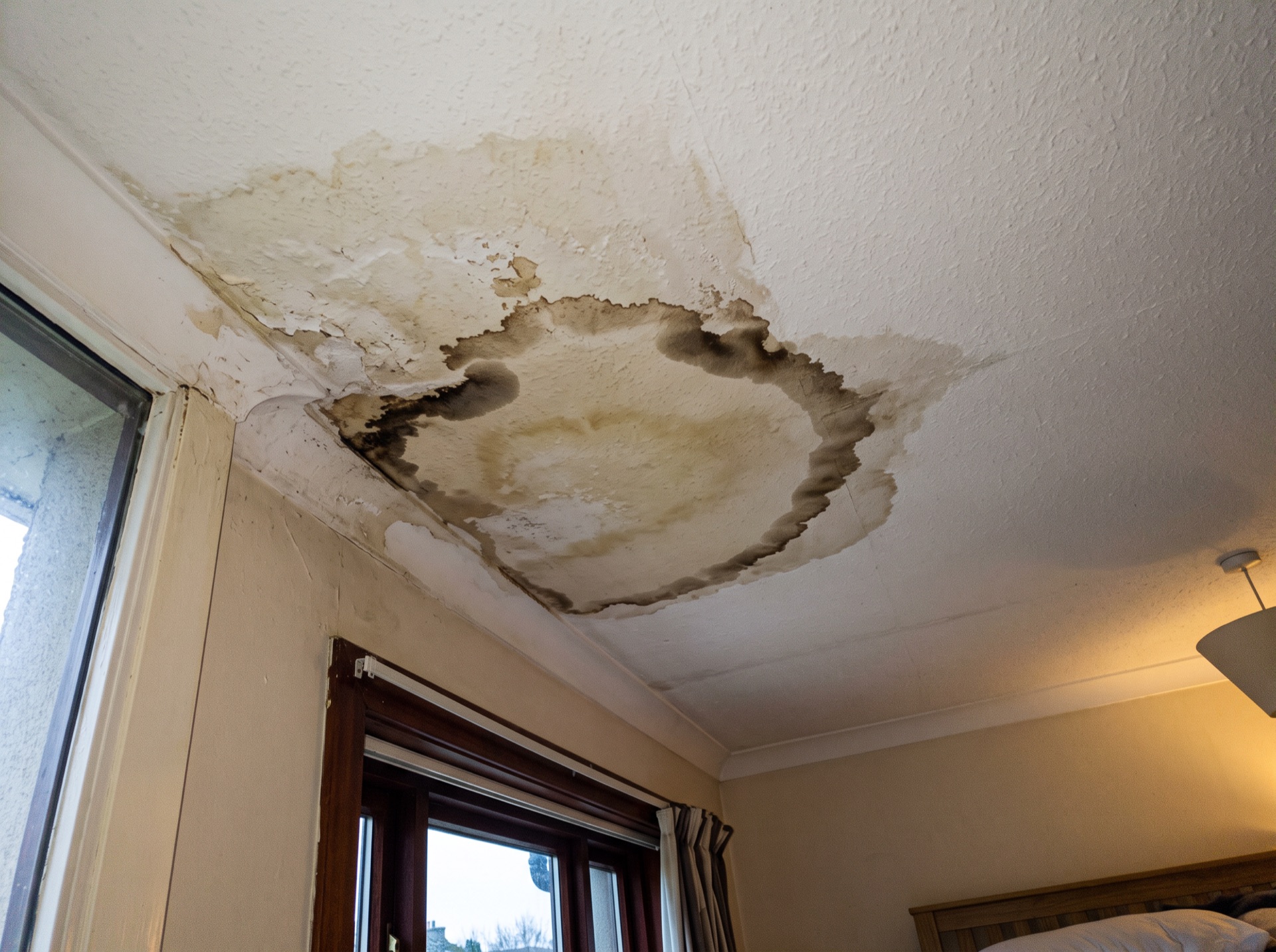
The first pass is assessment: eaves, valleys, gutter line and any interior staining, all photographed with timestamps. You see what the crew sees, and the rate and likely hours are agreed before work begins.
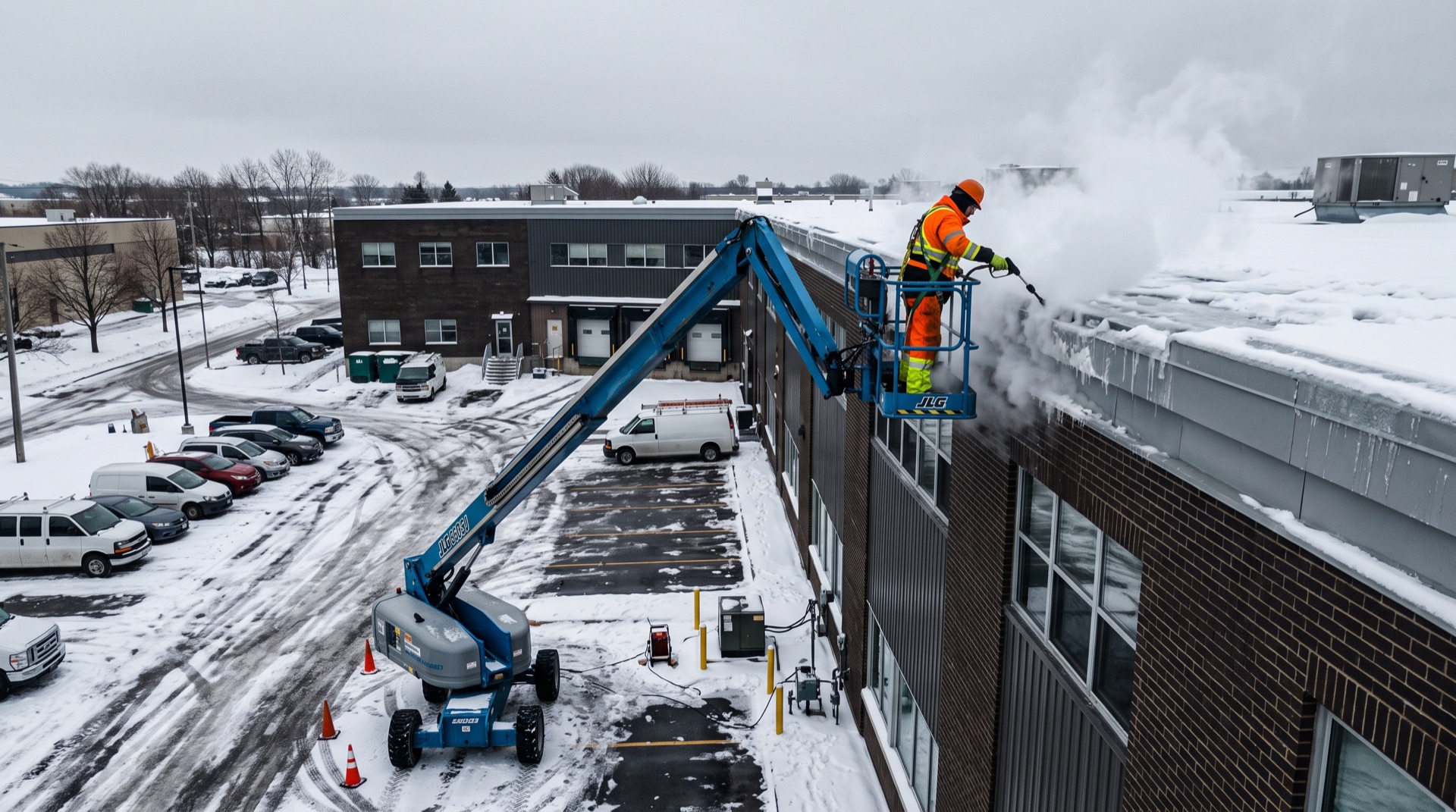
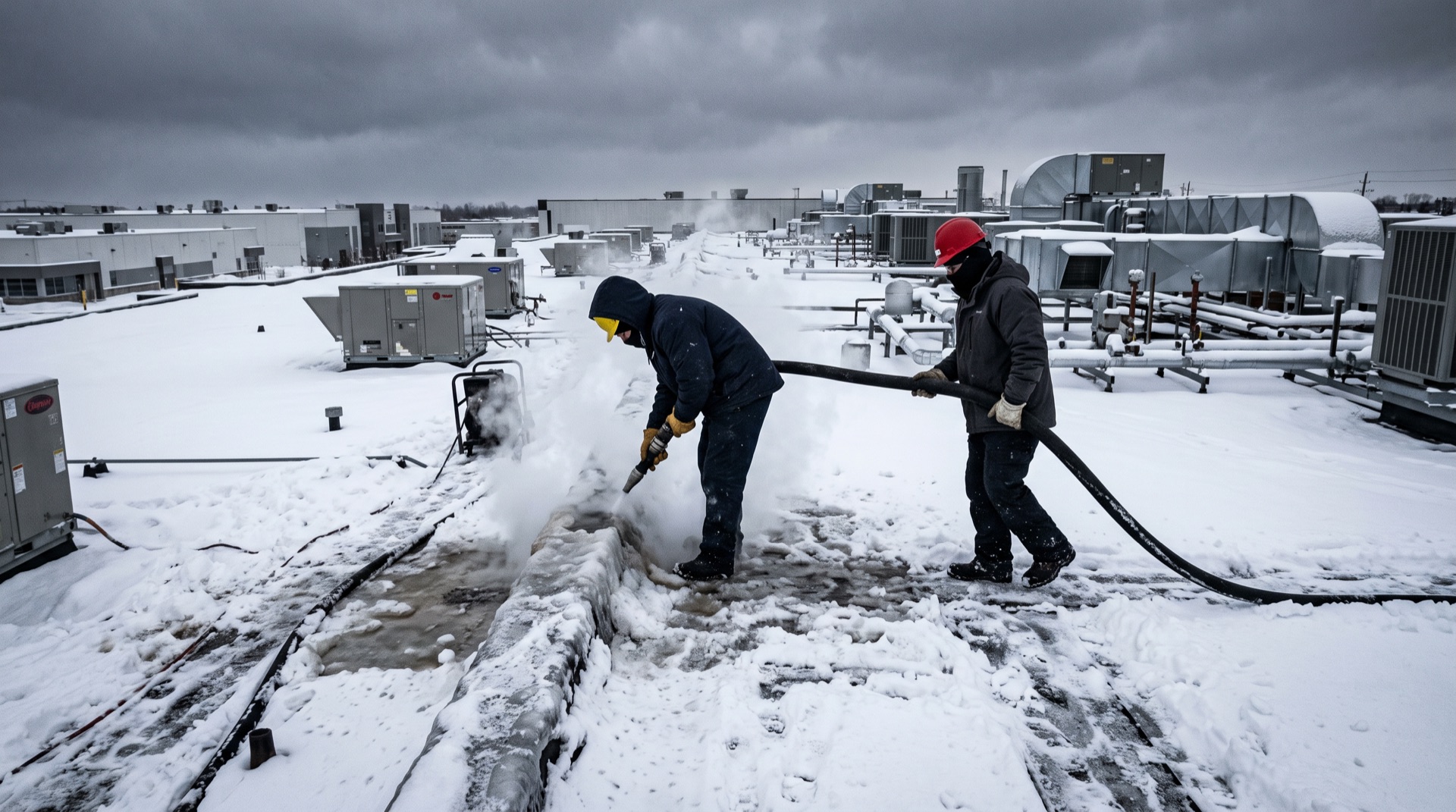
Steam then takes the dam off in sections, prioritizing wherever water is actively backing up behind it. The gutter trough and downspout are cleared through to daylight on the same visit, because a clear eave over a frozen gutter is a temporary fix.
Why a drainage channel is not removal
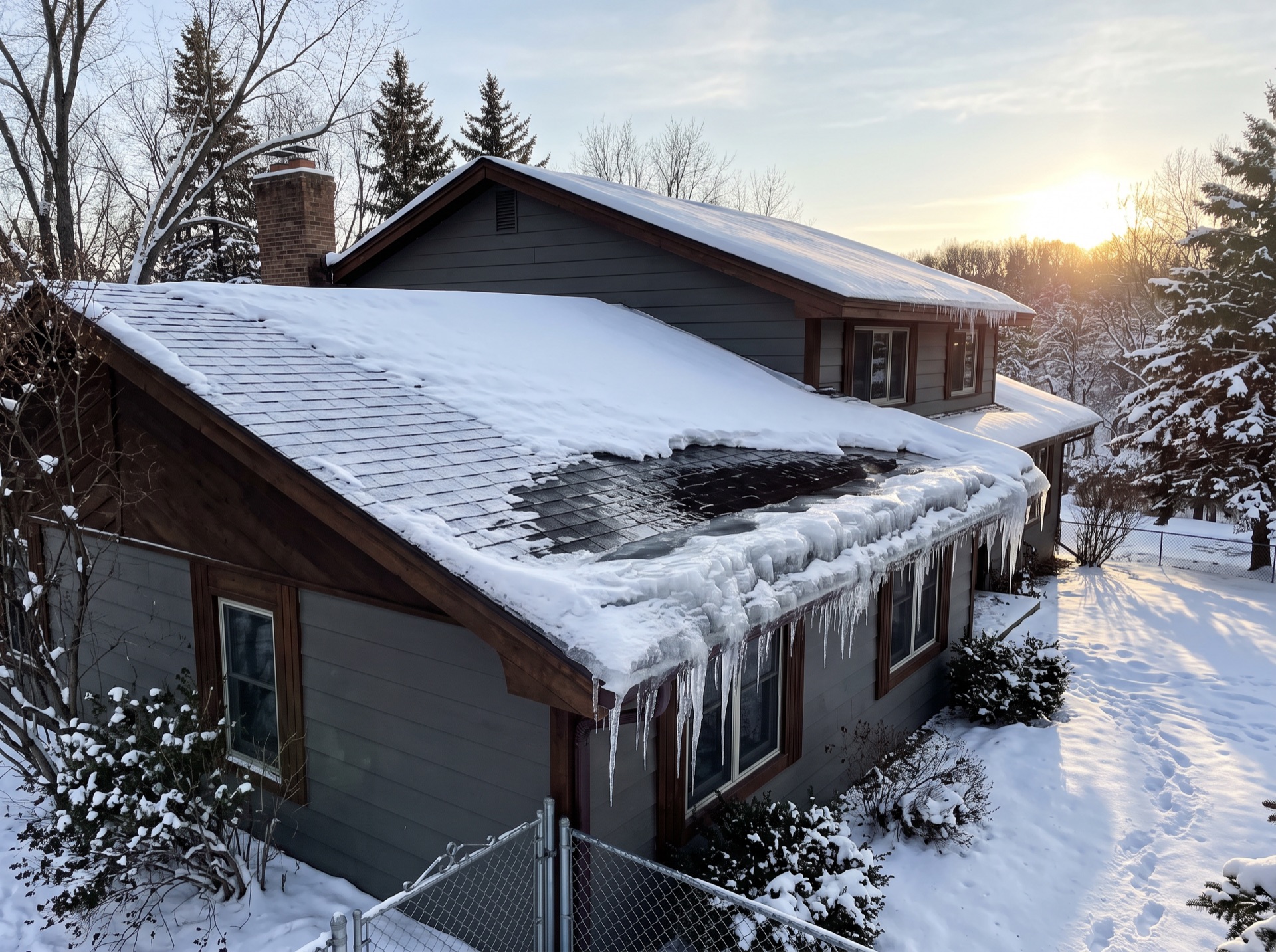
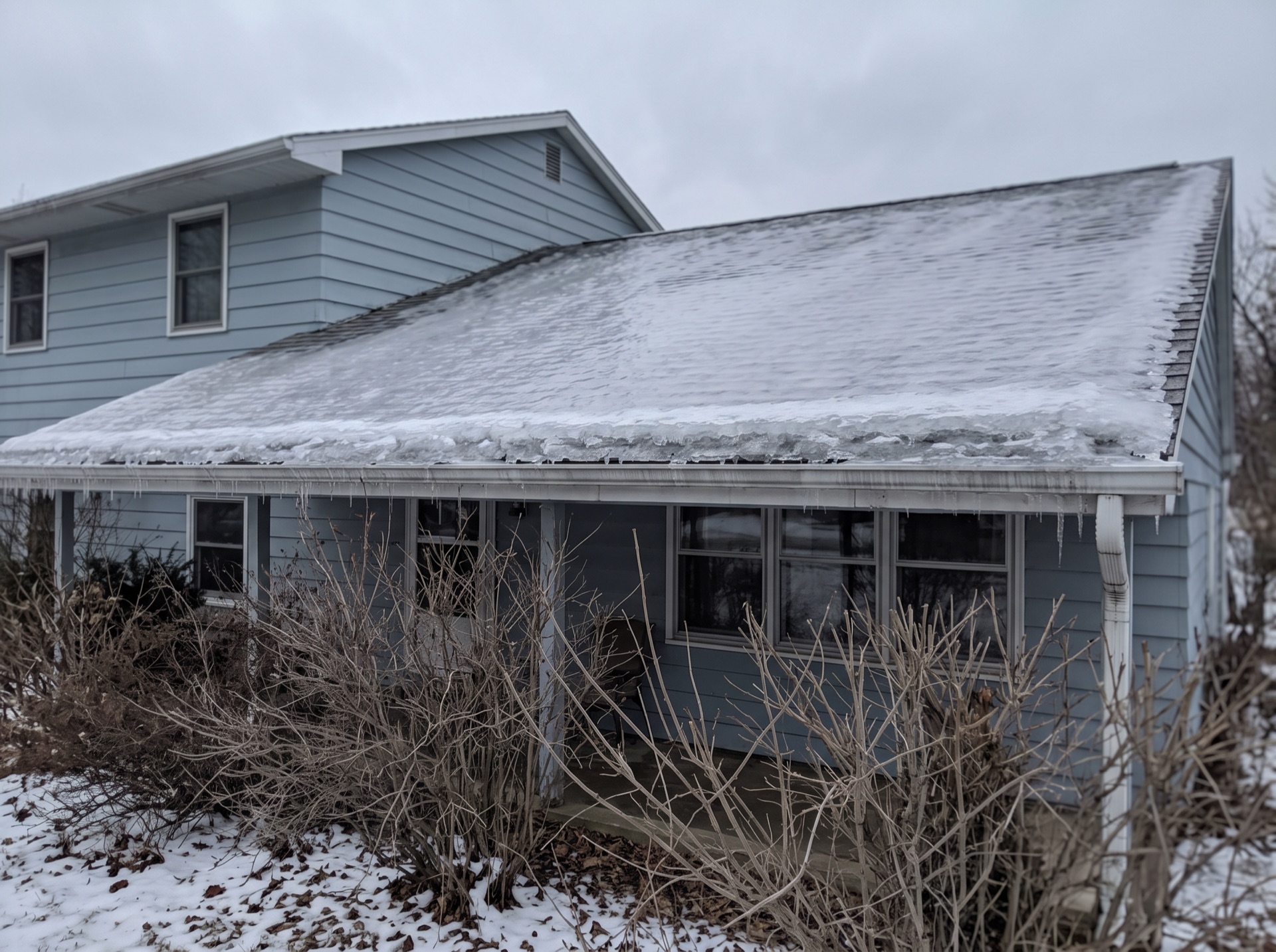
Cutting a few channels through a dam so water can get past is quick and it is sometimes sold as ice dam removal. It drains the roof for as long as the channels stay open, which in an Eagle cold snap can be a single night before they close again.
Removing the dam means taking the ice off down to the shingle along the whole affected run, so the eave can drain the way it was built to. It takes longer and it is the only version that holds.
How long a removal actually takes
A single-story eave with a thin dam and clear gutters is often an hour or two. A two-story Eagle house with ice standing a foot deep across the front, frozen downspouts and a valley packed solid is most of a day for a two-man crew. The honest answer on the phone is a range and the reason for it, not a number designed to win the booking.
The estimate is revised out loud if the roof turns out worse than it looked from the ground, before the extra hours are worked rather than after they appear on the invoice.
Working at night and during an active storm
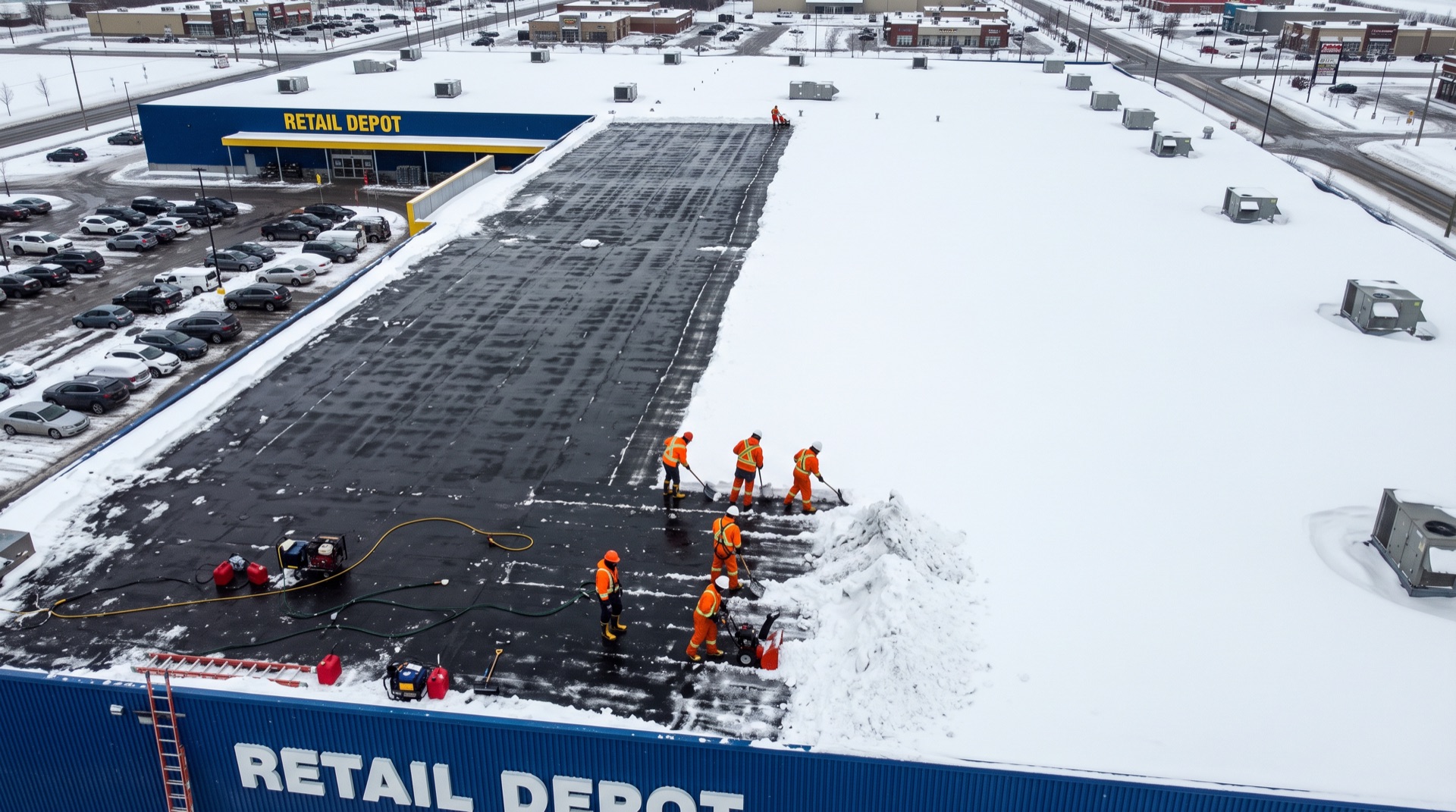
Freeze events do not keep office hours, and the worst leaks tend to announce themselves in the evening when the day's melt refreezes. Crews run lit, and a roof that is actively collecting snow is worked anyway, because waiting for better weather means the dam is bigger when somebody finally gets to it.
What does stop a crew is wind and lightning. Both are judgment calls made on site in Eagle, and a postponed start gets explained rather than dressed up.
| Dispatch window | 24 to 48 hours in mountain terrain |
|---|---|
| Primary climate stressor | Solar melt on deep pack, shaded eaves |
| Service | Ice dam removal in Eagle, ID |
| Typical scope | Steam, 8-16 crew hours typical |
| Coverage area | Eagle and Ada County |
| Documentation | Dated before and after photos, written scope in Xactimate line items |
| Local ice-barrier practice | Extended membrane plus snow retention |
Neighborhoods and Towns We Reach From Eagle
Crews working Eagle cover the adjoining communities on the same route — Garden City, Star and Middleton — so a storm week usually means one truck handling several addresses in Ada County rather than separate trips.
Nearest hub towns with their own crew pages: Meridian, Boise, Nampa, Kuna, Caldwell, Mountain Home.
Eagle sits inside the regular Idaho service area, so a crew is usually scheduled the same day or the following morning.
Water coming in right now in Eagle? Call (888) 561-9664. Active interior leaks go to the front of the schedule.