If you are in Kodiak watching icicles grow along the gutter line, what you are really watching is water that no longer has anywhere to drain. As part of our complete Kodiak winter roof services, crews handle heated roof & gutter cables across Kodiak Island County.
Kodiak Ice Dams: Melting on Days It Never Thaws
The pack at this elevation is deep enough to act as its own insulation, which means the surface melts under sun while the base stays locked. Water released at the top has to travel through and under all of it.

That is why mountain roofs dam up on clear, cold weeks that look harmless. South and west faces melt, north-facing eaves and shaded valleys hold the ice, and the pack above keeps feeding it.
Ice-barrier practice in Kodiak Island County
Snow retention above doors, walkways and parking is a requirement in most Kodiak Island County jurisdictions for good reason: a release off a metal mountain roof is a serious event, not an inconvenience.
Heated Roof & Gutter Cables in Kodiak: How The Work Runs
What happens when a section stops working
A dead run is usually one of four things: a tripped ground fault, a failed controller or sensor, physical damage at a specific point, or a connection at the end seal that has let water in. Icicles and a Wet Ceiling.
They are diagnosed with a meter rather than by replacing the whole run. Self-regulating cable can generally be repaired in place with a proper splice kit, so a single damaged section does not mean a new system.
What heat trace does and does not do
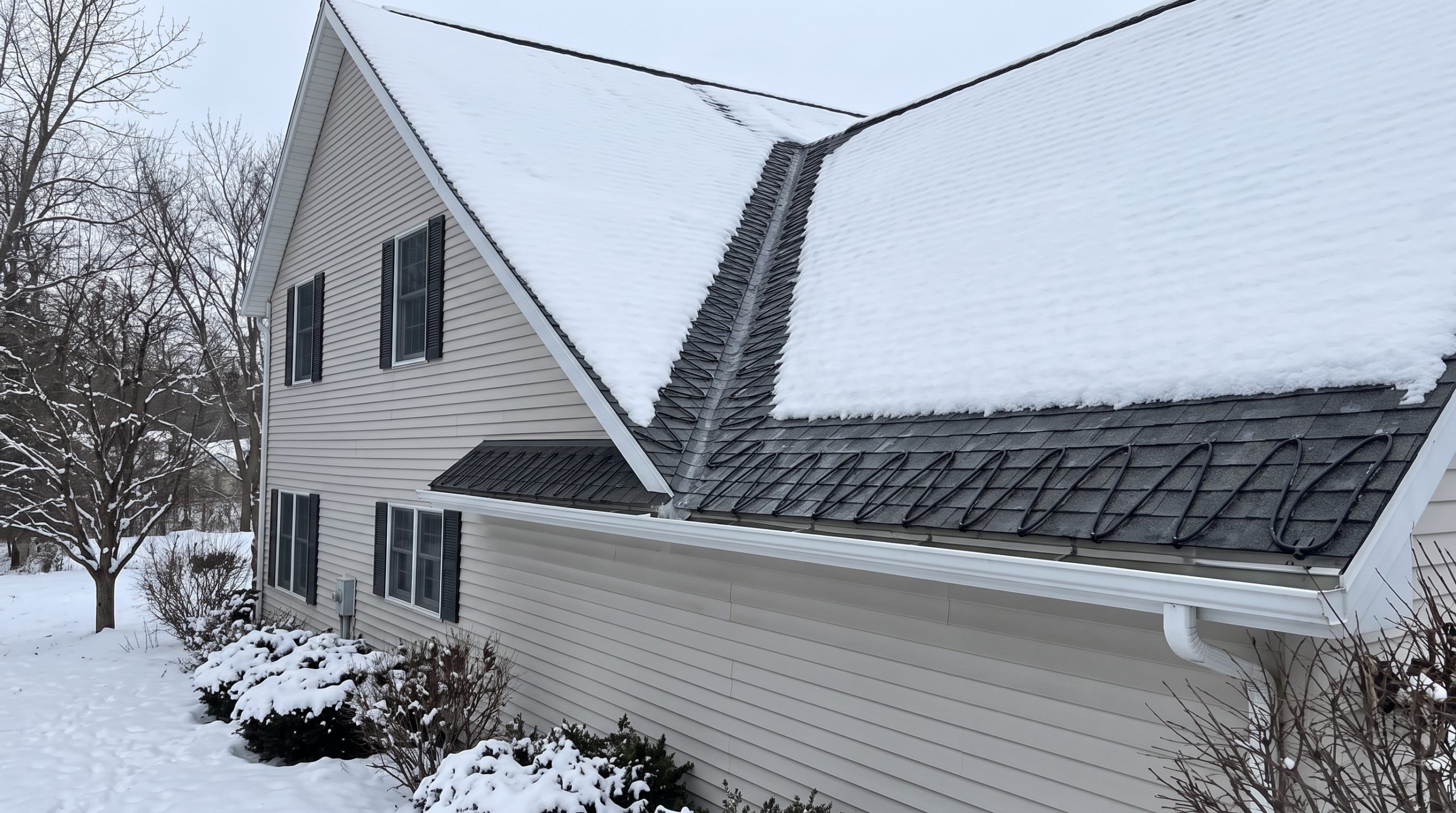
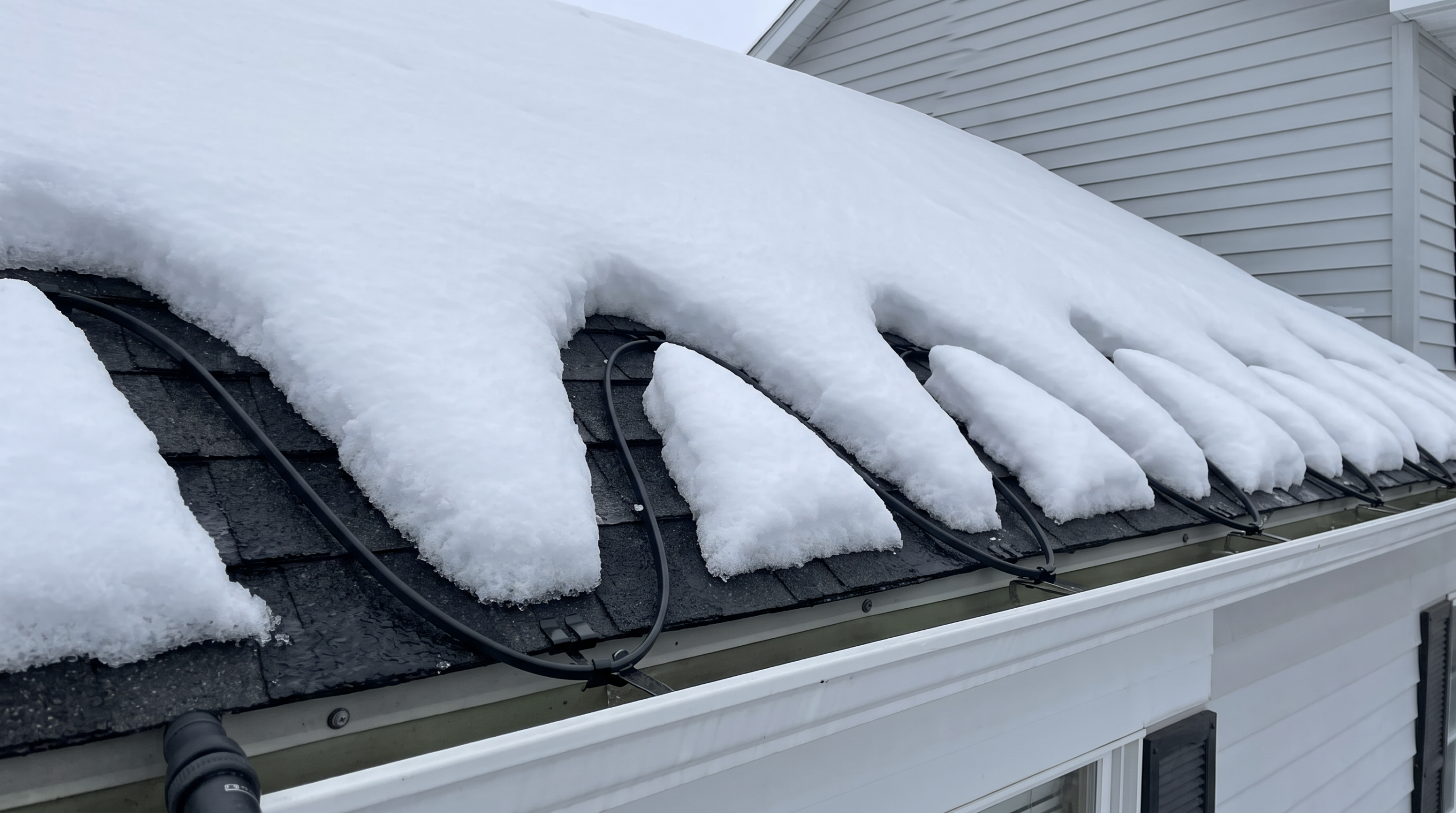
A properly designed system keeps a continuous drainage channel open from the roof surface through the gutter and down the leader to the ground. Meltwater that would have refrozen at the cold eave instead keeps running. It does not melt the snow off your roof, and it will not remove a dam that has already formed — it prevents the dam from establishing in the first place.
That distinction matters when comparing quotes. Anyone selling cable as an emergency fix for an existing dam is selling the wrong product.
Valleys, downspouts and the parts people forget
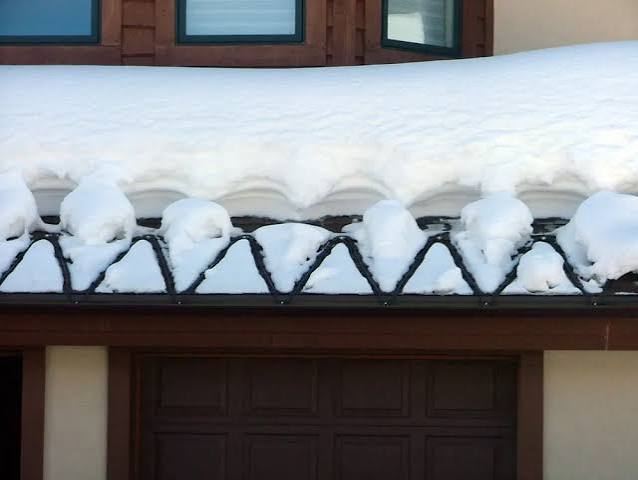
A zig-zag along the eave with nothing in the valley and nothing down the downspout produces a melted strip of roof draining into a solid block of ice. The water still has nowhere to go, and the dam just forms somewhere slightly different.
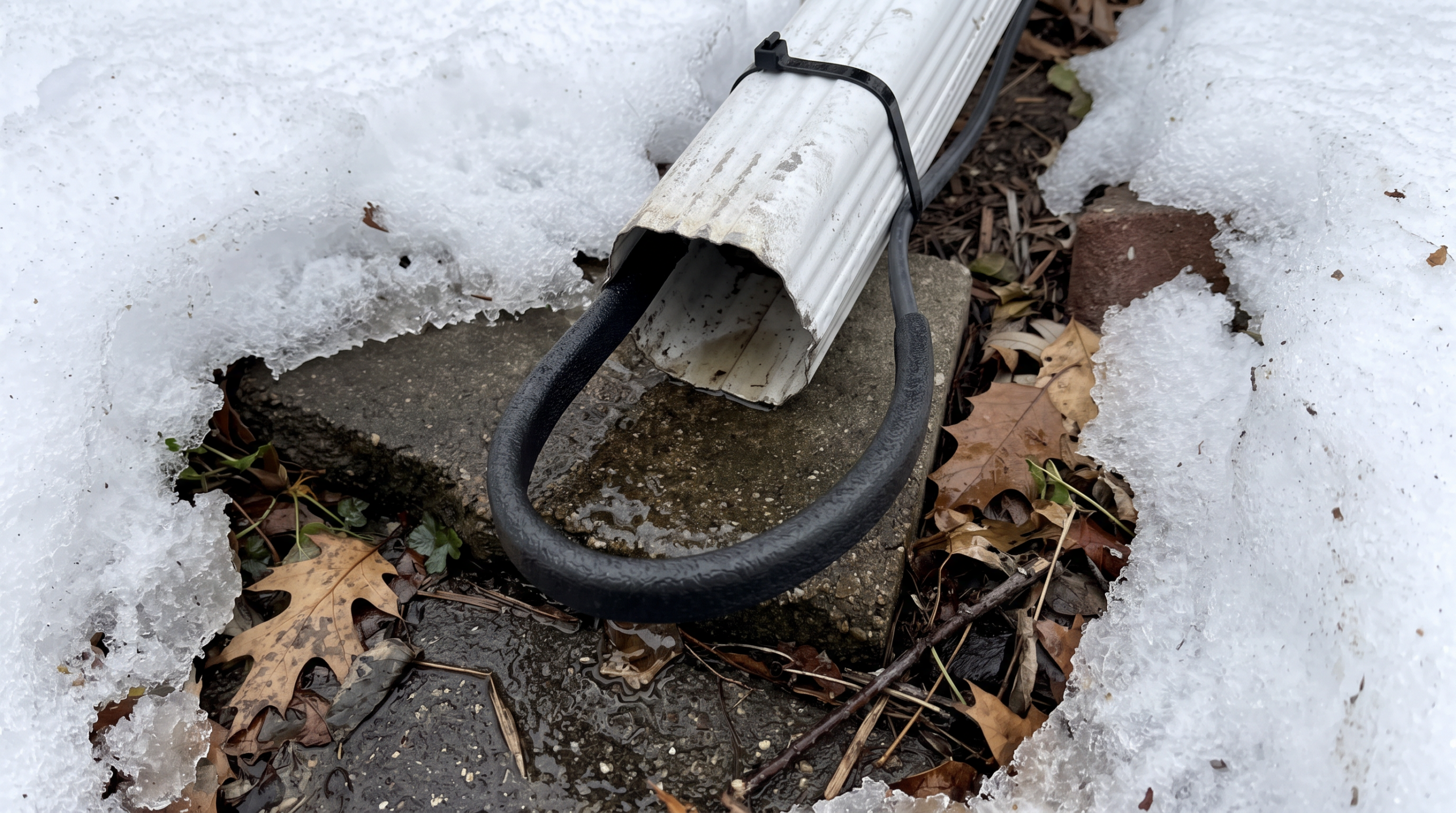
A system that works runs the full path: eave, valley, gutter trough and all the way down the downspout to daylight. The downspout run is the piece most often left out and the piece most often responsible for the system not working.
Controls decide the running cost
A cable on a plain thermostat runs through every dry cold snap, which is most of the winter and none of the risk. A combined temperature and moisture sensor runs it only when there is both cold and water present.
On a Kodiak winter that difference is most of the operating cost, and the controller pays for itself quickly.
What shortens the life of a cable run
Self-regulating cable is generally good for a decade or more. What ends it early is ultraviolet exposure on a run left unshaded through summer, physical damage from somebody raking or shovelling over it, rodents in the gutter, and ice loading on clips that were never rated for it.
A system installed with UV-stable cable, proper clips and a note on the roof plan saying where it runs will usually outlast one that was simply stapled up in a hurry.
What you get in Kodiak
- Zig-zag sized properlyEave coverage measured against the actual cold overhang
- No fasteners through the roofClips and standoffs only, nothing driven through the covering
- Smart controlsThermostat and moisture sensing so it runs on the conditions that make ice
| Documentation | Dated before and after photos, written scope in Xactimate line items |
|---|---|
| Pricing model | Billed by the crew hour, rate quoted before dispatch |
| Primary climate stressor | Solar melt on deep pack, shaded eaves |
| Service | Heated Roof & Gutter Cables in Kodiak, AK |
| Typical scope | Steam, 8-16 crew hours typical |
| Local ice-barrier practice | Extended membrane plus snow retention |
| Dispatch window | 24 to 48 hours in mountain terrain |
Kodiak Coverage and the Adjoining Communities
Crews working Kodiak cover the adjoining communities on the same route — Ouzinkie — so a storm week usually means one truck handling several addresses in Kodiak Island County rather than separate trips.
Nearest hub towns with their own heat cables pages: Homer, Soldotna, Kenai, Girdwood, Anchorage, Wasilla.
Kodiak sits inside the regular Alaska service area, so a crew is usually scheduled the same day or the following morning.
Most jobs do not stop at one service. Heat Cables in Kodiak often runs alongside ice dam removal in Kodiak, and both get written into one scope rather than billed as separate visits.
Active leak right now? Our 24/7 Kodiak steam ice dam removal crews are dispatched first during a freeze event. Call (888) 561-9664.