



Why Sun Prairie Roofs Dam Up: Lake-Effect Load and Freeze-Thaw
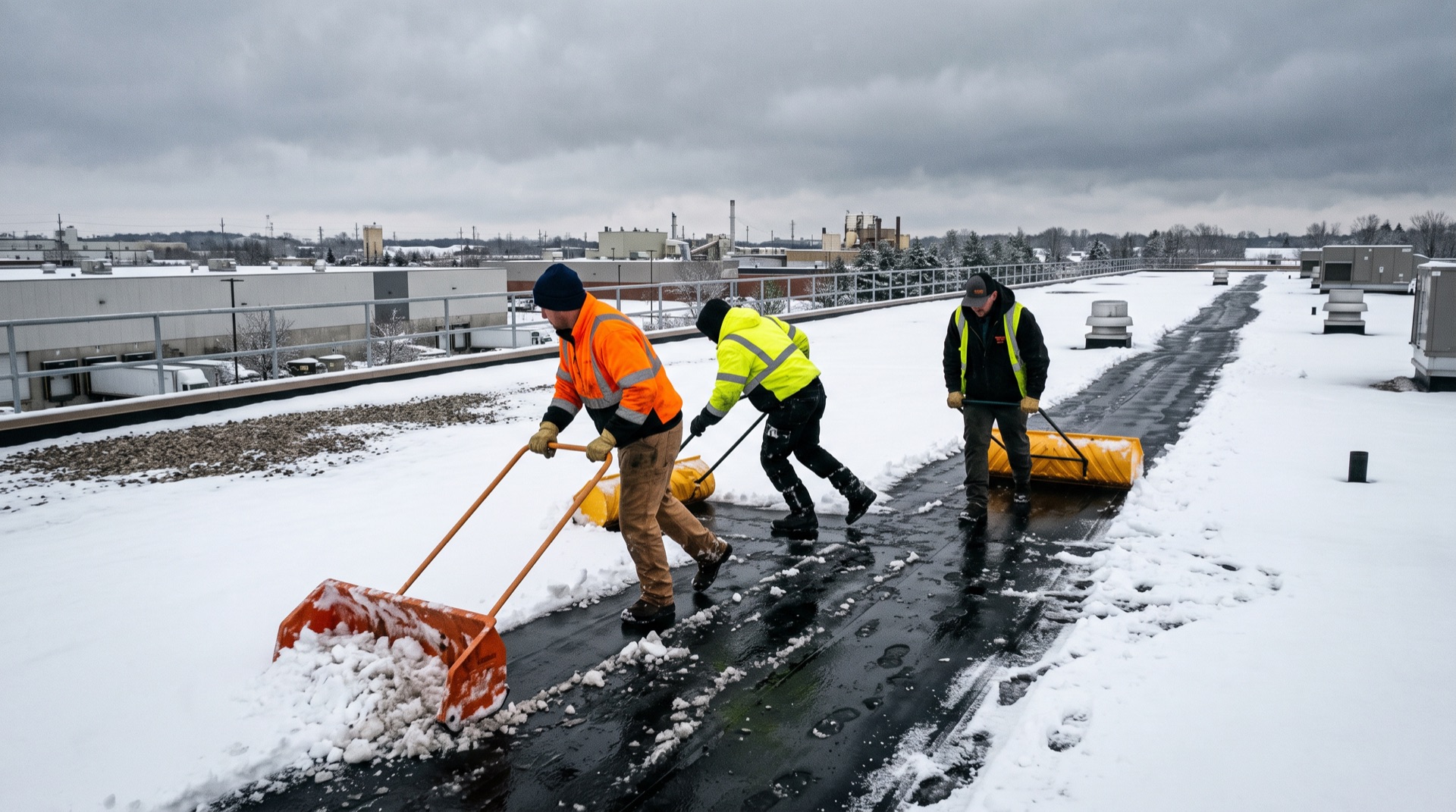
What makes Dane County roofs dam is not the seasonal total, it is how the snow arrives. Bands dump a heavy, saturated pack in hours, and that pack becomes a water reservoir sitting on a heated surface.

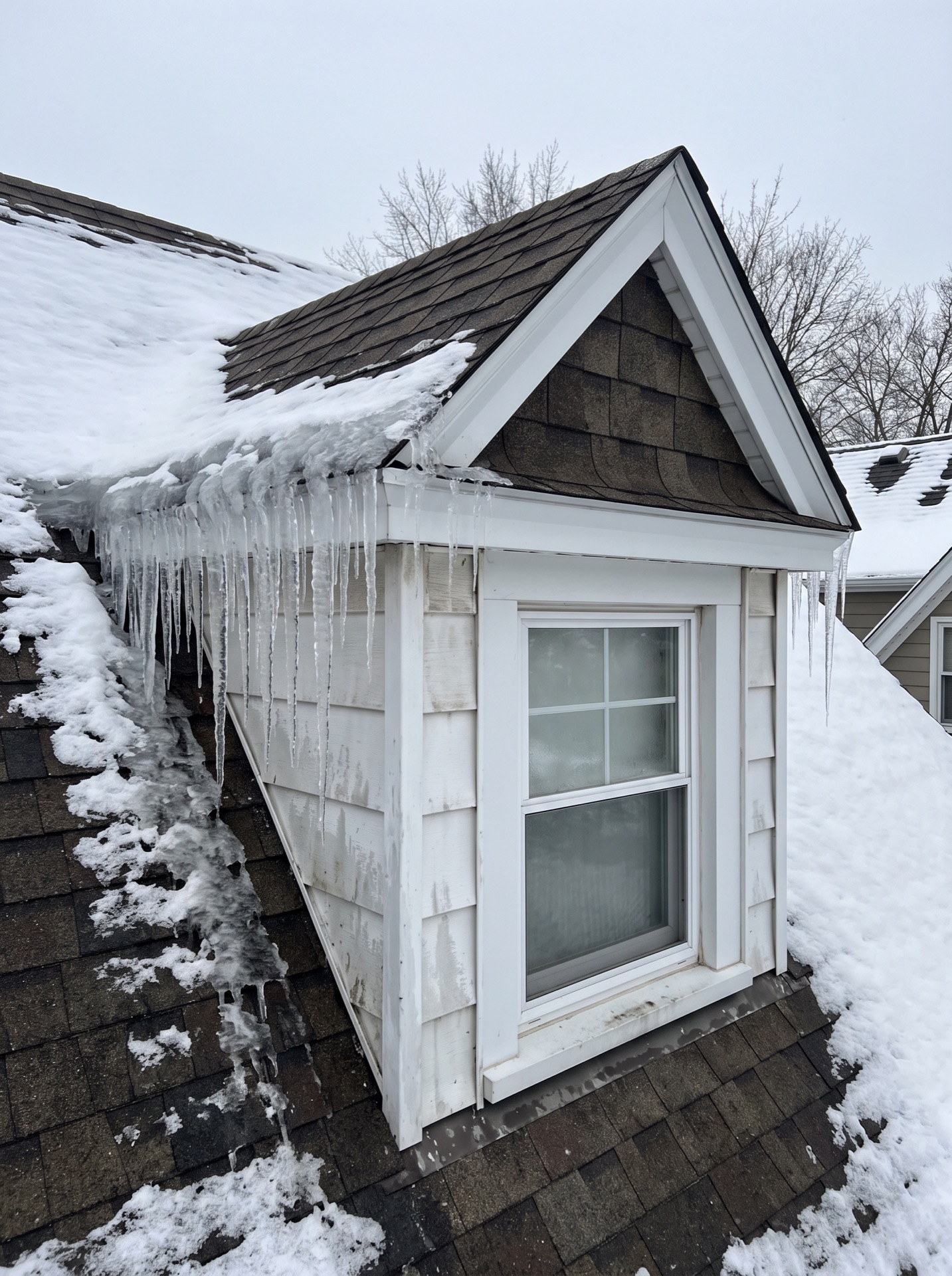
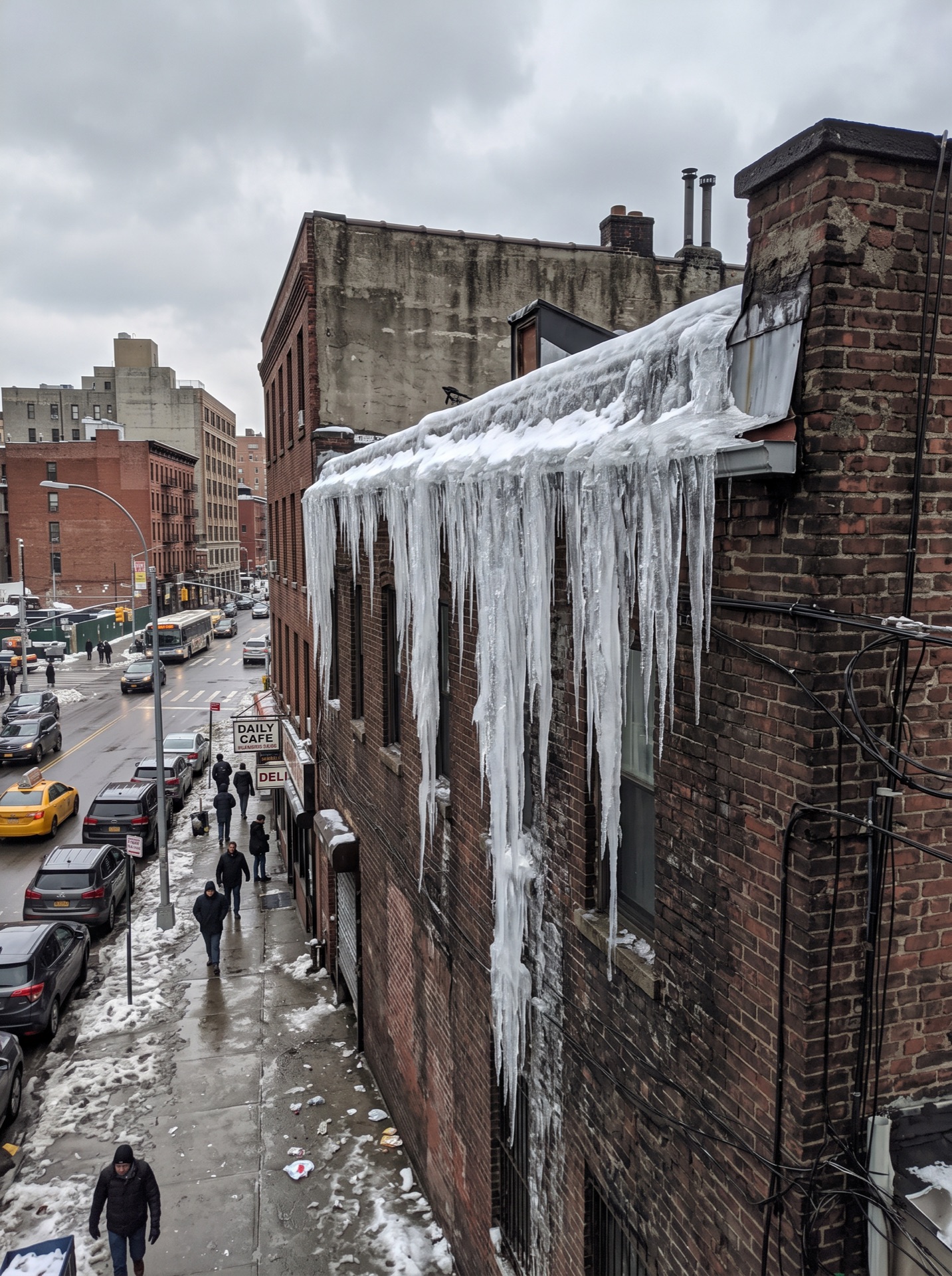
Each band is followed by a clearance and a cold night, and that is the cycle doing the damage. Meltwater released during the day sets at the eave after dark, and the ridge at the gutter line gains a layer every time.
Ice-barrier practice in Dane County
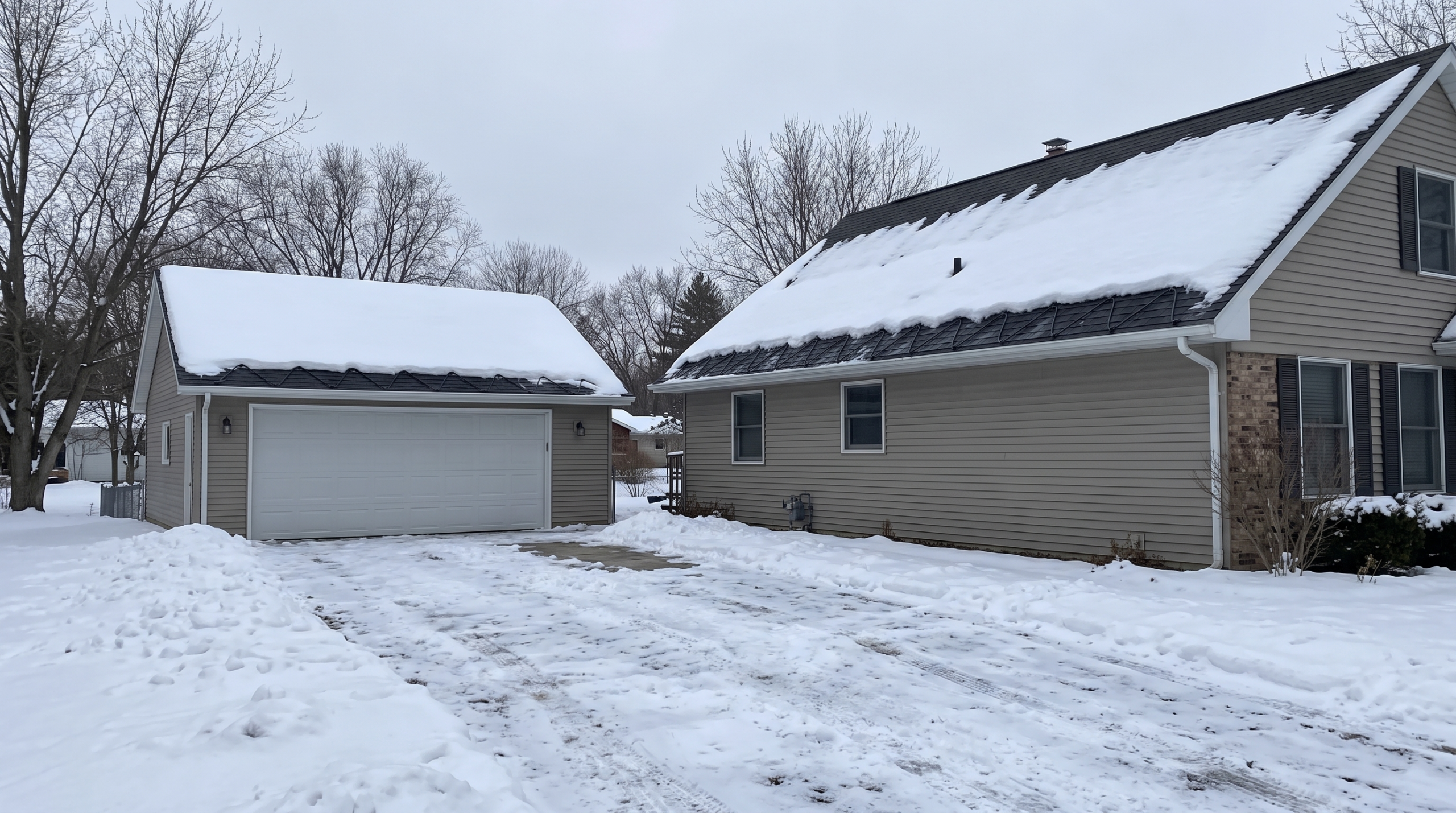
Lake-belt jurisdictions in Wisconsin have enforced eave membrane on re-roof permits for a long time. The roofs that leak are, almost without exception, the ones that have not been touched since before that.
How We Work a Sun Prairie Ice Dam
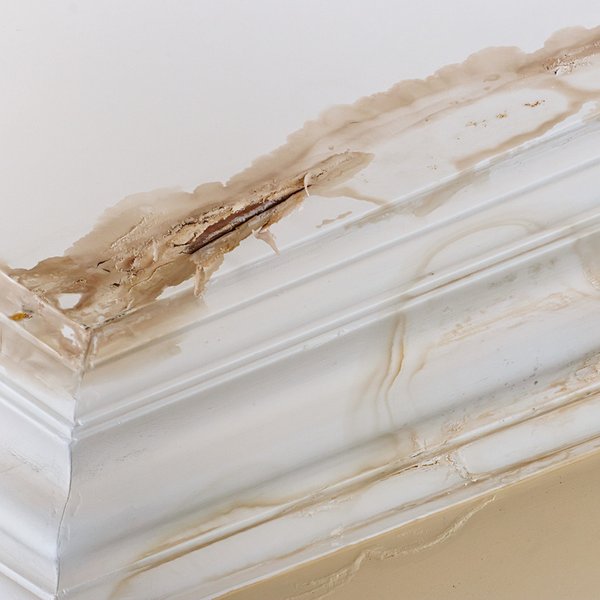
Crews walk the eaves, valleys and gutter line first and photograph every dam and every point where water is tracking inside, before touching anything. You get shown what they found and quoted the crew-hour rate before work starts.
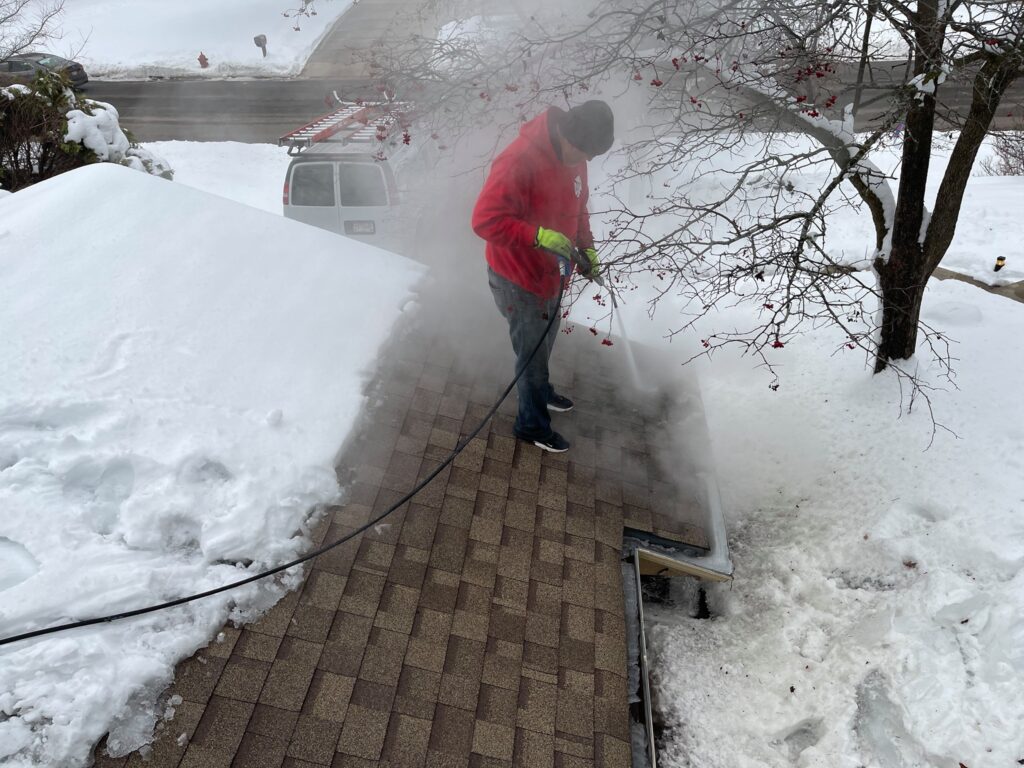
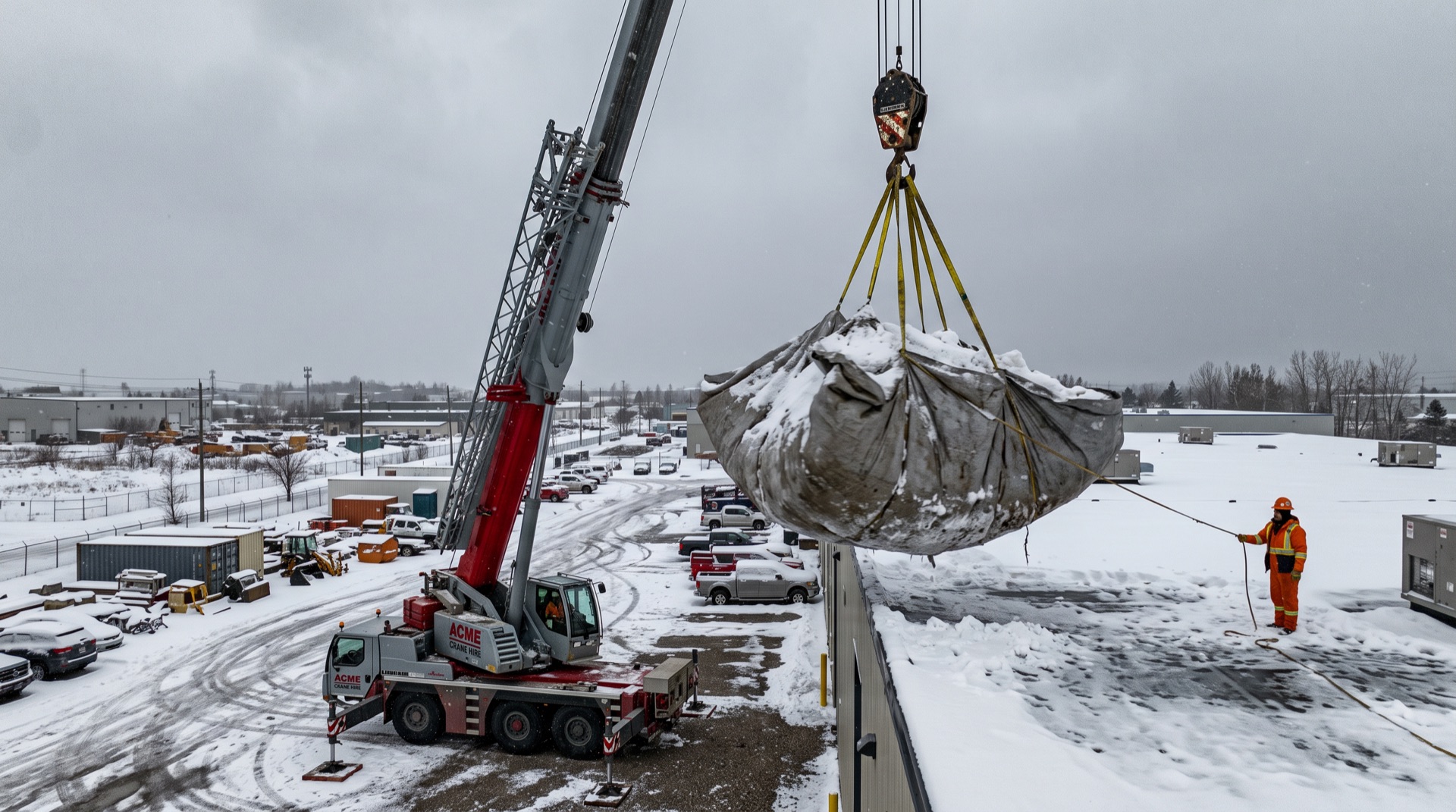
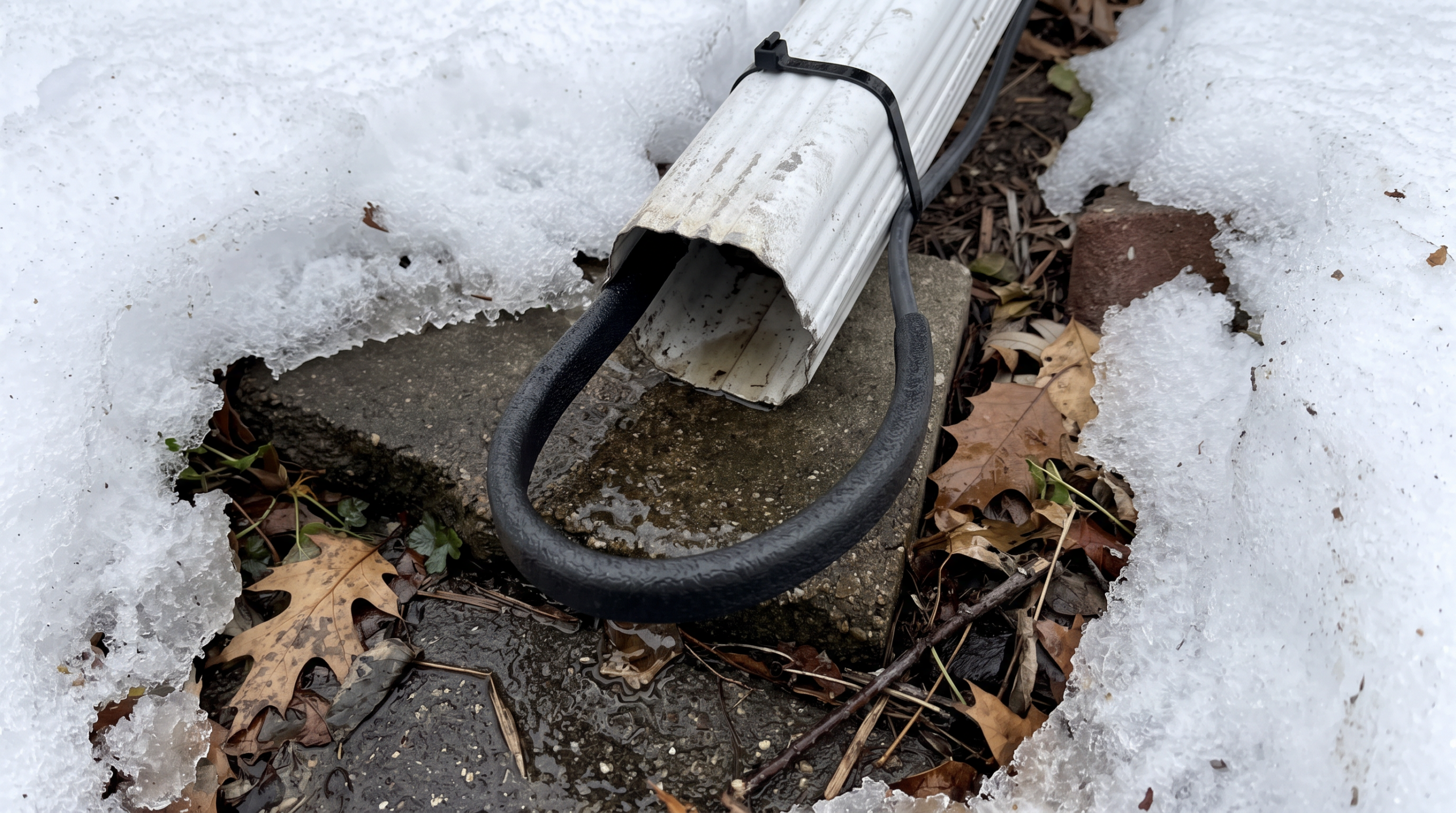
Then the ice comes off with low-pressure steam, starting wherever water is actively backing up so drainage opens early. Frozen gutters and downspouts are cleared in the same visit, because a cleared eave above a solid block of ice in the gutter dams again on the next cold night.
What the dam has already done to the gutter and fascia
Ice expands as it forms, and a trough packed solid pushes the gutter away from the fascia a little more every cycle. By the time the dam is thick enough to leak, the hangers are often pulled, the back of the trough has lifted, and the fascia board behind it has been wet for weeks.
None of that is visible until the ice is off. It gets photographed when it appears, because a bent gutter found in February is a great deal easier to argue about with a carrier than one discovered in May.
Why the gutter has to be cleared in the same visit
A dam sitting above a gutter packed solid with ice is only half the problem. Clear the eave and leave the trough frozen, and the next day's meltwater has nowhere to run — it backs up onto the roof and the dam rebuilds from the bottom.
Crews steam the trough and the downspout through to daylight on the same visit. It adds time, which is why the hour estimate given on the phone accounts for it, and it is the difference between a fix and a repeat visit in Sun Prairie the following week.
What steam actually does
A steam unit delivers water at roughly 290°F at a pressure low enough to rest your hand in the plume. It cuts a channel straight through the ice and lifts the dam off in sections, right down to the shingle. The heat does the work, not force, so granules, seal strips and flashing come through untouched.
That is the whole difference between steam and the hot pressure washers often sold as steam. A pressure washer cuts ice fast because of its pressure — and that same pressure strips the granules off asphalt shingles and drives water up under the courses. One method removes ice. The other removes ice and roof.
| Service | Ice dam removal in Sun Prairie, WI |
|---|---|
| Coverage area | Sun Prairie and Dane County |
| Pricing model | Billed by the crew hour, rate quoted before dispatch |
| Typical scope | Steam, 6-12 crew hours typical |
| Dispatch window | Same day to 24 hours |
| Primary climate stressor | Lake-effect bands, wet heavy pack |
| Removal method | Low-pressure steam only. No chipping, salt or pressure washing. |
Dane County Coverage From Sun Prairie
Crews working Sun Prairie cover the adjoining communities on the same route — Windsor, De Forest, Cottage Grove, Marshall and Morrisonville — so a storm week usually means one truck handling several addresses in Dane County rather than separate trips.
Nearest hub towns with their own crew pages: Madison, Fitchburg, Watertown, Janesville, Beloit, Waukesha.
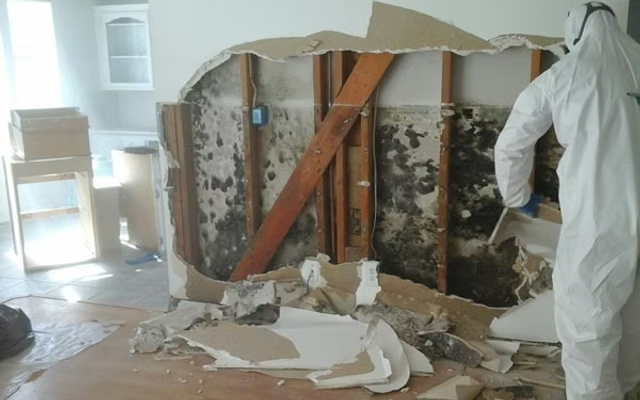
When a storm hits Dane County, crews are dispatched by severity rather than by call order — water already inside the house goes first.
Water through a ceiling in Sun Prairie is a same-day call, not a next-week one. (888) 561-9664 goes straight to dispatch.