


Why Greensburg Roofs Dam Up: Nor'easter Load and the Maritime Swing
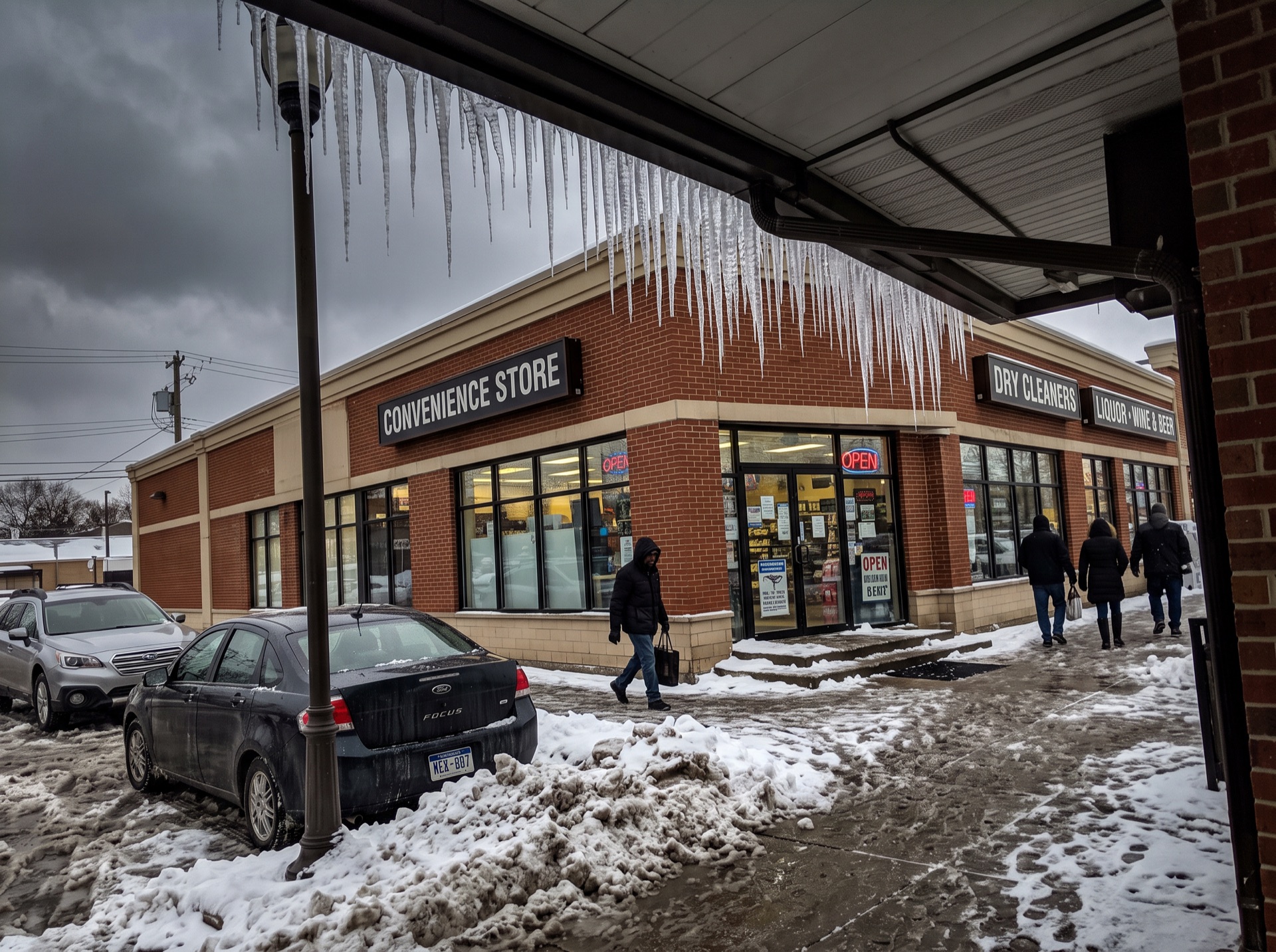
Westmoreland County gets the worst combination for ice: snow with high water content, followed by temperatures that oscillate rather than settle. The pack does not stay frozen and it does not drain.

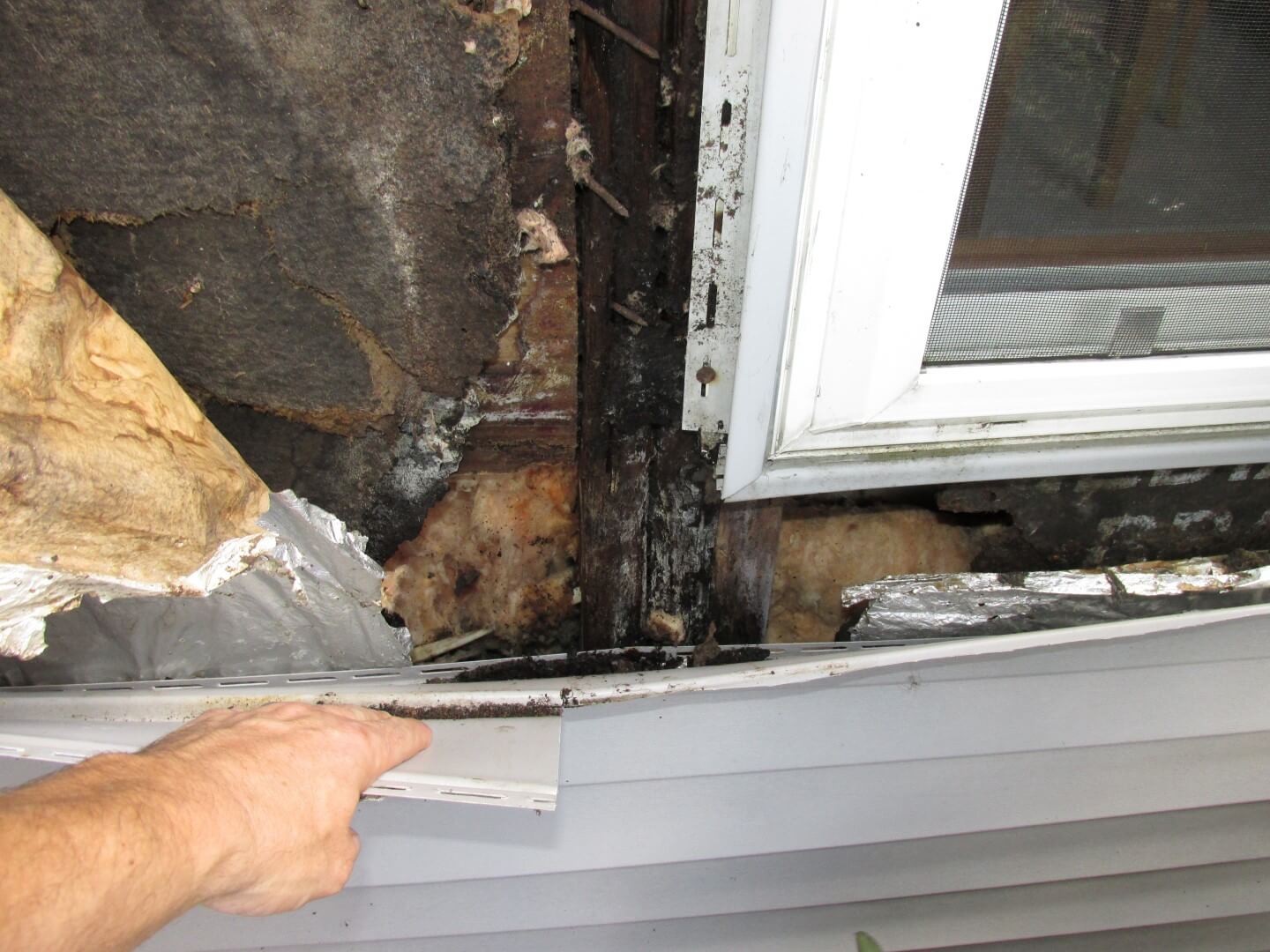
Retrofits often made it worse rather than better. Insulation laid on an attic floor without sealing the bypasses underneath it keeps the living space warm and sends the same warm air straight to the roof deck.
Ice-barrier practice in Westmoreland County
In most coastal Pennsylvania towns the eave membrane requirement extends past the interior wall line rather than stopping at the first course. On a roof in Greensburg with a deep overhang, that is further up than it sounds.
What a Crew Does on a Greensburg Roof
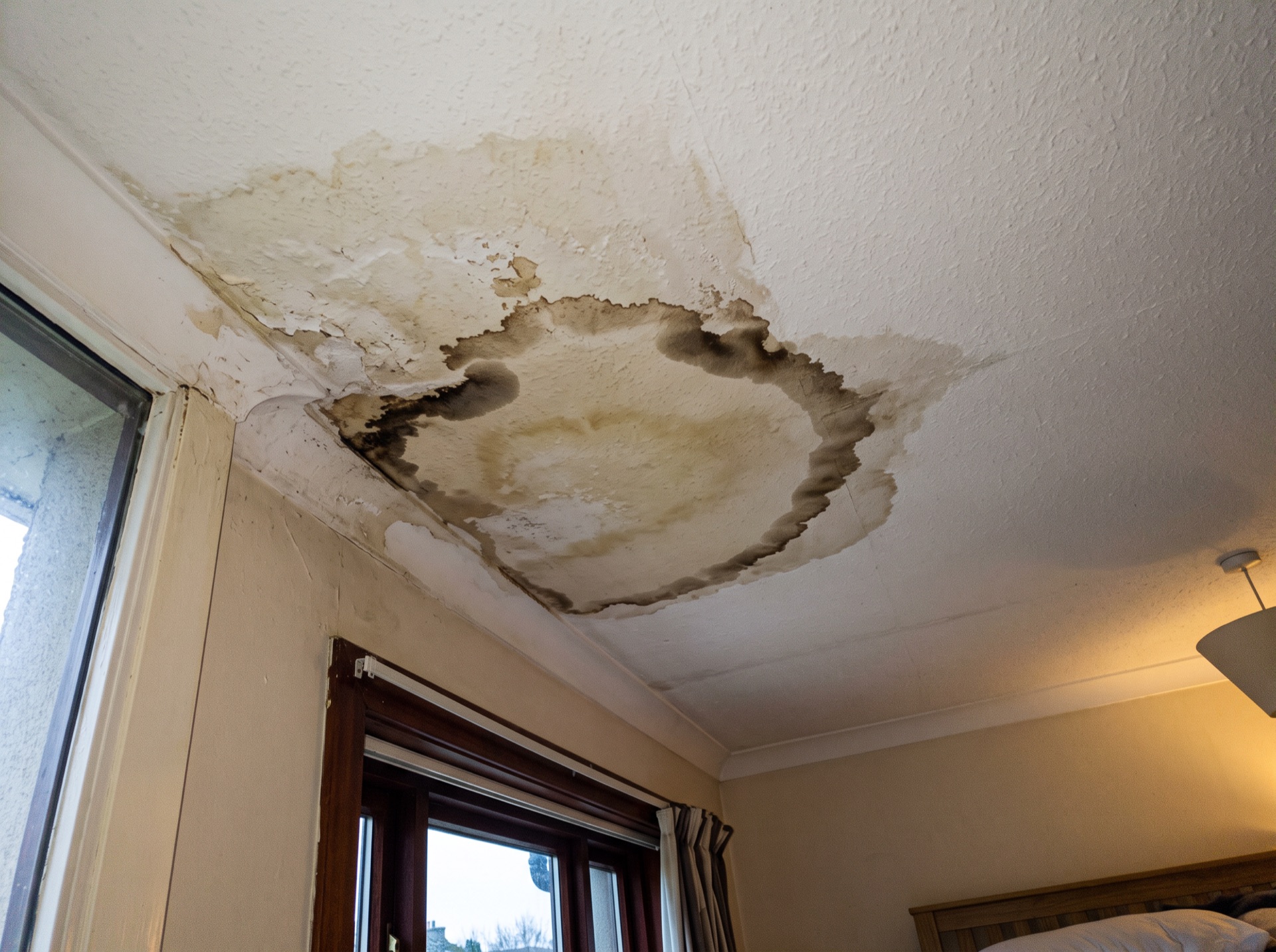
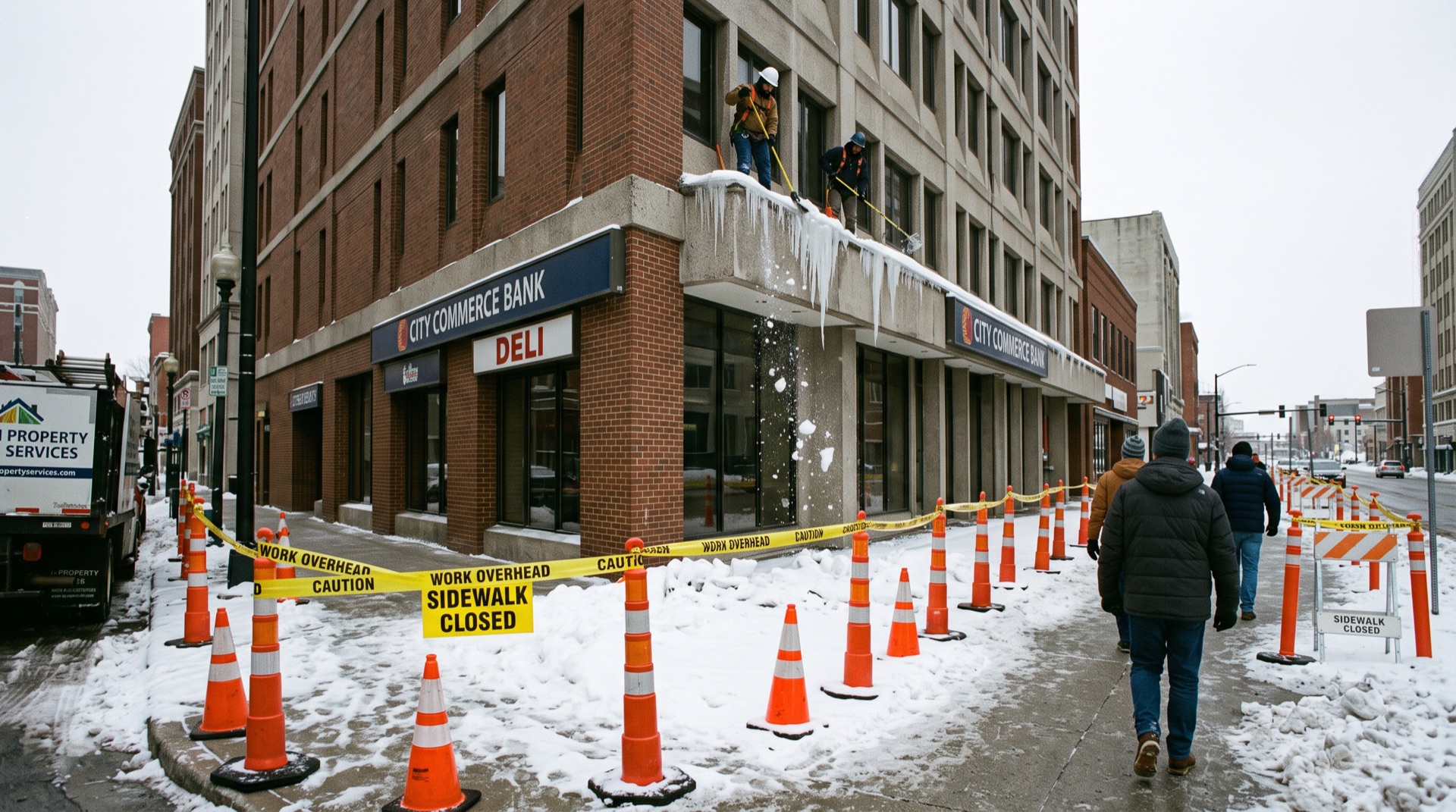
Crews walk the eaves, valleys and gutter line first and photograph every dam and every point where water is tracking inside, before touching anything. You get shown what they found and quoted the crew-hour rate before work starts.
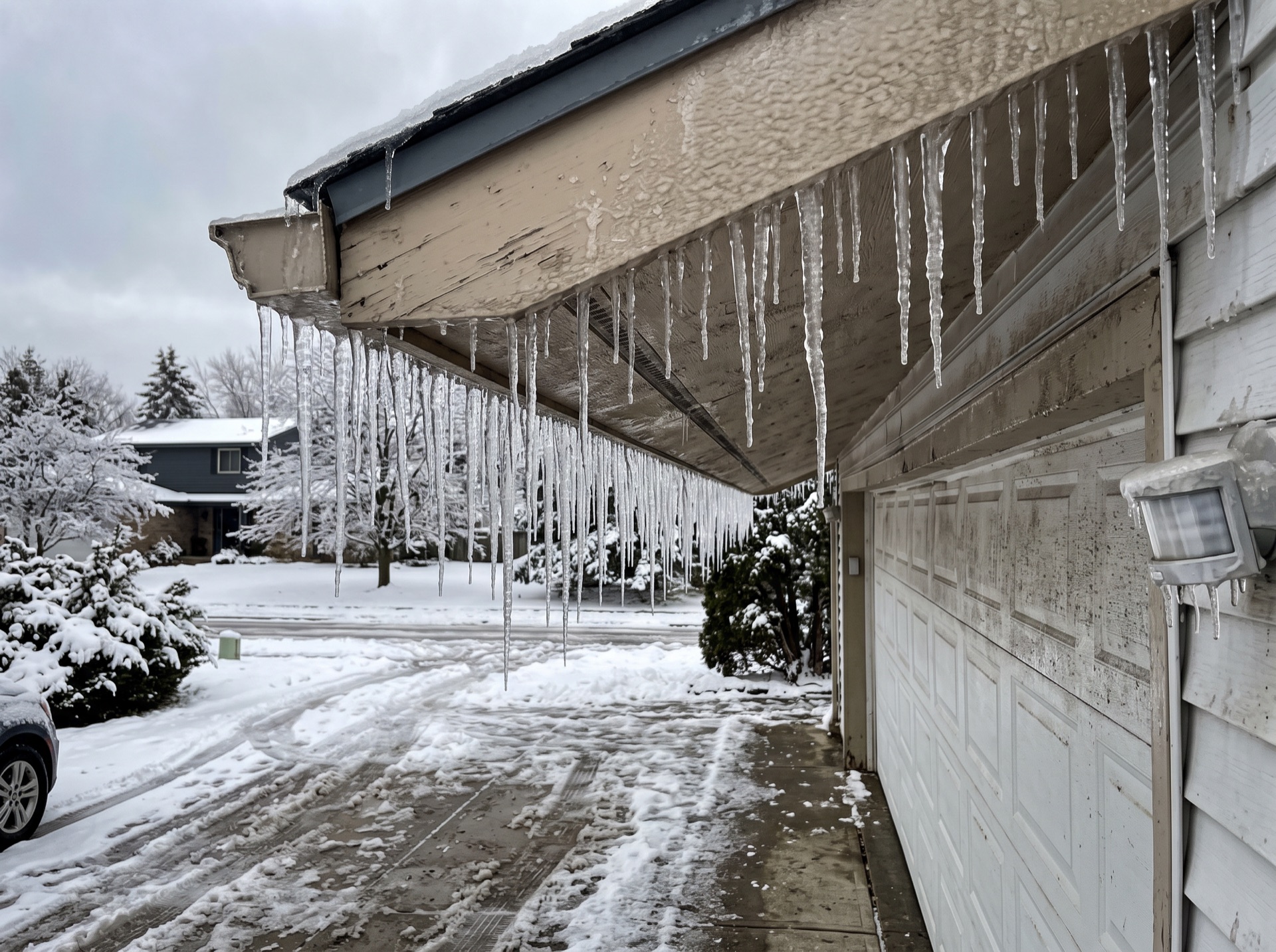
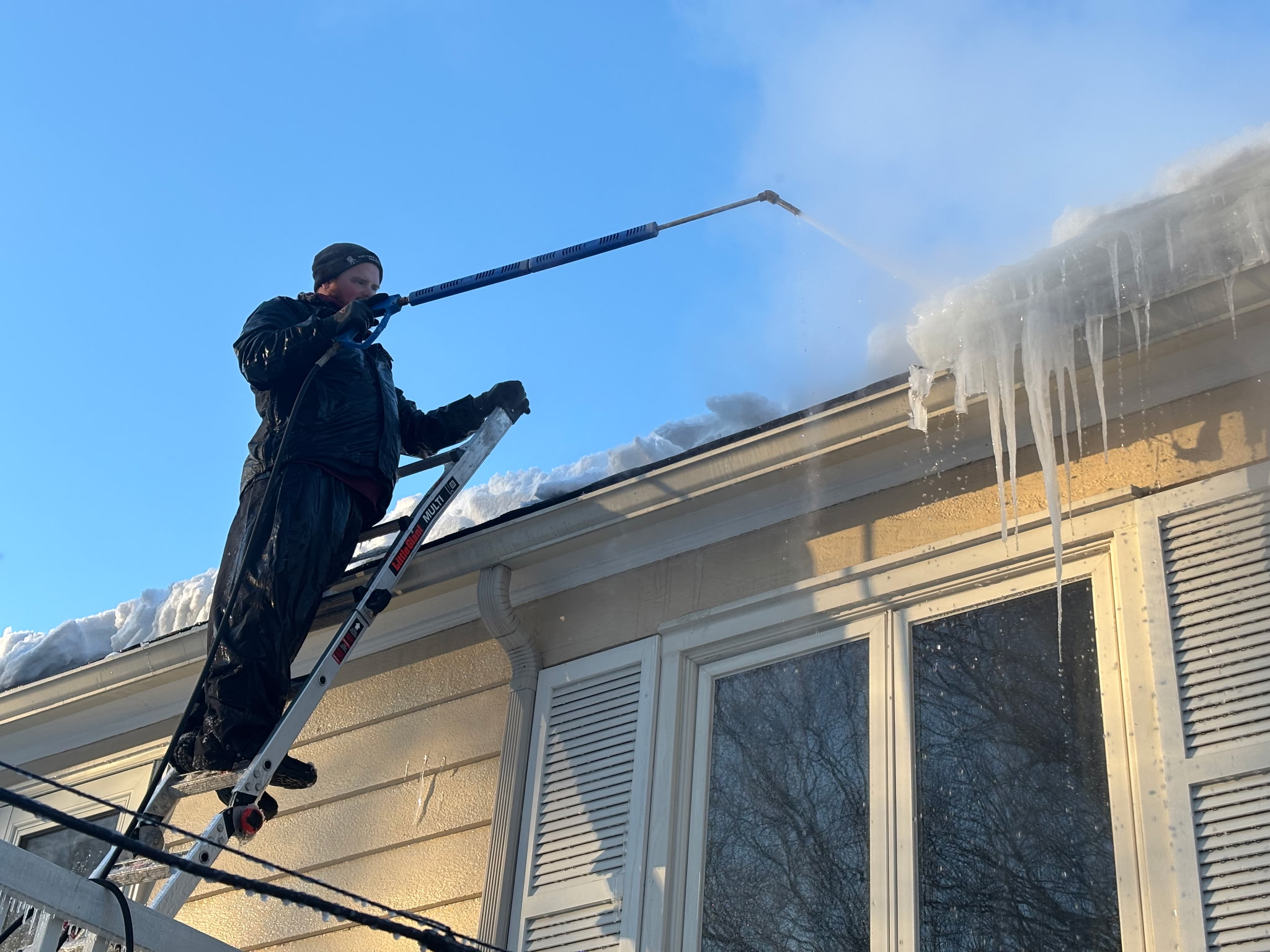
Then the ice comes off with low-pressure steam, starting wherever water is actively backing up so drainage opens early. Frozen gutters and downspouts are cleared in the same visit, because a cleared eave above a solid block of ice in the gutter dams again on the next cold night.
Working at night and during an active storm
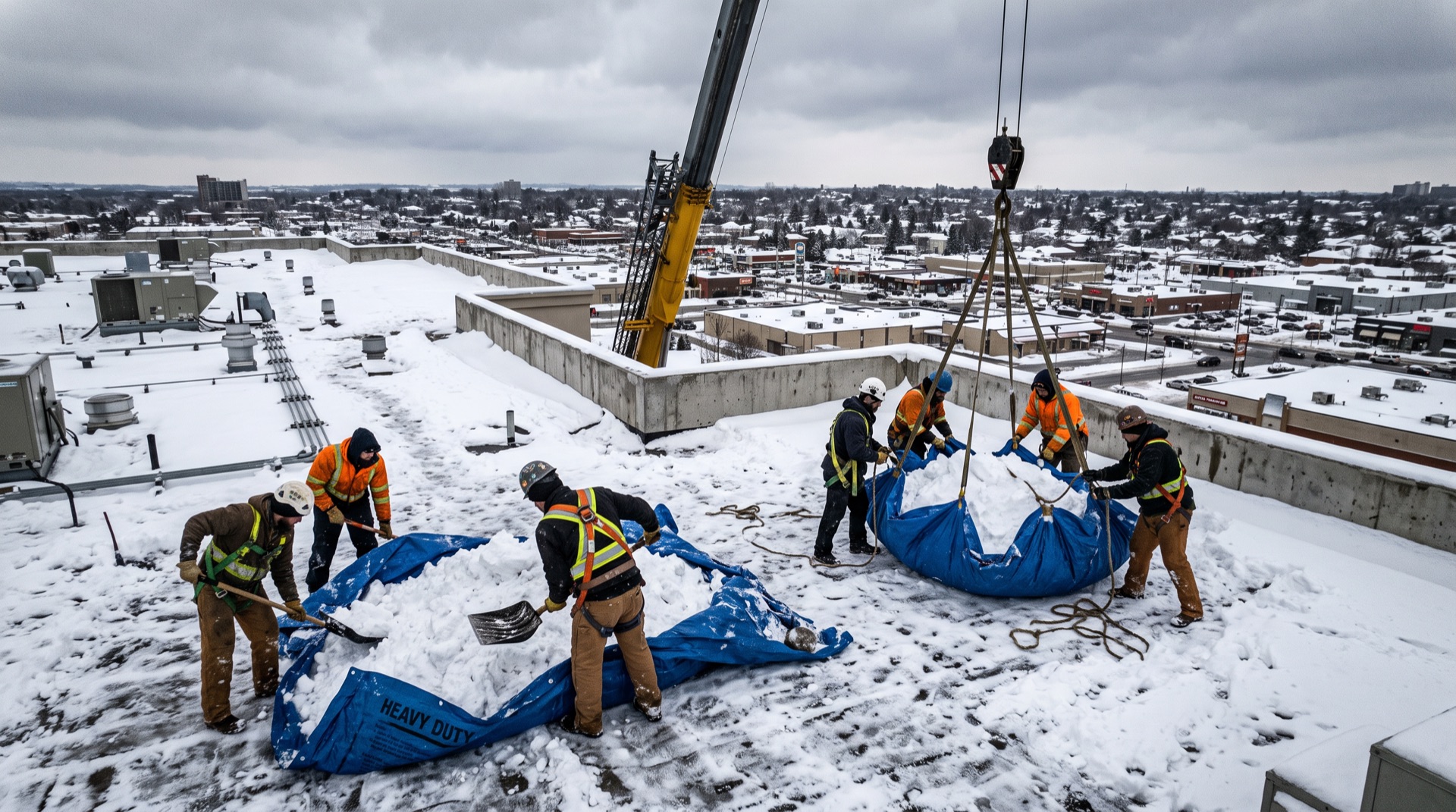
Freeze events do not keep office hours, and the worst leaks tend to announce themselves in the evening when the day's melt refreezes. Crews run lit, and a roof that is actively collecting snow is worked anyway, because waiting for better weather means the dam is bigger when somebody finally gets to it.
What does stop a crew is wind and lightning. Both are judgment calls made on site in Greensburg, and a postponed start gets explained rather than dressed up.
Why the dam formed in the first place
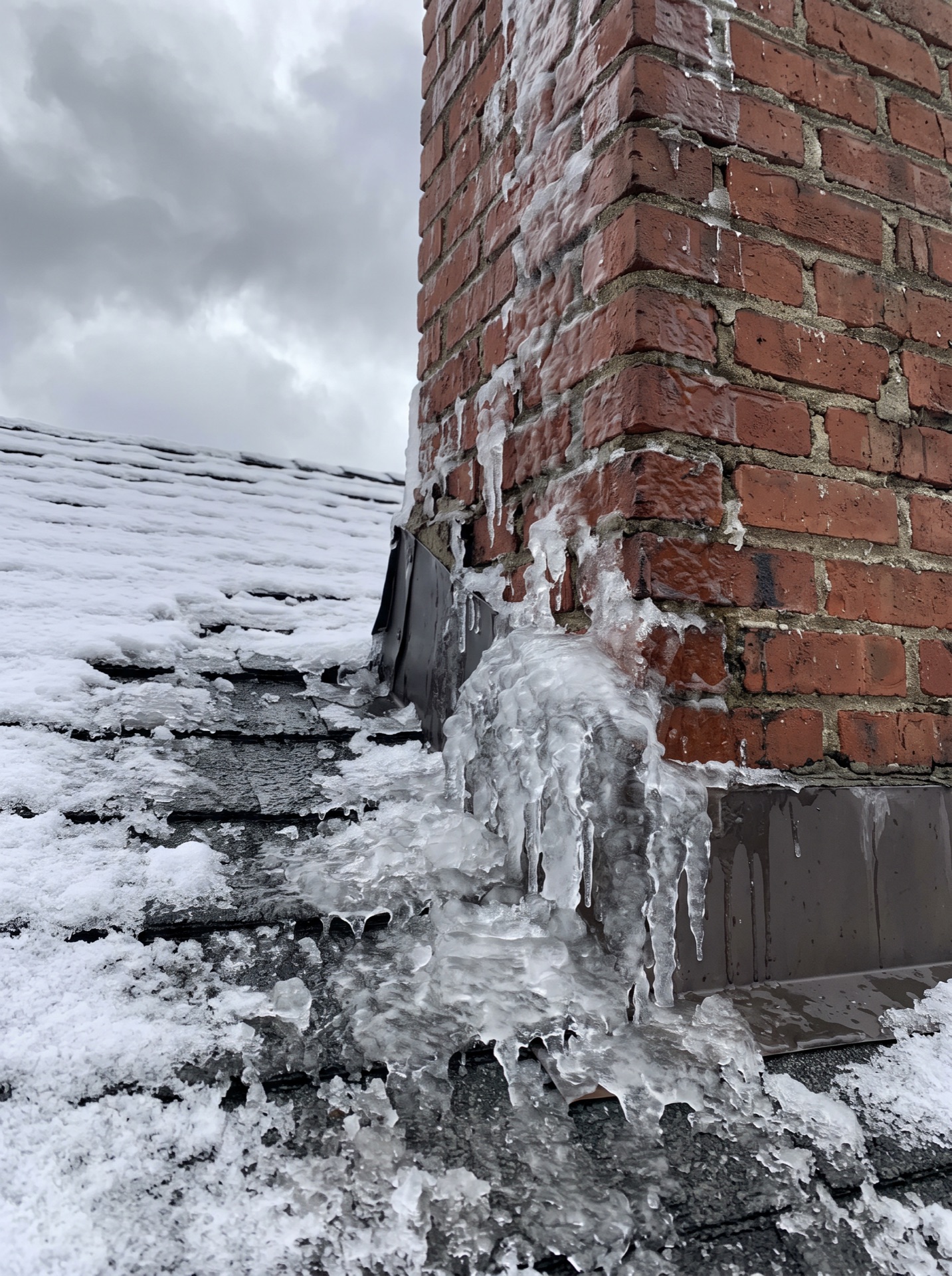
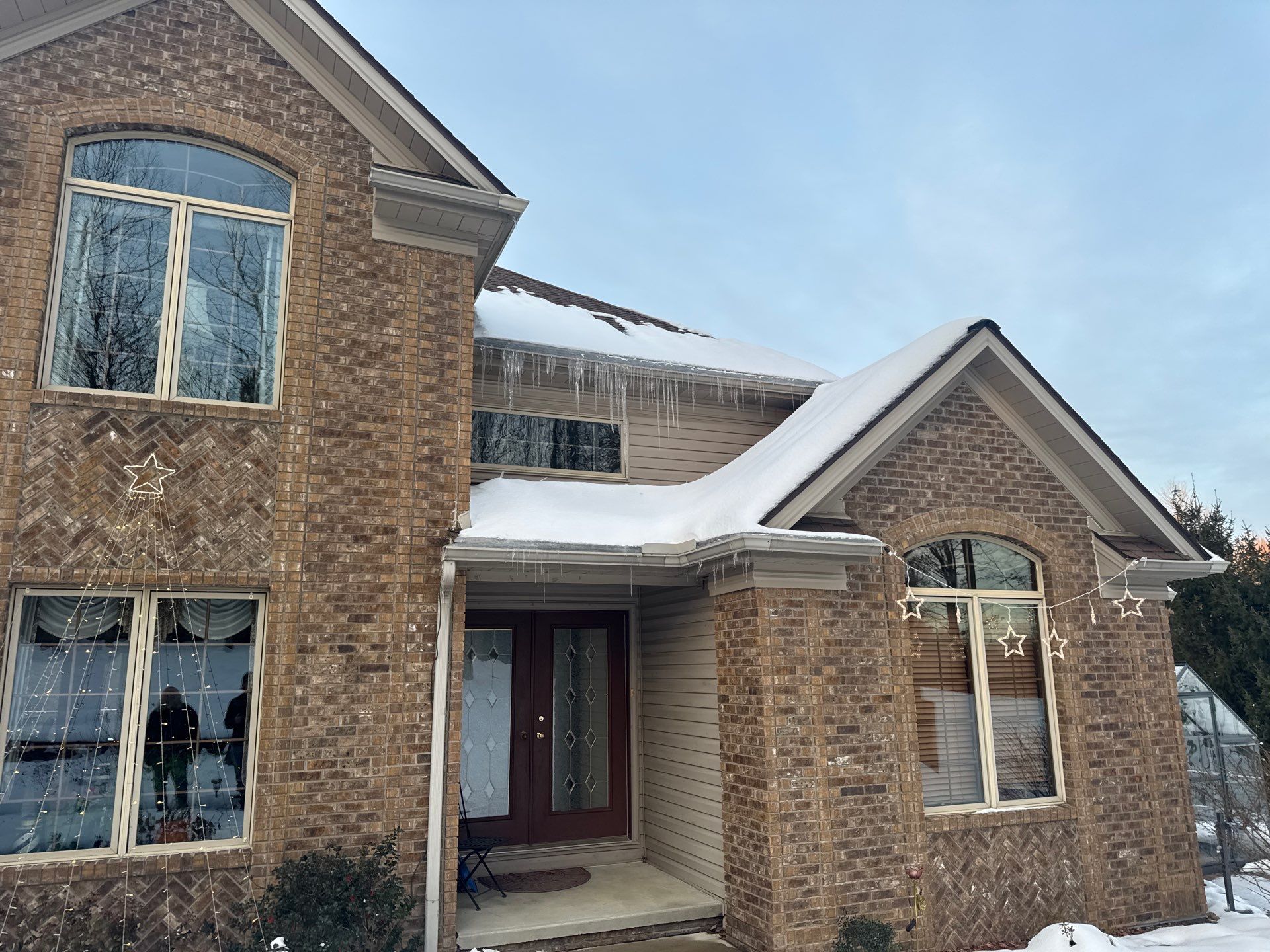
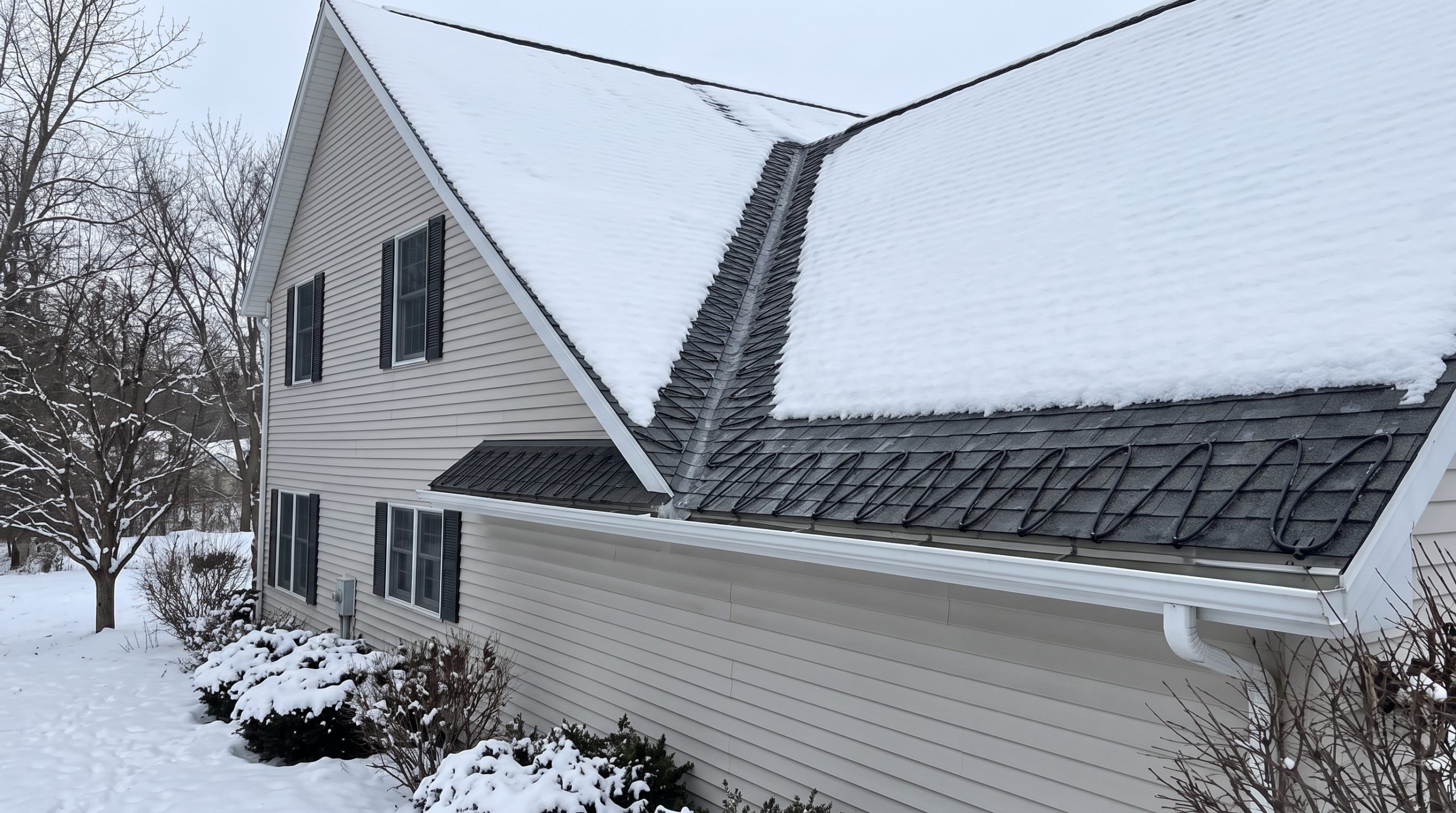
Ice dams are a heat problem wearing a weather costume. Warm air escaping into the attic melts snow on the upper roof; that meltwater runs to the eave, which hangs past the heated envelope and stays below freezing; it refreezes there, and the ridge of ice grows a layer every cycle. Removal is the emergency fix. Before the crew leaves you will know which part of your attic is feeding it.
Why a drainage channel is not removal
Cutting a few channels through a dam so water can get past is quick and it is sometimes sold as ice dam removal. It drains the roof for as long as the channels stay open, which in a Greensburg cold snap can be a single night before they close again.
Removing the dam means taking the ice off down to the shingle along the whole affected run, so the eave can drain the way it was built to. It takes longer and it is the only version that holds.
| Pricing model | Billed by the crew hour, rate quoted before dispatch |
|---|---|
| Typical scope | Steam, 4-10 crew hours typical |
| Primary climate stressor | Nor'easters, rapid thaw-freeze swing |
| Documentation | Dated before and after photos, written scope in Xactimate line items |
| Local ice-barrier practice | Eave membrane standard on re-roofs |
| Service | Ice dam removal in Greensburg, PA |
| Removal method | Low-pressure steam only. No chipping, salt or pressure washing. |
Westmoreland County Coverage From Greensburg
Crews working Greensburg cover the adjoining communities on the same route — Westmoreland City, Bovard, Grapeville, Forbes Road and Luxor — so a storm week usually means one truck handling several addresses in Westmoreland County rather than separate trips.
Nearest hub towns with their own crew pages: Murrysville, Monroeville, Plum, West Mifflin, Penn Hills, Baldwin.
Scheduling for Greensburg tightens up during a freeze event, which is exactly when the phone beats the form. Water coming in means a call, not an email.
If water is already inside a property in Greensburg, call (888) 561-9664 rather than filling in a form — the phone is faster and leaks jump the line.