



Why Youngstown Roofs Dam Up: Cycling, Not Snowfall Totals
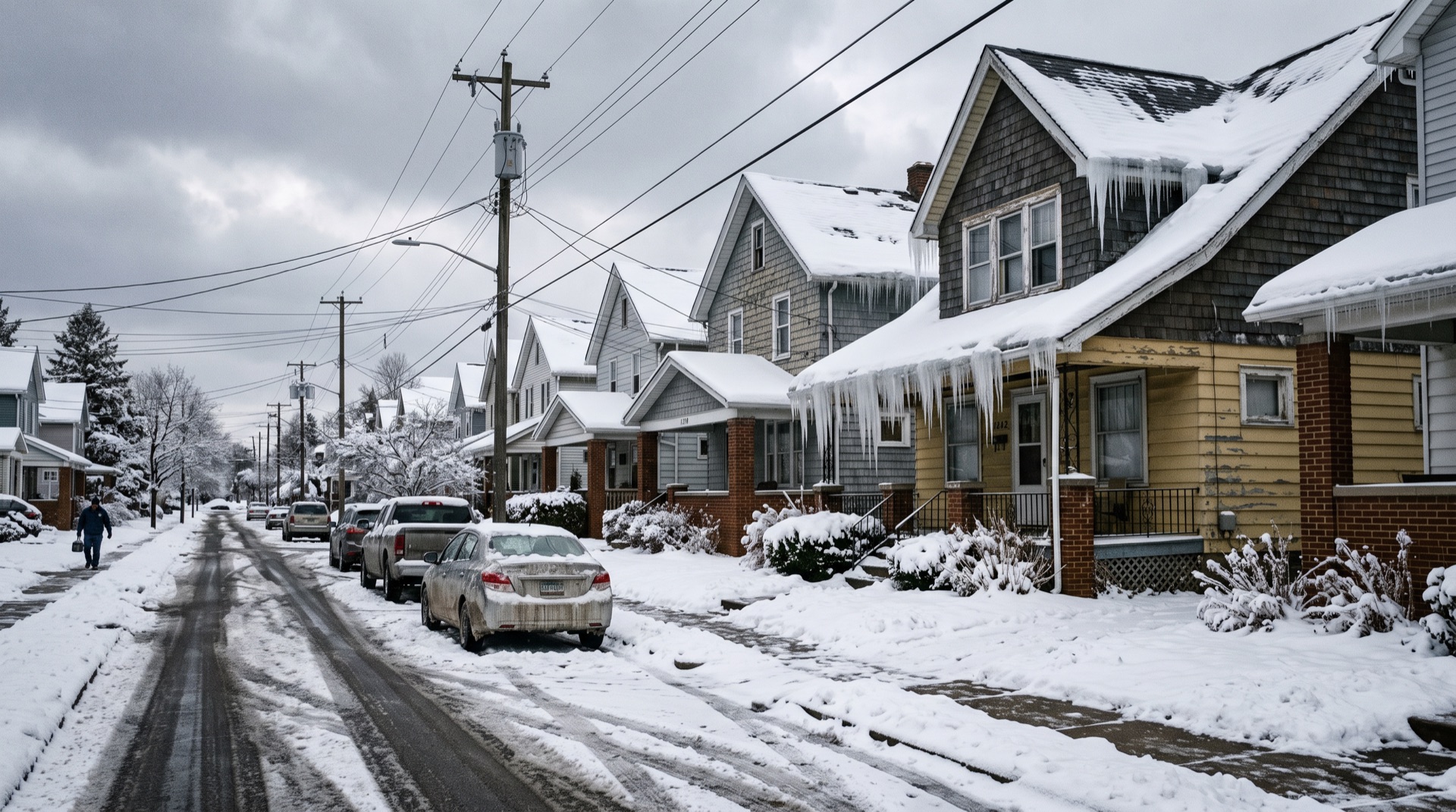
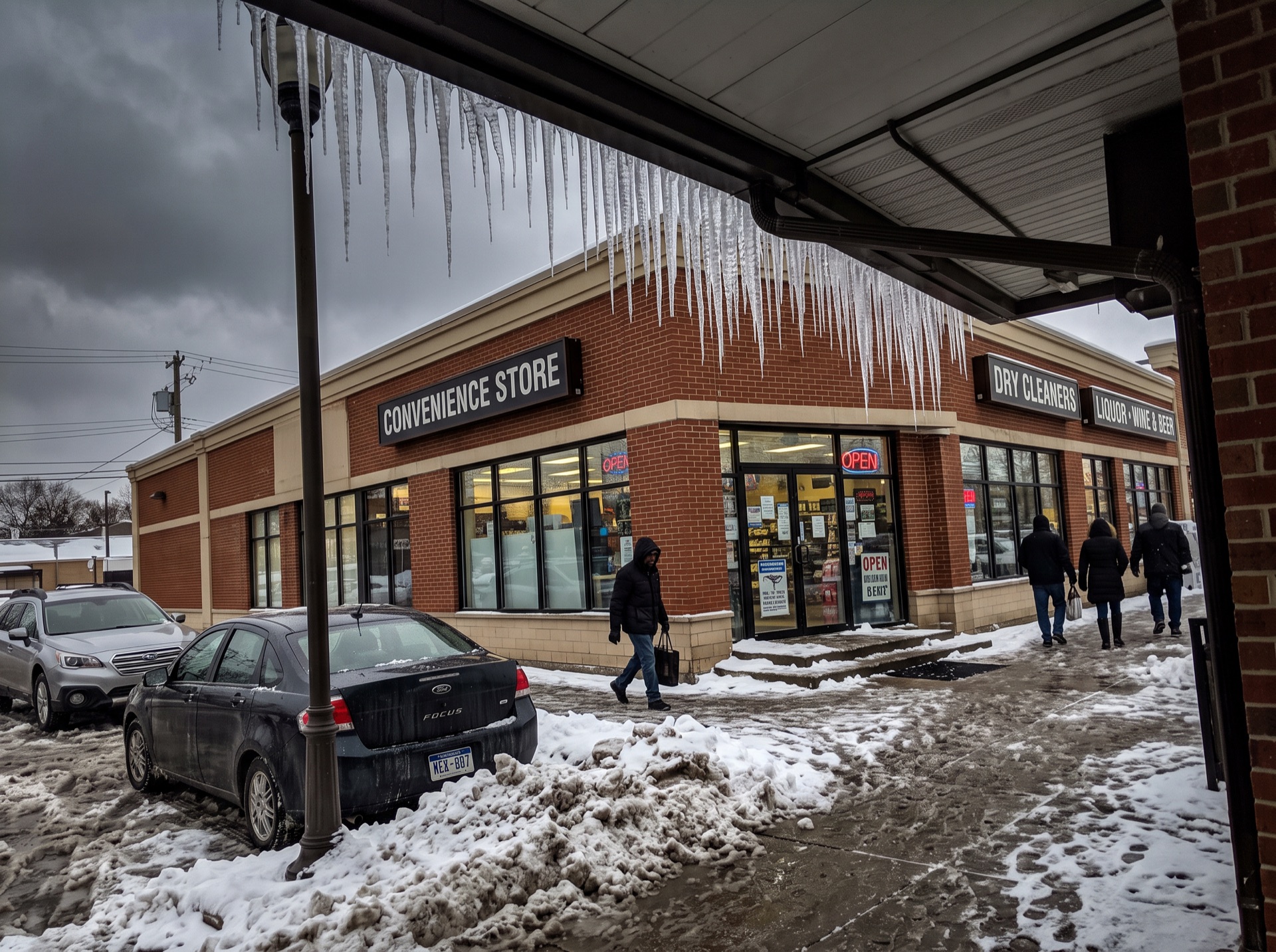
What catches people out in Mahoning County is that the snow looks harmless. Two or three inches reads as nothing, and it builds ice on an eave just as effectively as a northern storm given enough cycles.

Because the winters read as mild, the building stock is not built for ice. Attic insulation is thinner, eave details are less considered, and ice barrier is more often absent than present on a roof in Youngstown.
Ice-barrier practice in Mahoning County
Because ice is not the first thing a homeowner in Youngstown thinks about, the eave membrane is the detail most often value-engineered out of a re-roof quote. It is worth asking for by name.
How We Work a Youngstown Ice Dam
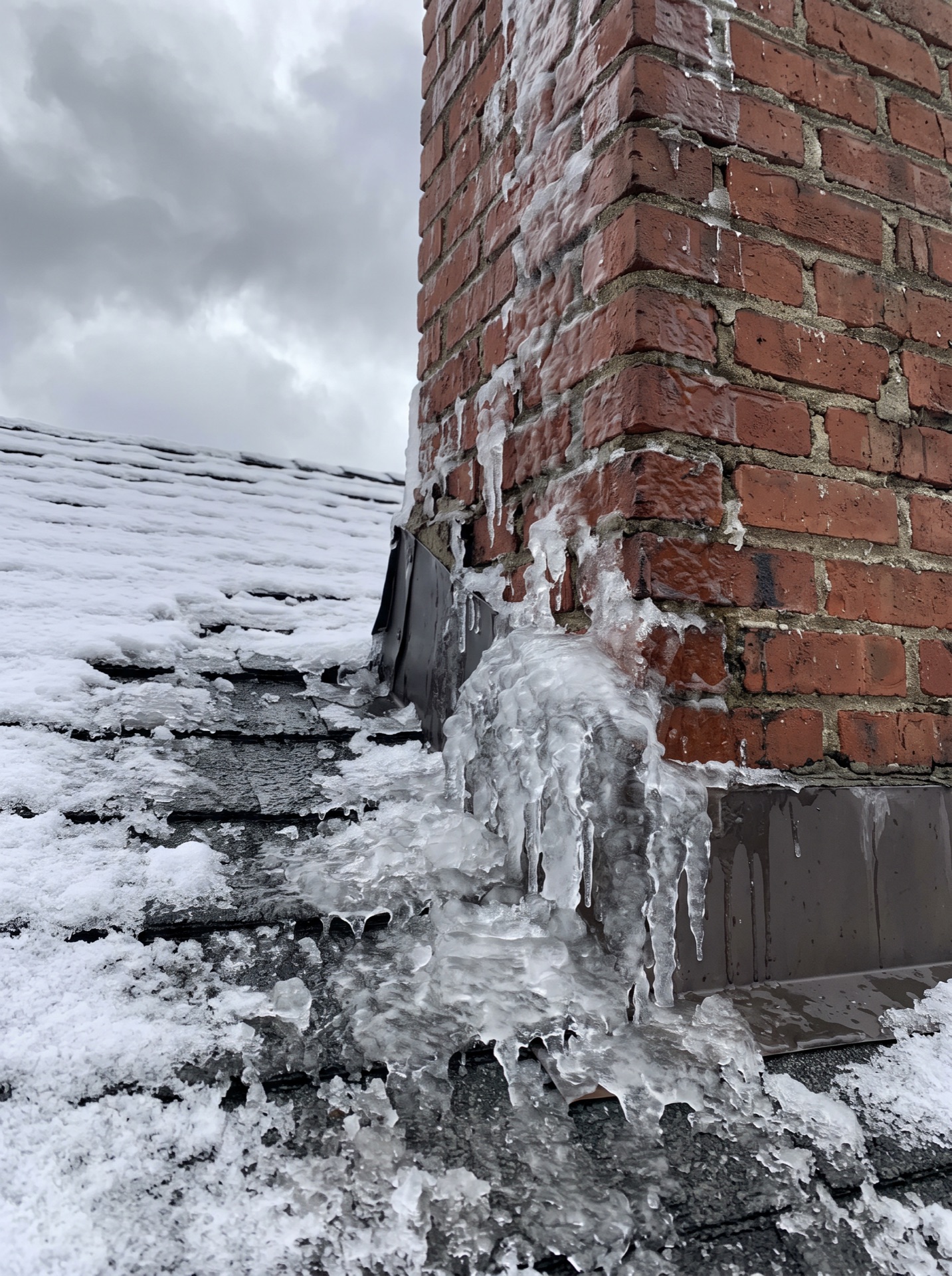
Nothing gets touched until the roof has been walked and photographed. The crew finds every dam, locates where water is getting in, shows you, and gives you the crew-hour rate and a time estimate before the equipment comes off the truck.
Removal then works from the worst point outward, so water starts draining early rather than at the end. Gutters and downspouts frozen solid get steamed through in the same visit — leaving them means the eave dams again within days.
Access, ladders and what the crew needs on site
Steam equipment needs somewhere to park within hose reach, and ladders need footing that is not a buried flower bed or a sheet of ice. Clearing a path to the affected eave, moving vehicles off the driveway and unlocking a side gate takes ten minutes and saves considerably more than that on the clock.
Where the only access is through a neighbor's property, that conversation is worth having before the crew is in the street rather than while it waits.
What the crew does on arrival
Before anything is touched, the crew walks the eaves, valleys and gutter line and photographs every dam and every point where water is tracking inside. You get shown what they found. Then the dam comes off in sections, starting wherever water is actively backing up, so drainage opens early rather than at the end.
Downspouts and gutter troughs get cleared in the same visit where they are frozen, because a dam removed above a solid block of ice in the gutter just reforms in the next cold night.
Why salt and ice melt make it worse
Calcium chloride opens a narrow channel and leaves the dam standing. The channel refreezes, the dam does not go anywhere, and in the meantime the runoff corrodes gutter seams, fasteners, flashing and anything growing underneath.
It is a stopgap at best. On a roof in Youngstown with an active leak it buys hours, not days, and it adds a corrosion problem to the water problem.
| Local ice-barrier practice | Eave membrane on new work, often absent |
|---|---|
| Removal method | Low-pressure steam only. No chipping, salt or pressure washing. |
| Primary climate stressor | Repeated thaw-freeze cycling |
| Typical scope | Steam, 4-8 crew hours typical |
| Service | Ice dam removal in Youngstown, OH |
| Dispatch window | Same day to 24 hours |
| Documentation | Dated before and after photos, written scope in Xactimate line items |
Mahoning County Coverage From Youngstown
Crews working Youngstown cover the adjoining communities on the same route — Campbell, Struthers, Girard, Hubbard and Mc Donald — so a storm week usually means one truck handling several addresses in Mahoning County rather than separate trips.
Nearest hub towns with their own crew pages: Boardman, Warren, Stow, Hudson, Cuyahoga Falls, Canton.
Scheduling for Youngstown tightens up during a freeze event, which is exactly when the phone beats the form. Water coming in means a call, not an email.
Water through a ceiling in Youngstown is a same-day call, not a next-week one. (888) 561-9664 goes straight to dispatch.