



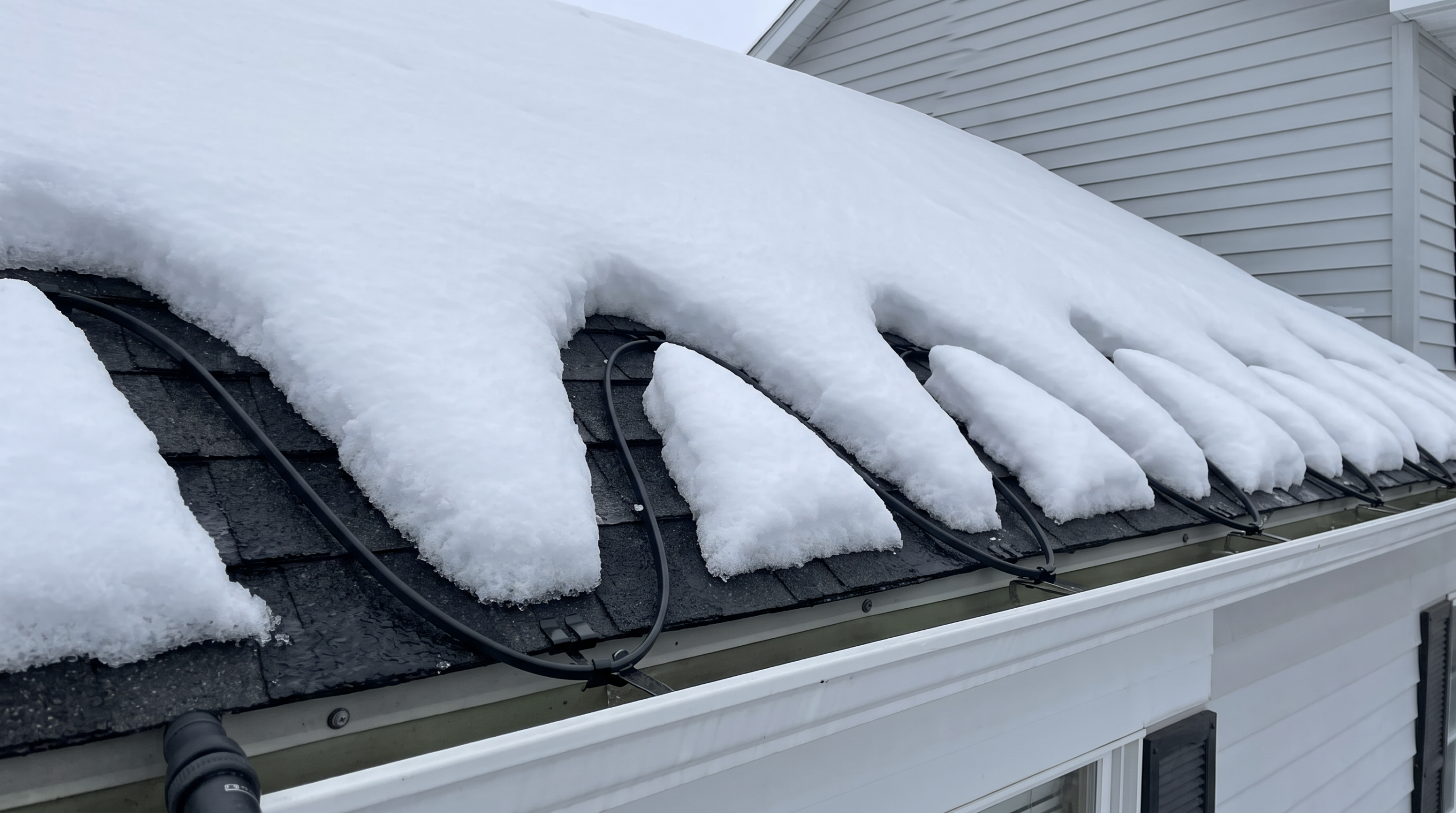
Months of Load: Why Lincoln Eaves Carry Ice
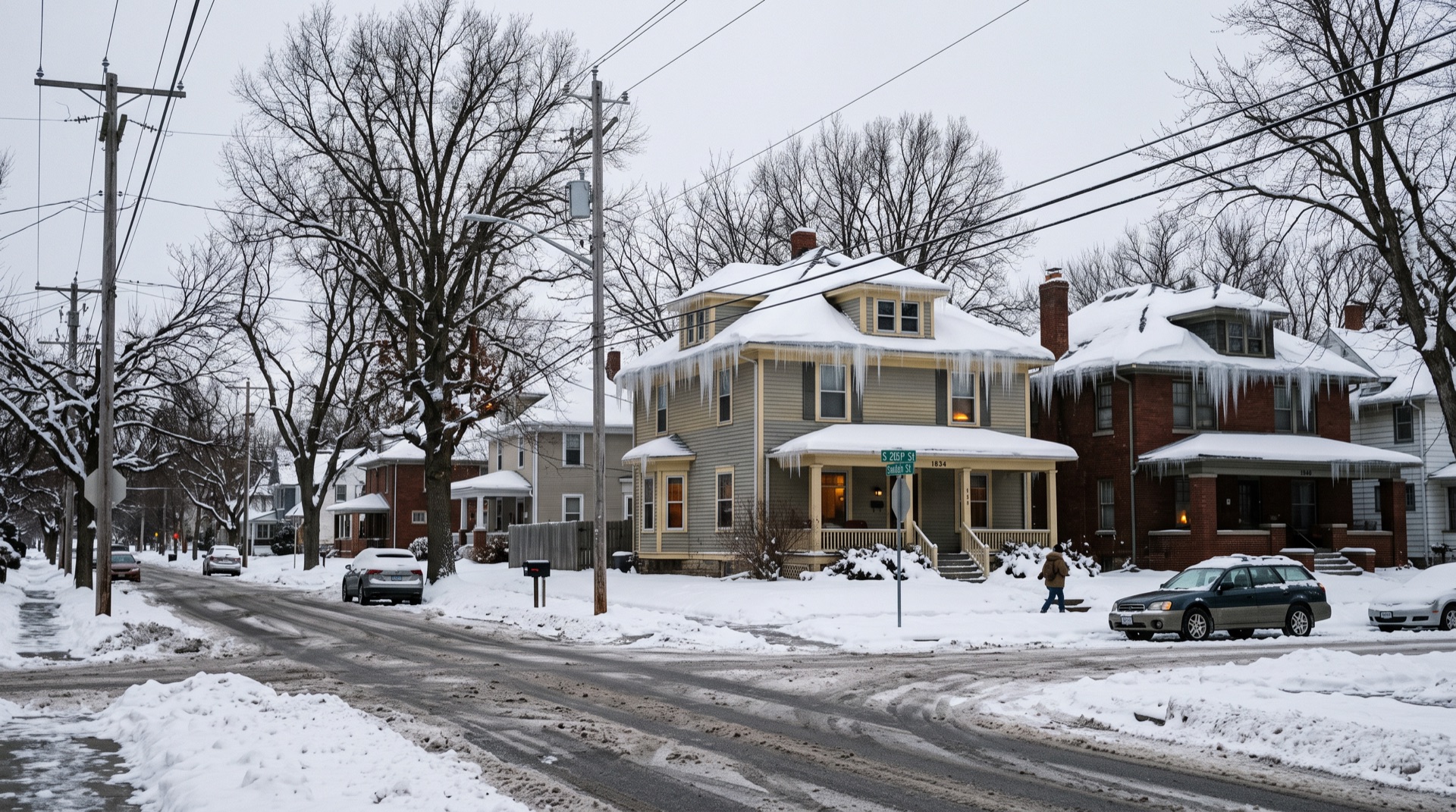
Lincoln holds snow. In a normal winter the pack that lands in December is still on the roof in February, which means the eave spends months below freezing while the attic underneath stays heated.

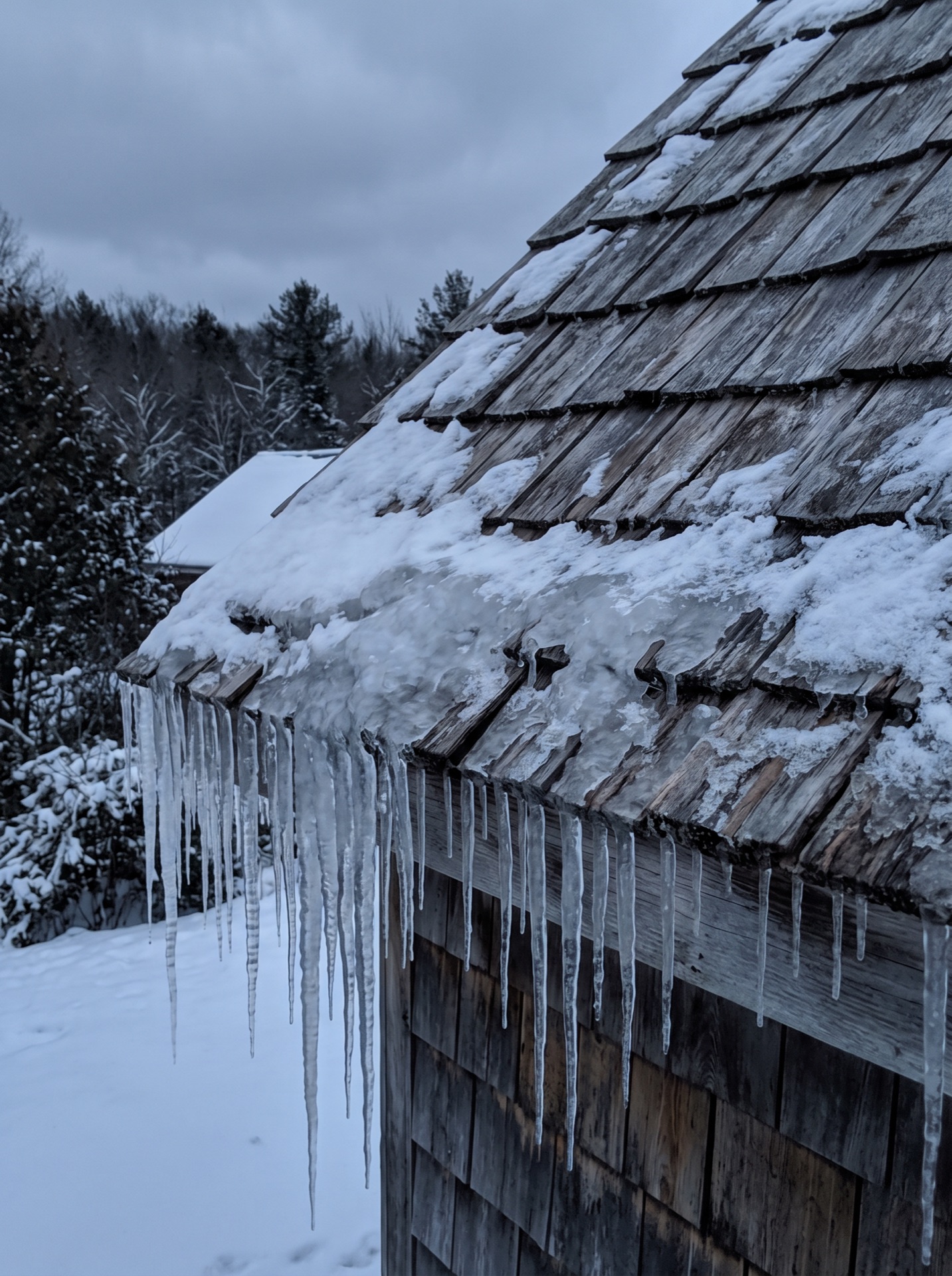
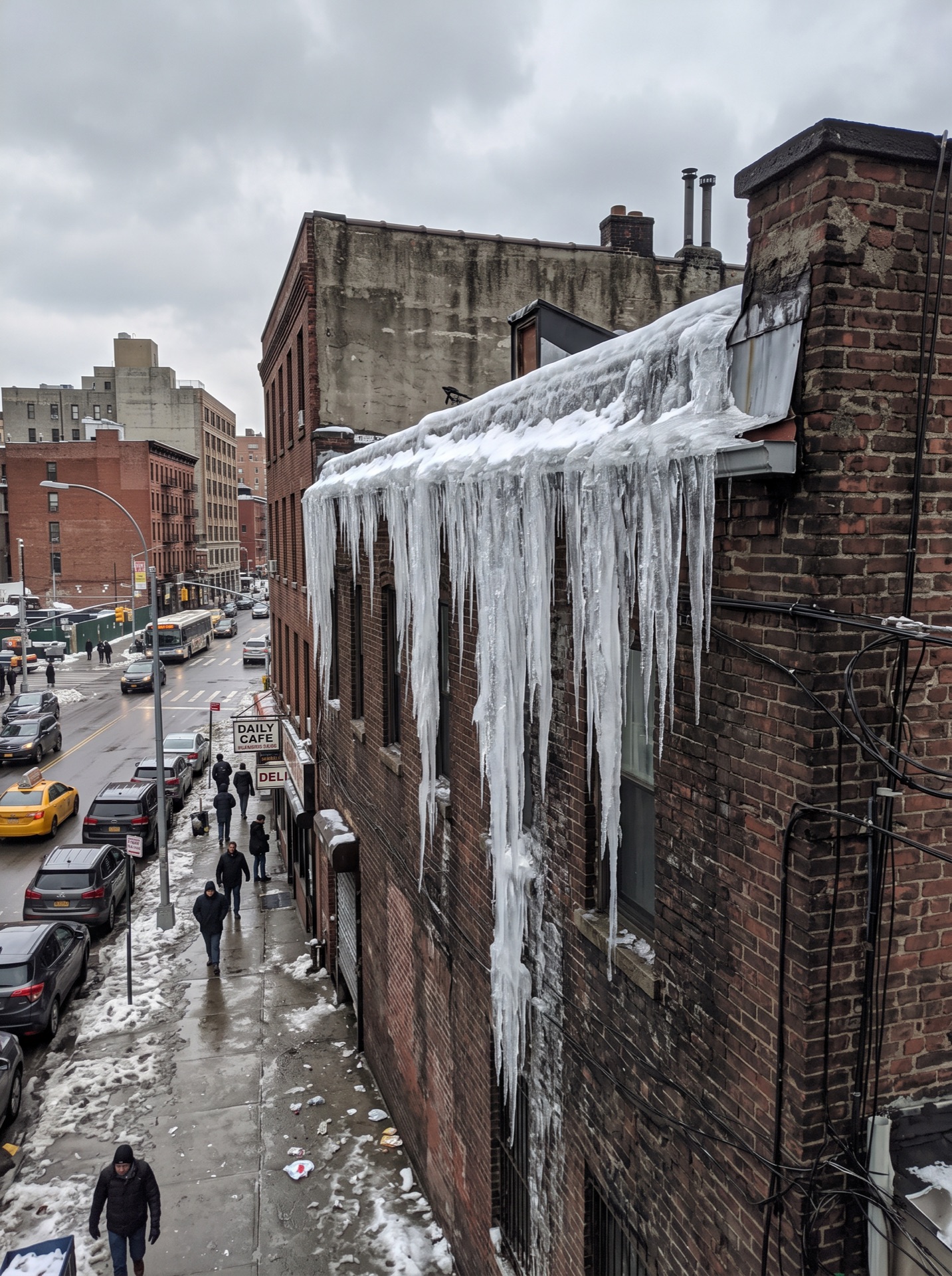
The ice that comes off a roof in Lincoln in February is rarely one event's worth. It is a laminated record of the whole season, which is why it is thick, dense and firmly bonded to the shingle.
Ice-barrier practice in Lancaster County
Because the ice here does not stay near the edge, the Nebraska requirement generally runs the membrane well up the roof plane. On a house in Lincoln roofed a few decades ago it is frequently missing entirely.
How We Work a Lincoln Ice Dam
Crews walk the eaves, valleys and gutter line first and photograph every dam and every point where water is tracking inside, before touching anything. You get shown what they found and quoted the crew-hour rate before work starts.
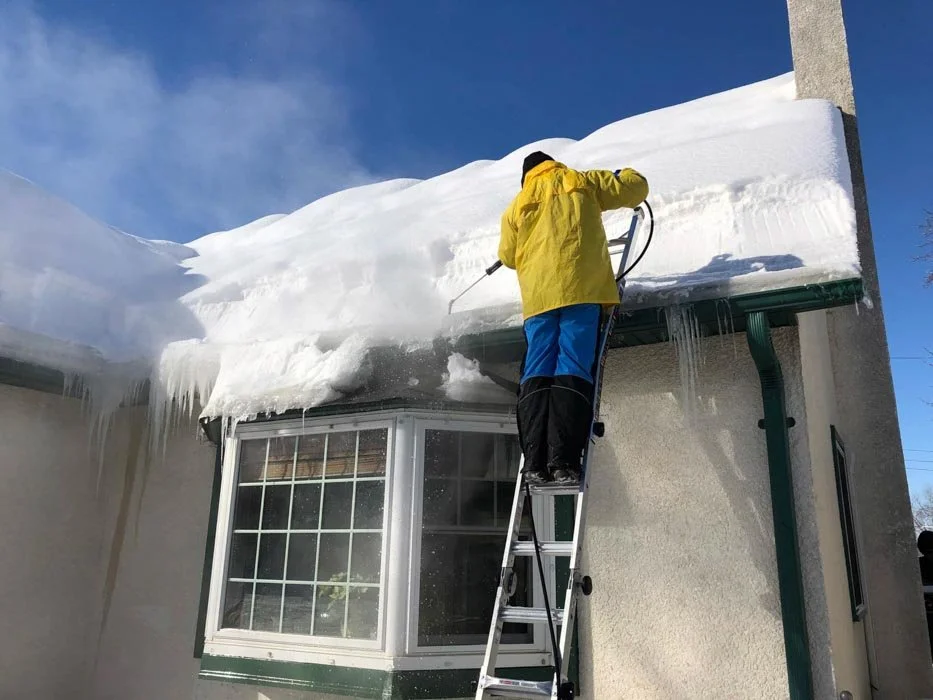
Then the ice comes off with low-pressure steam, starting wherever water is actively backing up so drainage opens early. Frozen gutters and downspouts are cleared in the same visit, because a cleared eave above a solid block of ice in the gutter dams again on the next cold night.
Dormers, valleys and dead spots
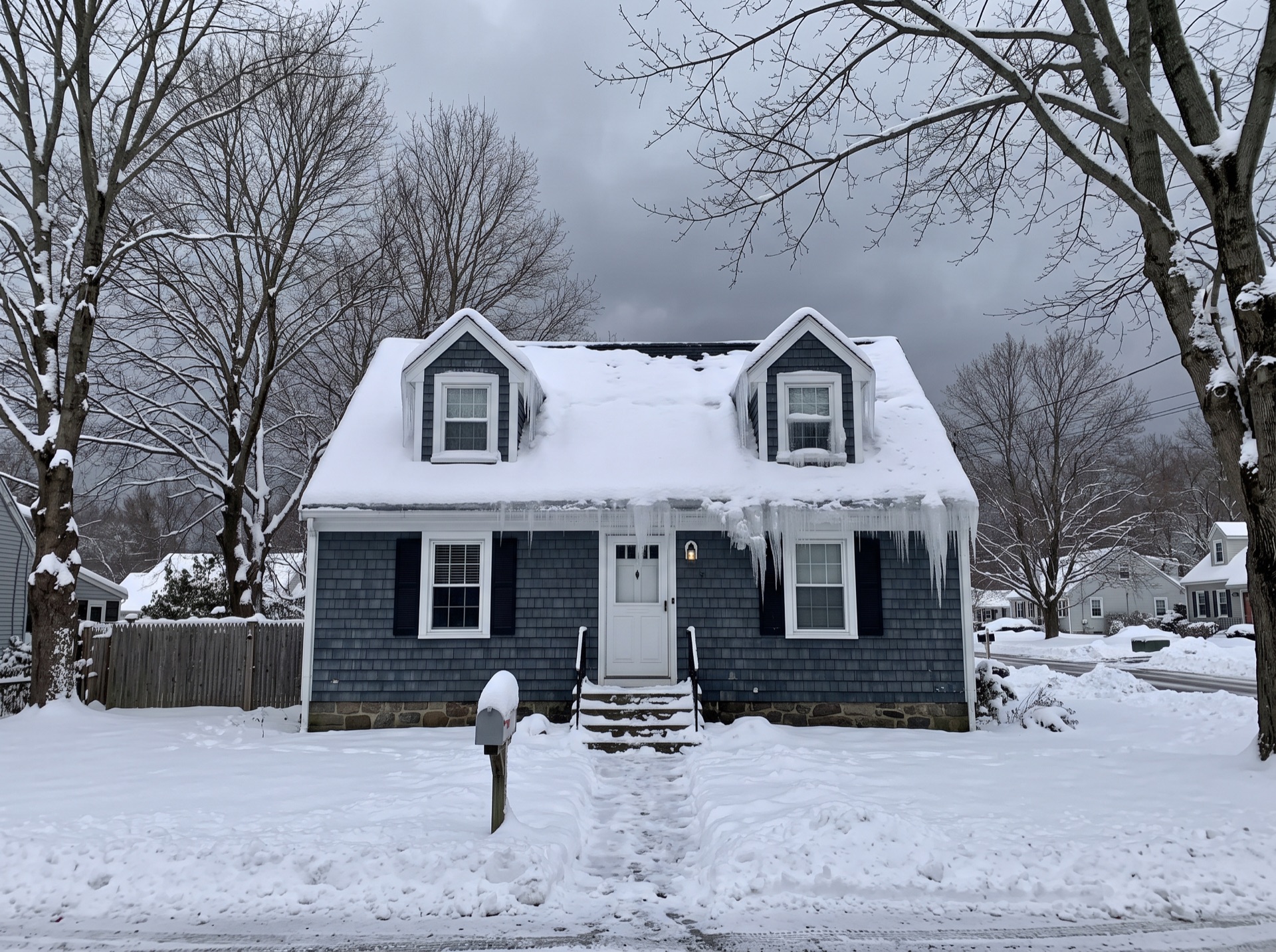
Ice does not distribute evenly. It concentrates where two roof planes meet, behind dormers, in dead valleys that drain nowhere, and along the north face that never sees sun. Those pockets hold water deepest and leak first.
A crew working a roof in Lincoln clears the full eave line and then goes back through the valleys and dormer pockets specifically, because clearing the easy straight run and calling it done is how a roof leaks again a week later.
What happens after the ice is off
Once the eave is clear and water is draining, the crew walks the interior with you where there is visible damage and says plainly whether it needs drying. Wet insulation and a damp ceiling cavity do not resolve themselves in a cold Lincoln February.
If it does, that is a separate scope and it gets written separately — nobody is upsold a dryout on the strength of one damp patch.
What gets photographed, and why it matters later
Before the lance comes out, the crew shoots the dam from the ground and from the roof, the icicle line, any staining visible inside, and the specific courses where water is tracking under the shingles. Timestamps are on every frame.
That record is the whole case if a claim follows. An adjuster arriving in March sees a dry roof and a stained ceiling; the photographs are what connect the two, and they are what a maintenance-exclusion denial runs into.
| Service | Ice dam removal in Lincoln, NE |
|---|---|
| Typical scope | Steam, 6-14 crew hours typical |
| Local ice-barrier practice | Eave membrane required on new work |
| Removal method | Low-pressure steam only. No chipping, salt or pressure washing. |
| Primary climate stressor | Sustained sub-freezing, long season |
| Documentation | Dated before and after photos, written scope in Xactimate line items |
| Coverage area | Lincoln and Lancaster County |
Lancaster County Coverage From Lincoln
Crews working Lincoln cover the adjoining communities on the same route — Walton, Malcolm, Roca, Denton and Martell — so a storm week usually means one truck handling several addresses in Lancaster County rather than separate trips.
Nearest hub towns with their own crew pages: Papillion, La Vista, Fremont, Bellevue, Omaha, Columbus.
Scheduling for Lincoln tightens up during a freeze event, which is exactly when the phone beats the form. Water coming in means a call, not an email.
Water through a ceiling in Lincoln is a same-day call, not a next-week one. (888) 561-9664 goes straight to dispatch.