



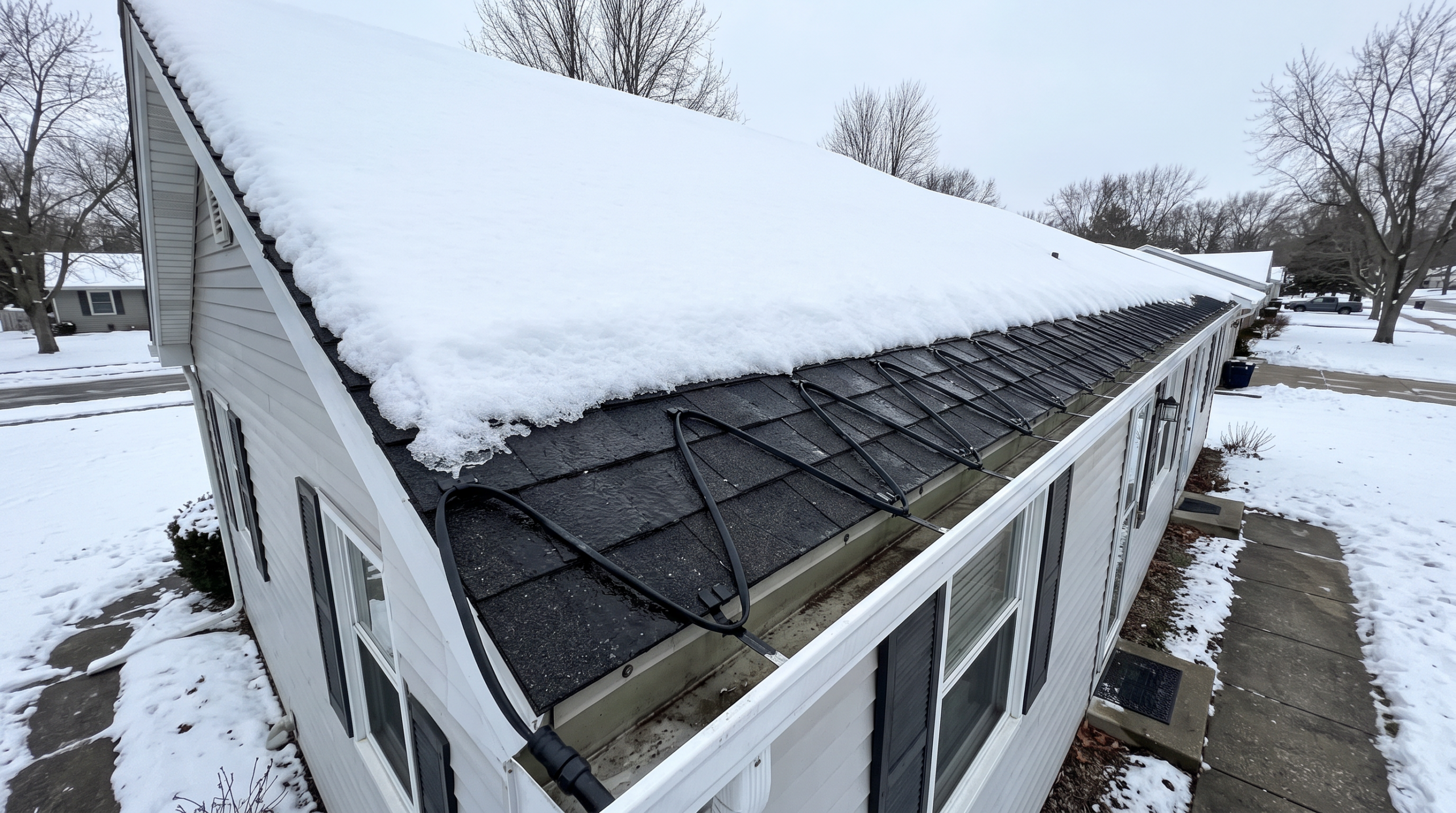
The Bloomington Problem Is the Thermometer, Not the Snowfall
What catches people out in Monroe County is that the snow looks harmless. Two or three inches reads as nothing, and it builds ice on an eave just as effectively as a northern storm given enough cycles.

That is the part homeowners miss. Total snowfall here is modest compared with the northern belt, so roofs in Monroe County are often built and insulated as though ice is not a concern. Then a cycling week in January finds every weak eave at once.
Ice-barrier practice in Monroe County
The residential code Indiana follows calls for eave ice barrier on new work. Enforcement in Monroe County is real but recent, so the age of the roof is what decides whether it is there.
How We Work a Bloomington Ice Dam
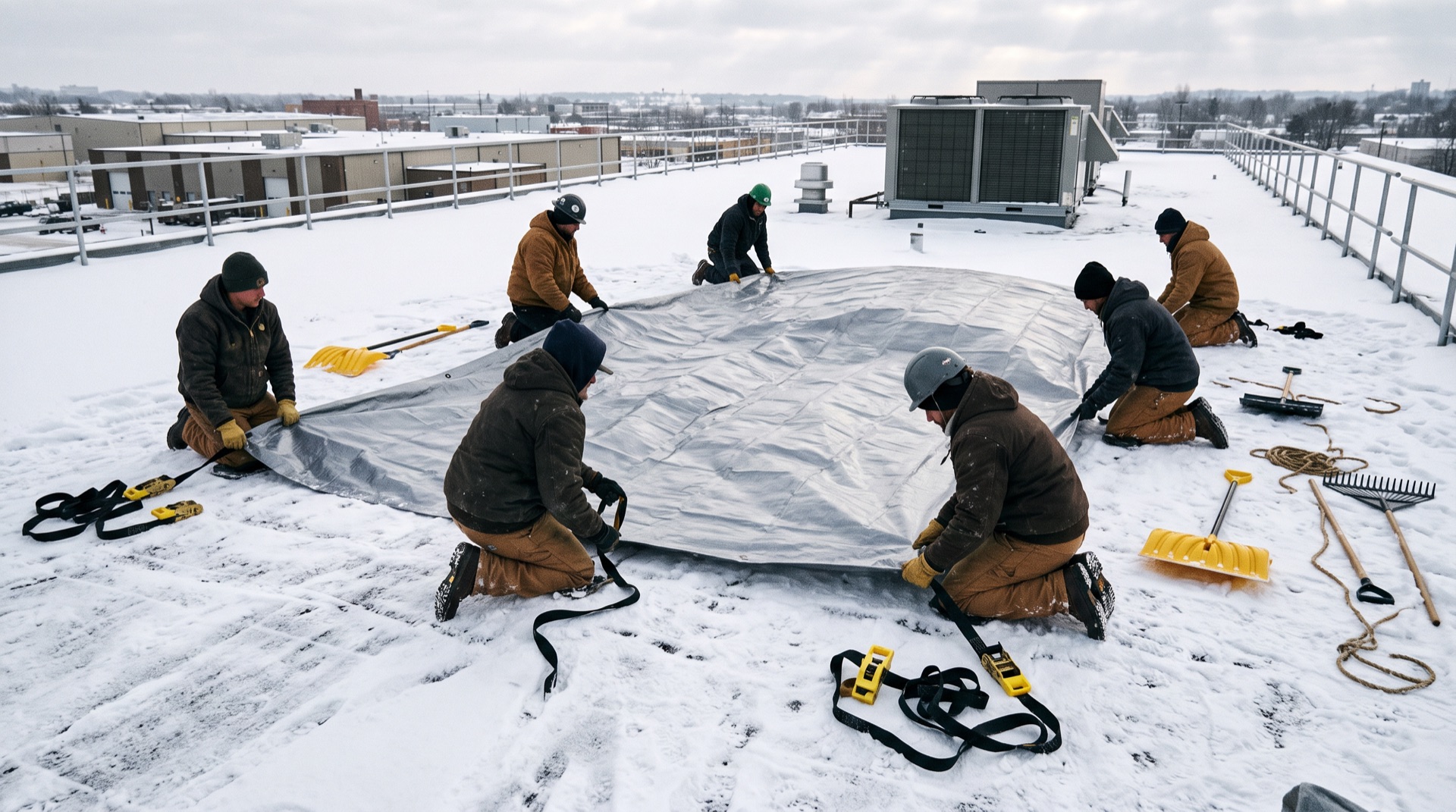
Nothing gets touched until the roof has been walked and photographed. The crew finds every dam, locates where water is getting in, shows you, and gives you the crew-hour rate and a time estimate before the equipment comes off the truck.
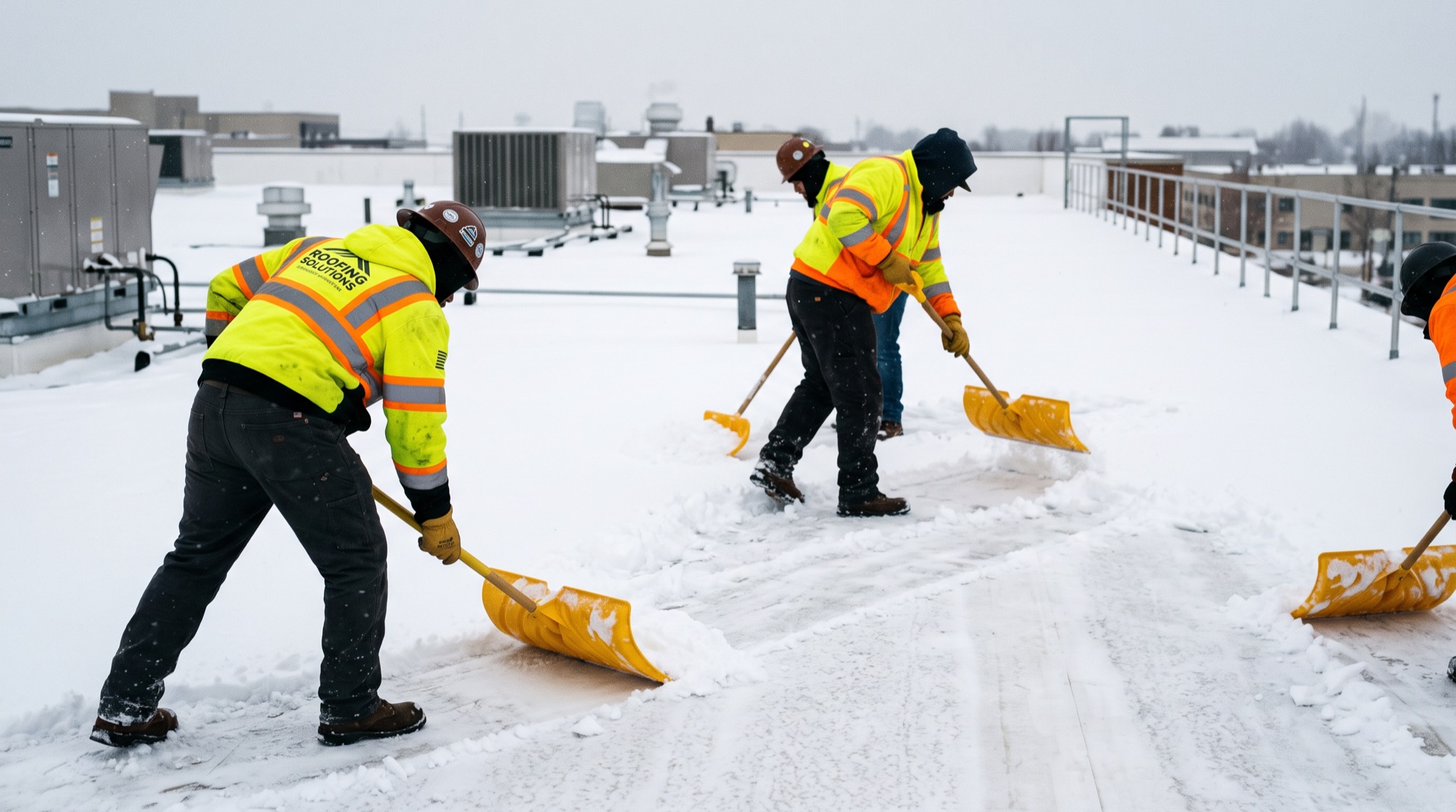
Removal then works from the worst point outward, so water starts draining early rather than at the end. Gutters and downspouts frozen solid get steamed through in the same visit — leaving them means the eave dams again within days.
If water already got inside
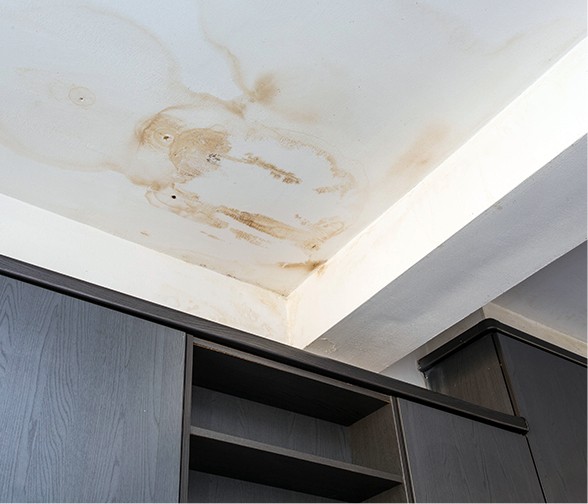
Taking the ice off stops new water. It does nothing about what is already in the insulation, the ceiling and the walls of a Bloomington home.
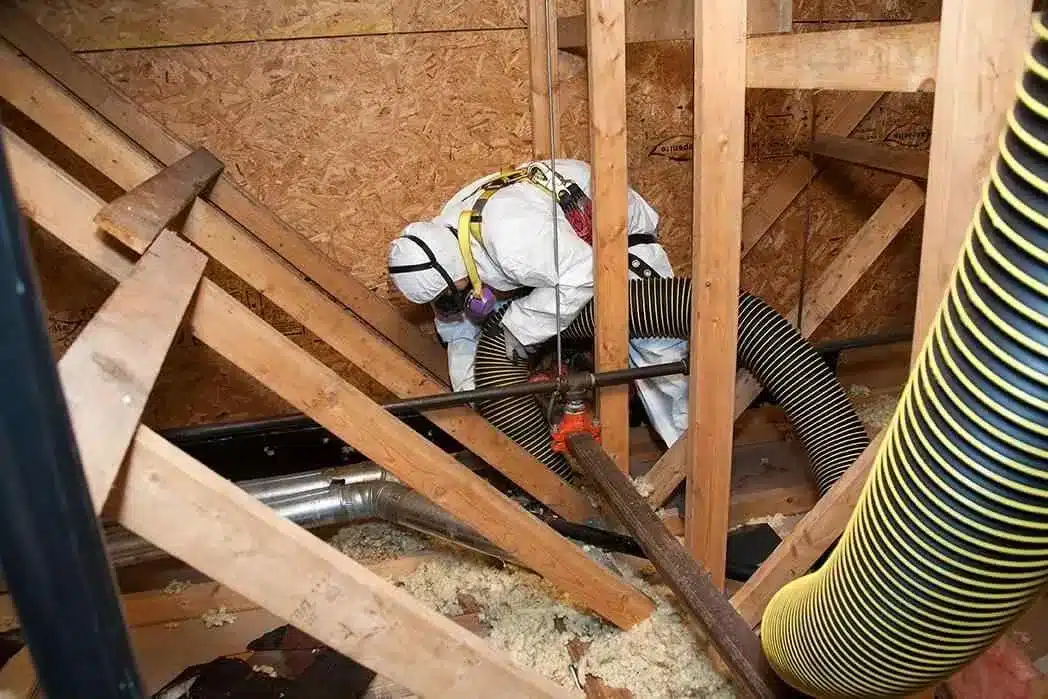
The same company handles the rest: water mitigation and dryout, mold remediation where the water has led to growth, the interior repair, and the roof where the dam damaged it, all documented on one insurance claim.
What happens after the ice is off
Once the eave is clear and water is draining, the crew walks the interior with you where there is visible damage and says plainly whether it needs drying. Wet insulation and a damp ceiling cavity do not resolve themselves in a cold Bloomington February.
If it does, that is a separate scope and it gets written separately — nobody is upsold a dryout on the strength of one damp patch.
What gets photographed, and why it matters later
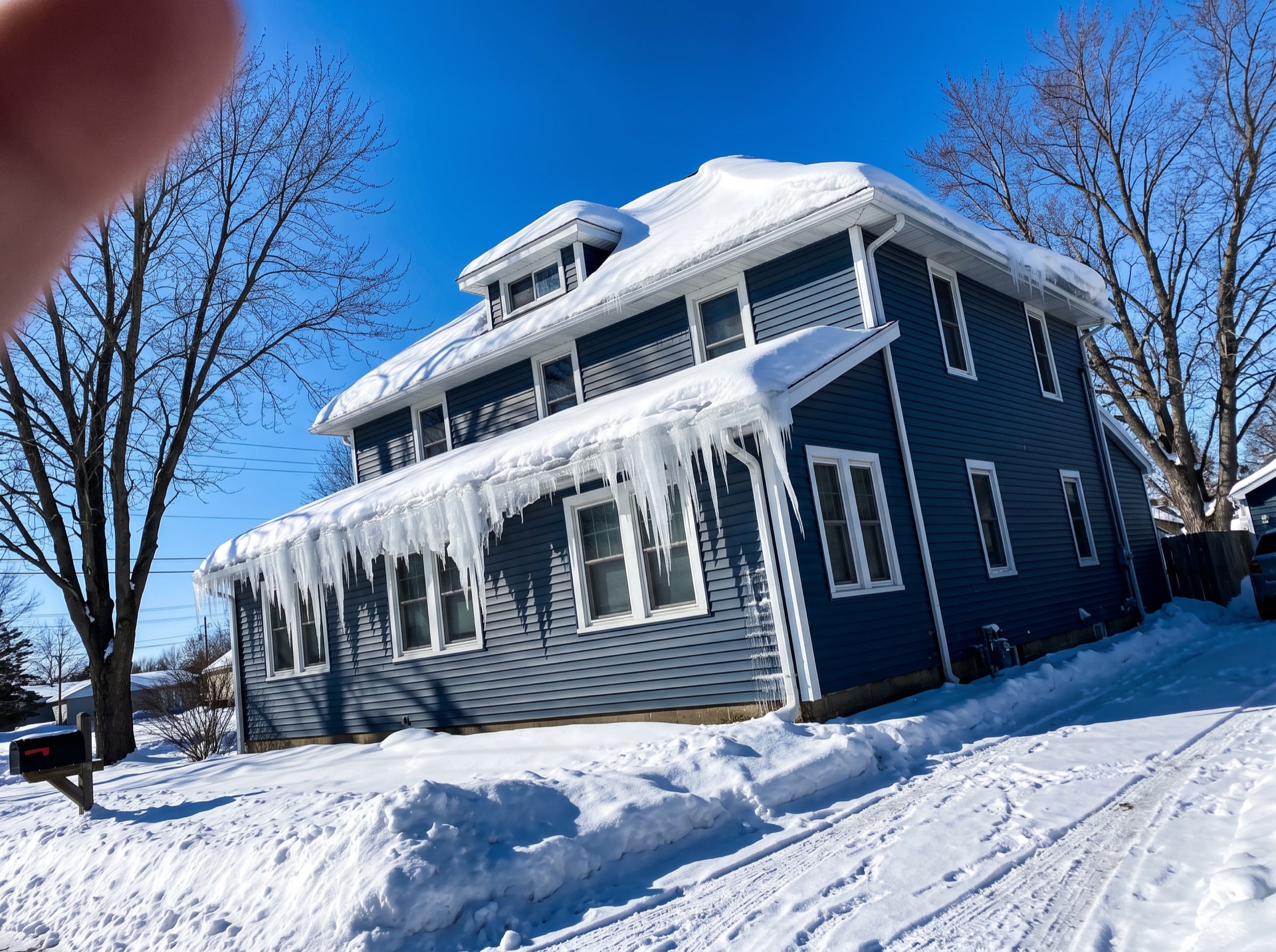
Before the lance comes out, the crew shoots the dam from the ground and from the roof, the icicle line, any staining visible inside, and the specific courses where water is tracking under the shingles. Timestamps are on every frame.
That record is the whole case if a claim follows. An adjuster arriving in March sees a dry roof and a stained ceiling; the photographs are what connect the two, and they are what a maintenance-exclusion denial runs into.
| Pricing model | Billed by the crew hour, rate quoted before dispatch |
|---|---|
| Service | Ice dam removal in Bloomington, IN |
| Local ice-barrier practice | Eave membrane on new work, often absent |
| Documentation | Dated before and after photos, written scope in Xactimate line items |
| Typical scope | Steam, 4-8 crew hours typical |
| Removal method | Low-pressure steam only. No chipping, salt or pressure washing. |
| Dispatch window | Same day to 24 hours |
Bloomington Coverage and the Adjoining Communities
Crews working Bloomington cover the adjoining communities on the same route — Clear Creek, Smithville, Harrodsburg, Unionville and Stanford — so a storm week usually means one truck handling several addresses in Monroe County rather than separate trips.
Nearest hub towns with their own crew pages: Columbus, Seymour, Greenwood, Plainfield, Indianapolis, Brownsburg.
Scheduling for Bloomington tightens up during a freeze event, which is exactly when the phone beats the form. Water coming in means a call, not an email.
Water through a ceiling in Bloomington is a same-day call, not a next-week one. (888) 561-9664 goes straight to dispatch.