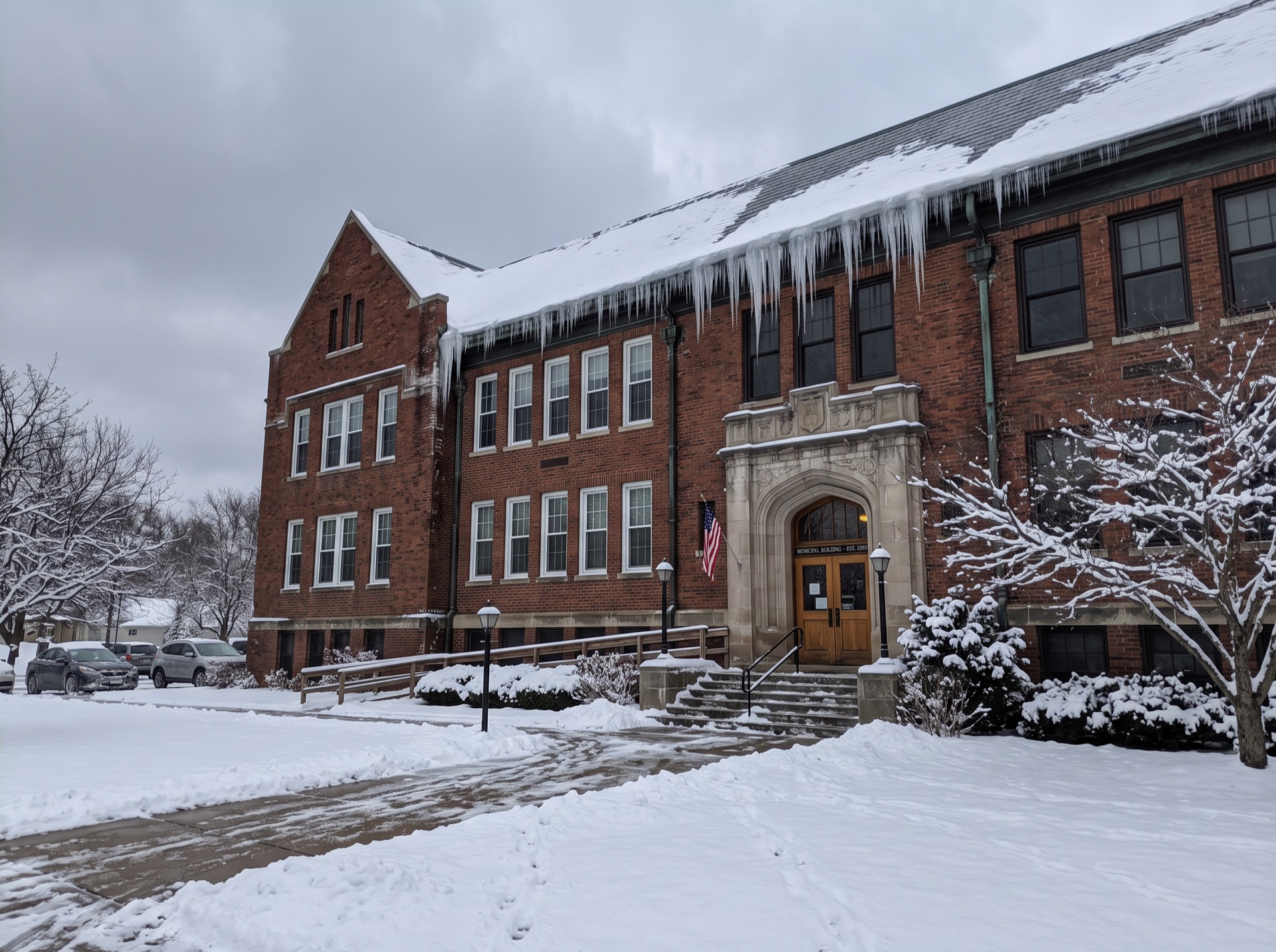
By the time a roof in Olympic Valley (Palisades) has a visible ridge of ice at the eave, meltwater has already been pooling behind it for several freeze-thaw cycles. As part of our complete Olympic Valley (Palisades) winter roof services, crews handle commercial ice dam removal across Placer County.
Sun on Cold Snow: The Olympic Valley (Palisades) Pattern
The pack at this elevation is deep enough to act as its own insulation, which means the surface melts under sun while the base stays locked. Water released at the top has to travel through and under all of it.

Depth makes it worse. A Placer County roof can carry several feet of pack, and all of that is a reservoir sitting above an eave that never sees sun.
Ice-barrier practice in Placer County
Mountain jurisdictions across Placer County generally require ice-barrier membrane well up the roof plane, not just the first course, along with snow retention on metal roofs above entries and walkways.
Commercial Ice Dam Removal in Olympic Valley (Palisades): How The Work Runs
Parapets hold the water in
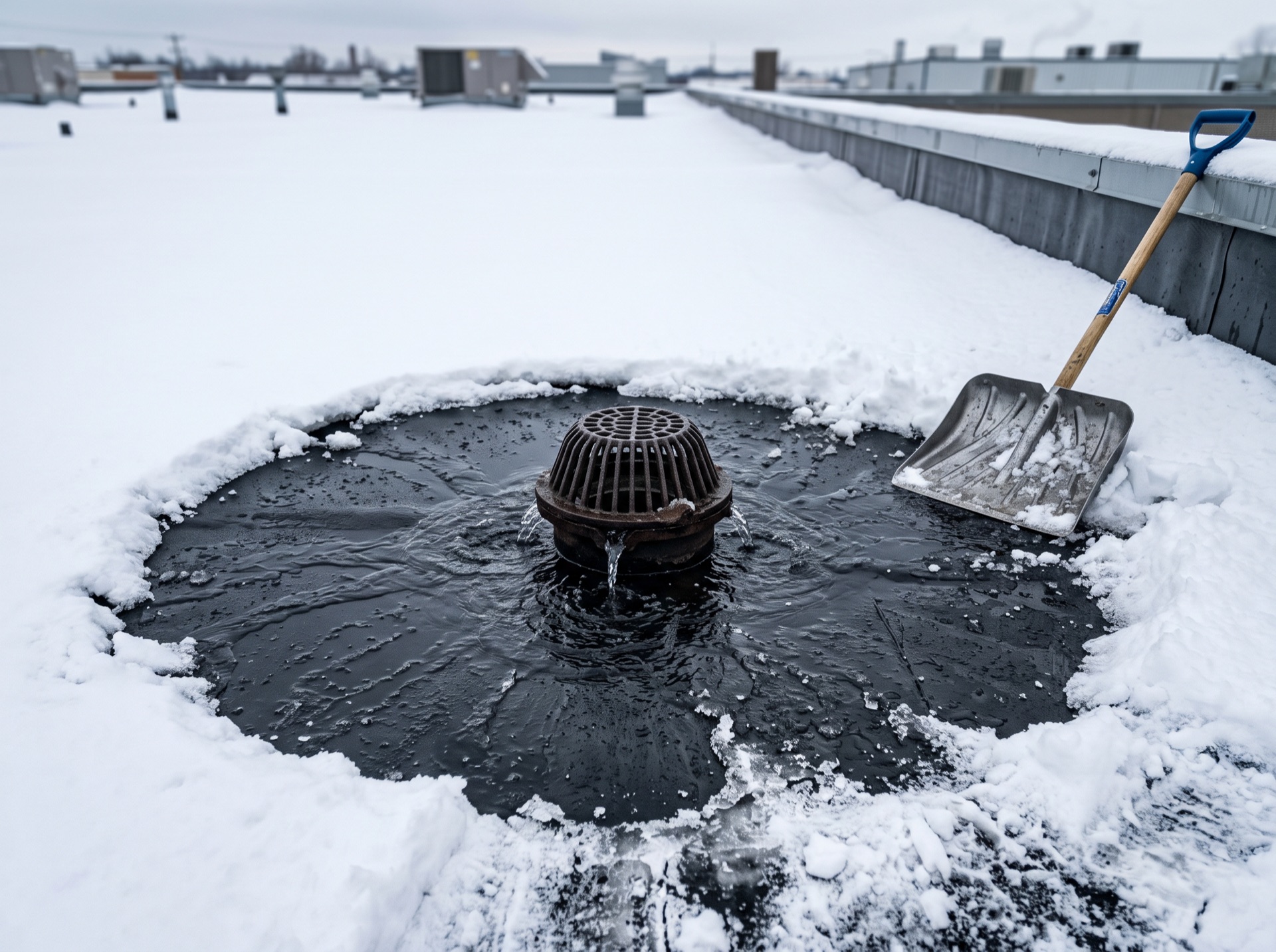
A parapet is why a commercial deck ponds instead of shedding. Scuppers through the parapet are the only exit, and they are narrow, exposed on three sides and the first thing to freeze solid.
Steaming a scupper throat open is often the single highest-value twenty minutes of a commercial Olympic Valley (Palisades) call.
Flat roofs fail differently
A pitched residential roof dams at the eave. A commercial deck dams at its drainage: frozen scuppers, iced-over internal drains, and ponding that refreezes into a sheet across the low spots. Water then sits on the membrane at depth, finds a seam or a flashing detail, and comes through into the tenant space below.
Parapet walls make it worse by holding the melt on the deck instead of letting it run off an edge. By the time it shows up as a ceiling tile stain in an Olympic Valley (Palisades) unit, there is usually standing water up there.
The pitched sections nobody plans for
Very few commercial buildings are flat all the way across. Entrance canopies, mansard faces, dormers over older frontages and the sloped transitions between roof levels all shed onto places where people walk.
Those sections behave like a residential roof and get worked like one - steam at the eave, snow guards noted where they are missing, and the pavement below cordoned while material is coming down.
Working around rooftop plant
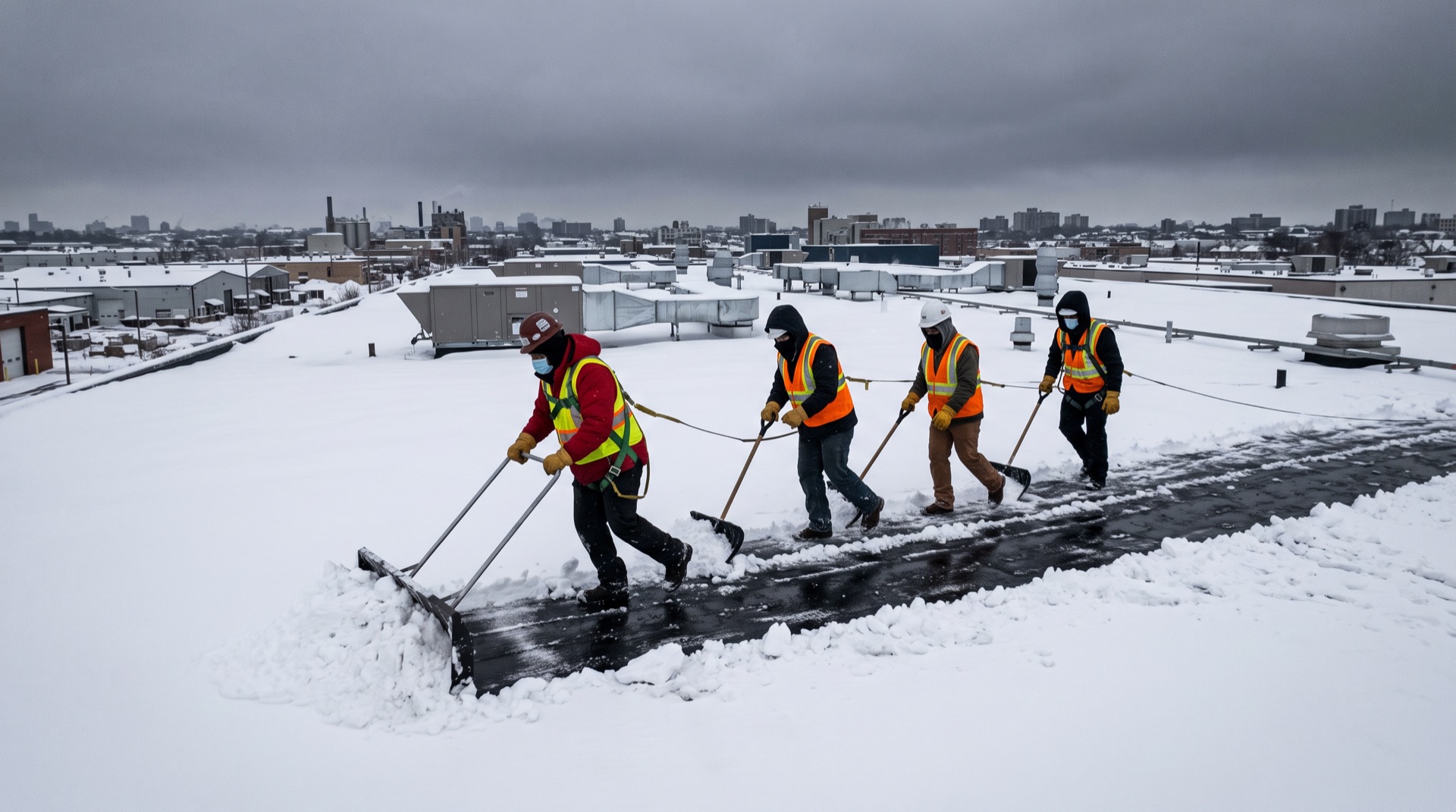
HVAC curbs, exhaust fans, conduit, gas lines, solar racking and railing are all obstacles and all drift traps. The snow behind a large unit is usually the deepest on the roof and the ice under it the thickest.
Crews work around and under them rather than over, and anything running stays running.
Insulation above the deck changes the melt pattern
A modern commercial assembly puts most of its insulation above the deck, so very little building heat reaches the membrane. That is good for energy and it means the snow that lands mostly stays - the roof does not self-clear the way an under-insulated one does.
Where dams do form on those roofs it is almost always at a thermal bridge: a parapet, a curb, a drain bowl or a line of fasteners. Those are the spots crews work first.
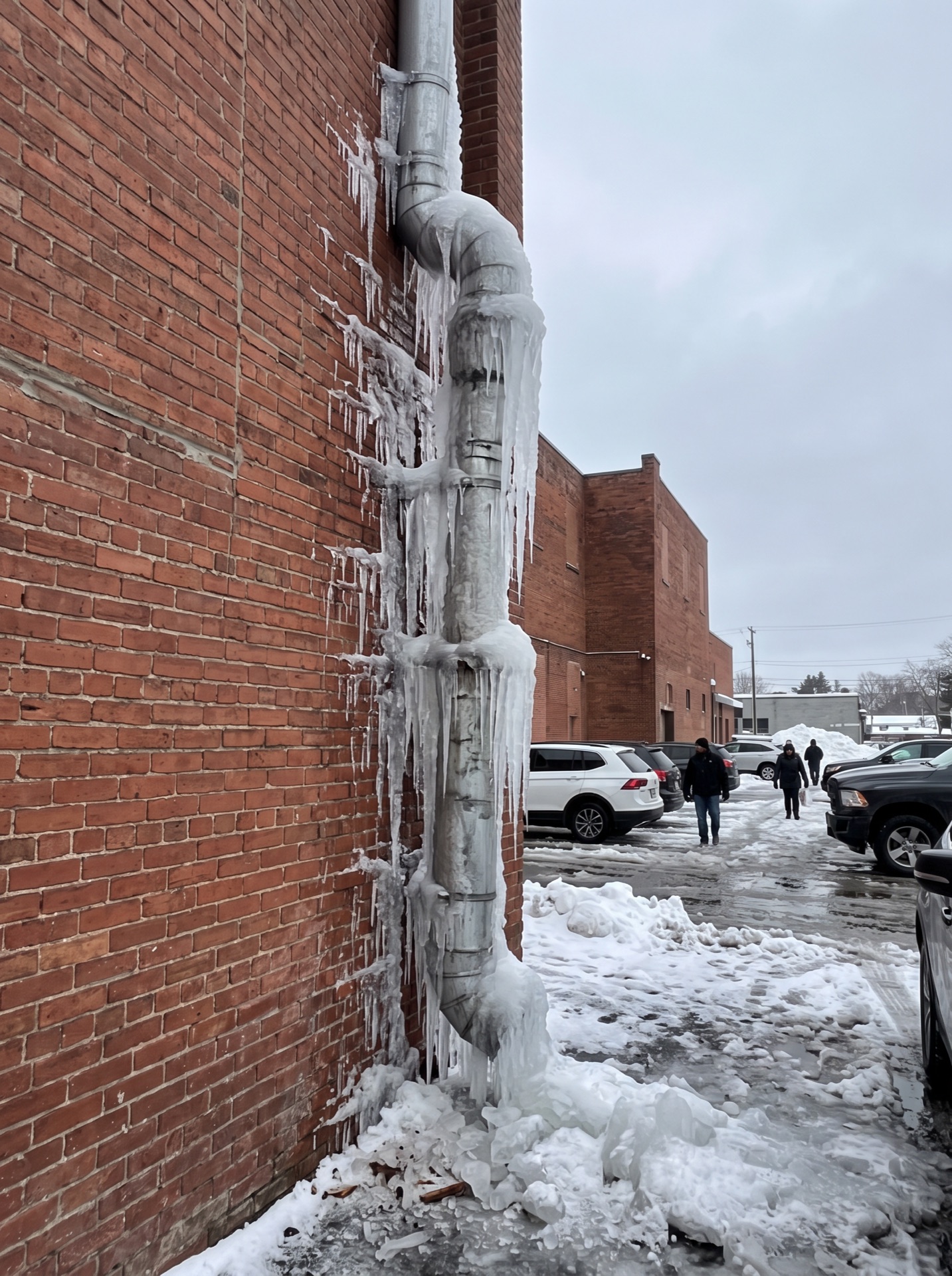
What you get in Olympic Valley (Palisades)
- Overnight windows availableWork scheduled outside occupancy where access demands it
- Documentation for the boardCondition report and photo record with every invoice
- Tenant-hours schedulingWork windows set around occupancy and access
| Dispatch window | 24 to 48 hours in mountain terrain |
|---|---|
| Local ice-barrier practice | Extended membrane plus snow retention |
| Primary climate stressor | Solar melt on deep pack, shaded eaves |
| Pricing model | Billed by the crew hour, rate quoted before dispatch |
| Documentation | Dated before and after photos, written scope in Xactimate line items |
| Coverage area | Olympic Valley (Palisades) and Placer County |
| Typical scope | Steam, 8-16 crew hours typical |
Neighborhoods and Towns We Reach From Olympic Valley (Palisades)
Crews working Olympic Valley (Palisades) cover the adjoining communities on the same route — Olympic Valley, Homewood, Tahoma, Carnelian Bay and Tahoe Vista — so a storm week usually means one truck handling several addresses in Placer County rather than separate trips.
Nearest hub towns with their own commercial ice dams pages: Tahoe City, Truckee, South Lake Tahoe, Placerville, Nevada City, Grass Valley.
Coverage runs across Olympic Valley (Palisades) and the nearby towns all winter, and capacity is surged into whichever California market the storm actually hits.
Most jobs do not stop at one service. Commercial Ice Dams in Olympic Valley (Palisades) often runs alongside commercial roof snow removal in Olympic Valley (Palisades), and both get written into one scope rather than billed as separate visits.
Active leak right now? Our 24/7 Olympic Valley (Palisades) steam ice dam removal crews are dispatched first during a freeze event. Call (888) 561-9664.